Heavy Duty Kettlebell Manufacturer: Leading China OEM
Heavy Duty Kettlebell Manufacturer: Selecting a Reliable China Partner
Many procurement professionals fail by prioritizing the lowest unit price from a generic trading company, only to face high landed costs due to weight inconsistencies and poor coating adhesion. A strategic shift toward a professional heavy duty kettlebell manufacturer ensures you secure predictable quality and scalable production. By sourcing directly from a China factory, distributors can bypass middleman markups and gain direct control over product specifications, ensuring long-term reliability for commercial fitness environments.
Transitioning from small-batch retail buying to professional sourcing requires a partner capable of managing high-volume production cycles without compromising structural integrity. Whether you are looking for wholesale cast iron kettlebells for a single gym rollout or a recurring commercial kettlebell supplier for global distribution, understanding the manufacturing depth of your partner is essential for maintaining healthy distributor margins and reducing replacement rates.
Optimizing TCO Through Direct Manufacturing
The Total Cost of Ownership (TCO) in commercial fitness is driven by more than just the initial invoice. Inconsistent casting or poor handle-to-body junctions lead to premature wear, increasing maintenance loads for gym operators. Engaging a dedicated heavy duty kettlebell manufacturer allows you to implement strict quality control protocols at the source. This includes verifying base flatness and knurling consistency before the goods ever leave the factory, significantly reducing the risk of costly returns or client dissatisfaction.
Effective sourcing strategy also involves optimizing the MOQ and lead time to balance inventory costs with market demand. A specialized China kettlebell factory can provide better visibility into production schedules, allowing you to plan wholesale shipments that optimize container loading and reduce shipping overhead per unit. This level of transparency is vital when calculating the final landed cost for large-scale commercial projects.
Sourcing Models: Factory-Direct vs. Trading Companies
Professional buyers must evaluate the long-term value of their supply chain beyond the initial quote. While trading companies offer simplicity, they often lack the technical oversight required for high-spec commercial products. A direct China kettlebell factory provides a distinct advantage in both technical customization and cost transparency, allowing for more precise control over the production lifecycle.
The following table outlines the typical differences in procurement dynamics between working with a specialized manufacturer and a general trading entity. This framework helps in determining the best approach for your specific sourcing requirements, whether for stock replenishment or new product development.
| Procurement Dimension | Direct Manufacturer Model | Trading Company Model |
|---|---|---|
| Production Control | High: Direct oversight of casting and coating | Low: Dependent on third-party factory QC |
| Customization (OEM/ODM) | Full capability for custom molds and branding | Limited to existing stock or standard catalogs |
| Typical MOQ | Tiered based on production runs | Often lower, but with higher unit costs |
| Lead Time Transparency | High: Direct visibility into production stages | Moderate: Subject to middleman communication |
| TCO Optimization | Superior: Direct control over material quality | Variable: Risk of hidden costs in quality issues |
For distributors focused on building a long-term brand, utilizing an OEM partner allows for the integration of custom branding and specific handle textures directly into the manufacturing process. This ensures that your brand identity remains consistent across all weight increments. Conversely, if your primary goal is rapid market entry with low initial risk, a wholesale approach using standard stock items may be more efficient. Regardless of the model, always verify the factory's ability to provide consistent weight calibration and durable surface finishes to protect your long-term margins.
Cast Iron and Material Specifications for Commercial Tiers
Selecting a reliable heavy duty kettlebell manufacturer requires a deep understanding of how base materials impact long-term durability and total cost of ownership. For high-volume distributors and gym owners, the material choice directly dictates replacement cycles and maintenance overhead. Most premium commercial-grade units rely on high-density gray iron or cast iron to ensure structural integrity under rigorous daily use in professional environments.
When sourcing equipment in bulk, buyers must distinguish between standard consumer models and industrial-strength versions. A professional China kettlebell factory typically utilizes sand casting techniques to produce the main body, ensuring a consistent density that prevents cracking or weight shifting over time. This manufacturing standard is essential for maintaining a stable TCO (Total Cost of Ownership) for fitness facilities and distributors.
Material Standards and Manufacturing Processes
The structural integrity of a kettlebell depends on the precision of the casting and the quality of the handle-to-body junction. For professional wholesale orders, we focus on a single-piece cast construction to eliminate the failure points common in cheaper, two-piece assembly models. This ensures the handle remains a seamless extension of the bell, providing safety during high-intensity movements.
| Material Type | Manufacturing Process | Key Component Detail | Commercial Duty Tier | QC Focus Point |
|---|---|---|---|---|
| Cast Iron | Sand Casting | Single-piece seamless body | Standard Commercial | Base flatness and concentricity |
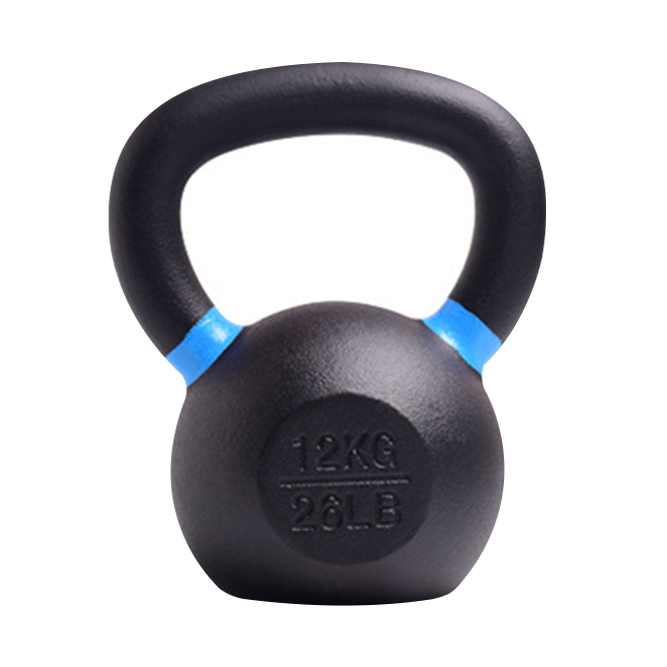
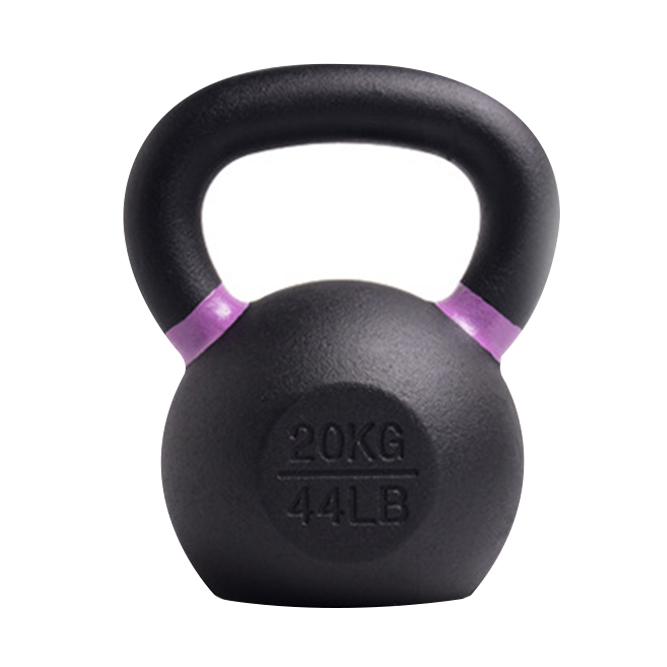
| Powder Coated Iron | Casting + Powder Coating | Smooth grip texture | Premium Commercial | Coating adhesion and color consistency |
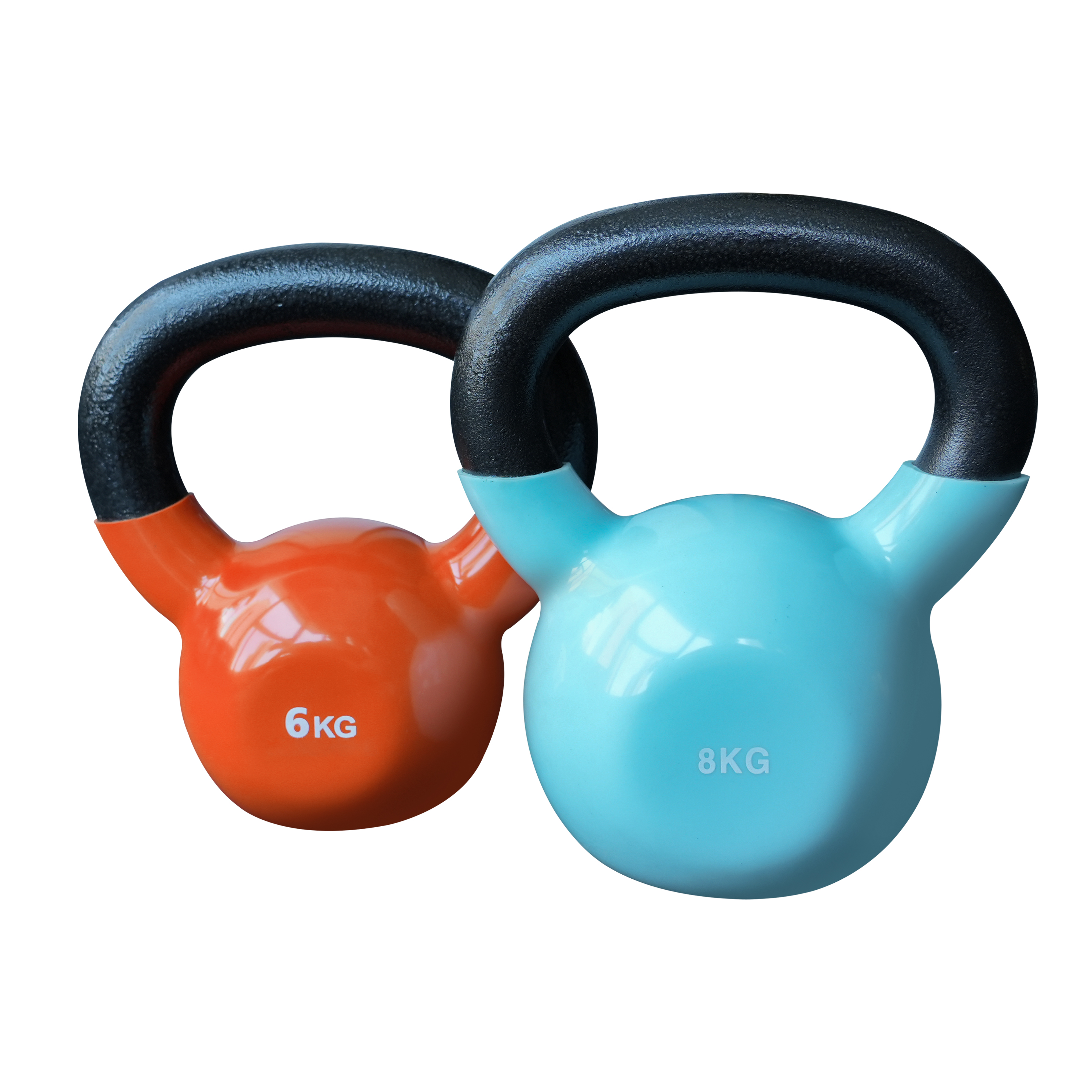
| PU Coated Iron | Casting + Polyurethane Dip | Encapsulated handle/body | High-End Studio/Boutique | Layer thickness and surface smoothness |
For a commercial kettlebell supplier, the finishing process is just as critical as the initial pour. A standard production sequence includes casting, followed by CNC machining for the handle aperture, and finally a specialized surface treatment such as powder coating or phosphate treatment. These steps prevent oxidation and ensure the wholesale cast iron kettlebells can withstand humid gym environments without degrading the surface or losing weight accuracy.
Understanding the technical distinctions between material tiers allows distributors to better manage their inventory and client expectations. Whether you are looking for rugged, high-impact durability or a refined, aesthetic finish for boutique studio settings, the manufacturing route chosen by your supplier will determine the product's lifespan and your eventual profit margins.
Technical Comparison of Commercial Finishes
The choice between a bare iron finish and a specialized coating involves a trade-off between raw durability and surface protection. In many commercial settings, the way a heavy duty kettlebell manufacturer handles the secondary finishing stage—such as the coating adhesion or the knurling texture—is what separates a budget product from a professional-grade tool. For example, while powder coating provides an excellent barrier against rust, a high-quality PU coating offers superior floor protection and a more premium tactile feel, though it may impact the initial MOQ and unit cost.
Before finalizing your procurement plan, we recommend requesting a detailed specification sheet or a physical sample to evaluate the handle texture and base flatness. Confirming these technical details during the sample approval stage ensures that your bulk order meets the exact requirements of your target market, whether you are prioritizing low-cost volume or premium brand identity.
Quality Control and Pre-Shipment Inspection Protocols
Reliability in bulk procurement is not determined by the initial pour alone, but by the rigor of the pre-shipment QC process. For any professional heavy duty kettlebell manufacturer, maintaining weight consistency and surface integrity across thousands of units is the primary challenge. A standard quality control workflow in a high-capacity China kettlebell factory involves multiple checkpoints: starting with a weight calibration check to ensure each unit meets the specified weight tolerance, followed by a visual inspection of the handle-to-body junction for any casting defects.
Beyond weight and structure, the surface finish undergoes strict scrutiny. For orders requiring powder coating or specialized finishes, inspectors typically evaluate coating adhesion and color uniformity to prevent peeling during high-frequency commercial use. This level of oversight is critical when you are sourcing for large-scale distribution, as it minimizes the risk of costly returns and protects your brand reputation. Whether your order is a standard stock replenishment or a custom OEM project, every batch should undergo a final inspection of the base flatness and knurling texture to ensure professional-grade performance.
To ensure seamless logistics and reduce landed cost risks, we also implement standardized export packaging. This includes heavy-duty corrugated boxes and reinforced palletizing designed to withstand long-distance ocean freight without damage. We recommend that buyers confirm the specific packaging requirements and lead time during the initial quote stage to align with your warehouse receiving schedules and distributor timelines. Contact us today to request a formal quote, discuss your MOQ, or arrange for a sample evaluation to verify our production standards firsthand.
Manufacturing Processes: From Sand Casting to Final Coating
Reliability in bulk procurement begins with the integrity of the raw material and the precision of the initial pour. For professional distributors and gym equipment importers, selecting a heavy duty kettlebell manufacturer that prioritizes structural consistency is essential to reducing long-term replacement costs and maintenance claims. A high-quality China kettlebell factory utilizes established industrial workflows to ensure each unit meets commercial-grade standards for density and balance.
The production of premium cast iron units typically begins with the sand casting process. This method involves creating a precise mold using specialized sand mixtures to ensure the shape and weight distribution remain consistent across large production runs. High-quality gray iron is the industry standard for these units, providing the necessary density and durability required for high-traffic commercial environments. During the casting stage, mold precision is critical; any deviation in the mold can lead to weight variances that complicate inventory management for a commercial kettlebell supplier. After the casting is complete, the units undergo machining to refine the handle-to-body junction and ensure the base remains flat for stable performance.
Following the casting and machining stages, the surface treatment determines the product's longevity and aesthetic appeal. Most wholesale cast iron kettlebells undergo a multi-step finishing process, starting with a phosphate treatment to prepare the metal surface, followed by a durable powder coating. This coating provides a layer of protection against oxidation and improves the grip texture. For procurement professionals, understanding these material tiers helps in calculating the total cost of ownership and selecting the right product for specific client needs, whether they require bare iron for ruggedness or coated finishes for premium studio environments.
| Material Tier | Primary Process | Commercial Duty | Maintenance Load | Procurement Focus |
|---|---|---|---|---|
| Standard Gray Iron | Sand Casting | High-Volume Commercial | Moderate | Budget-Friendly Wholesale |
| Powder Coated Iron | Casting + Powder Line | Premium Commercial/Studio | Low | Long-term Durability/Aesthetics |
| PU Coated/Encapsulated | Casting + Molding | High-End Boutique/Home | Very Low | Premium Branding/Floor Protection |
The final stage of production is a critical lever for your procurement decision. When sourcing through a heavy duty kettlebell manufacturer, the choice between different surface treatments will directly impact your landed cost, product lifespan, and the maintenance requirements of your end-users. For distributors managing high-volume stock, selecting the correct finish ensures that the product matches the specific environment of the facility, whether it is a rugged outdoor training zone or a high-end indoor studio.
Surface Finishing: Powder Coating vs. Pu Coating
The two most common professional finishes—powder coating and PU coating—offer distinct advantages depending on your target market. Powder coating is a staple for wholesale cast iron kettlebells intended for heavy-duty commercial use. It involves applying a dry powder to the cast iron surface and curing it under heat, resulting in a hard, resilient layer that provides excellent coating adhesion and resistance to chipping. This is a cost-effective way to ensure long-term durability against oxidation in high-traffic gyms.
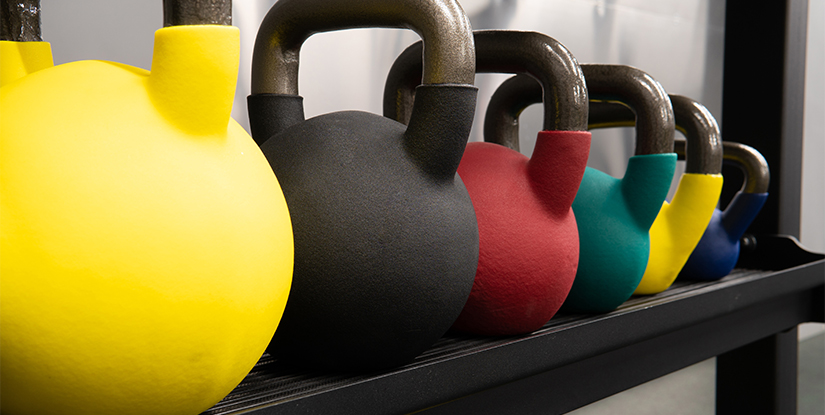
In contrast, PU coating (polyurethane coating) provides a smoother, more premium feel often preferred by boutique studios. This process typically involves a secondary molding or dipping stage that encapsulates the iron core, offering superior floor protection and a more ergonomic grip. While this may result in a slightly higher MOQ or unit price, it elevates the product's perceived value for high-end branding. As a professional commercial kettlebell supplier, we recommend evaluating these finishes based on your client's specific durability requirements and budget constraints to optimize your distributor margins.
The final phase of the production cycle is where a professional heavy duty kettlebell manufacturer proves its value to international distributors. For large-scale importers, the risk of receiving batches with inconsistent weights or damaged surfaces can lead to significant returns and lost revenue. To mitigate these issues, a rigorous pre-shipment QC protocol is essential. This involves a final inspection of the handle-to-body junction, checking for base flatness, and ensuring the knurling texture remains consistent across the entire order. Every unit is also subjected to a weight tolerance spot-check to ensure that the cast iron mass aligns with the specified commercial grade, preventing discrepancies in your inventory counts.
Once quality standards are verified, the focus shifts to export-grade protection. A reliable China kettlebell factory understands that shipping heavy, dense iron across oceans requires more than standard packaging. For high-volume bulk orders, we implement robust export packaging solutions—typically involving reinforced cartons, protective corner buffers, and palletization to ensure shipping safety. This meticulous approach to container loading minimizes movement and prevents coating damage during transit. By prioritizing these final steps, we help you manage your landed cost more effectively and ensure that your stock arrives in retail-ready condition, ready for immediate distribution or studio placement.
When planning your next procurement cycle, we recommend contacting our team to confirm your specific requirements. Whether you need to discuss a customized OEM branding solution, verify the current lead time for a bulk order, or request a sample for weight and finish evaluation, our specialists are ready to assist. Please reach out to discuss your MOQ, request a detailed spec sheet, or book a factory audit to ensure our production capabilities align perfectly with your brand identity and commercial standards.
Quality Control and Pre-Shipment Inspection Standards
For distributors and professional gym operators, the cost of receiving a shipment with inconsistent weight or poor surface texture can devastate profit margins and increase customer complaints. A reliable heavy duty kettlebell manufacturer must implement a multi-stage validation process to ensure every unit meets commercial-grade expectations. Relying on a China kettlebell factory that prioritizes systematic verification reduces the risks associated with high-volume imports, such as uneven handle textures or irregular base flatness.
Standardized quality control is essential when managing wholesale cast iron kettlebells for global export. A professional commercial kettlebell supplier typically integrates inspection points throughout the production sequence—from the initial sand casting stage to the final coating application. This ensures that the weight tolerance remains within industry-standard limits and that the surface finish is consistent across the entire batch, preventing the common failure modes seen in lower-tier production.
Critical Inspection Points for B2B Sourcing
When conducting a pre-shipment inspection or evaluating a potential factory, buyers should focus on specific technical benchmarks that impact long-term commercial durability. In many commercial settings, the integrity of the handle-to-body junction and the adhesion of the powder coating are the most frequent points of failure if not properly monitored.
- Weight Calibration: Verification of weight consistency across the entire batch to ensure accuracy for professional training.
- Surface Texture and Knurling: Inspection of handle grip depth and smoothness to ensure a consistent tactile experience.
- Coating Integrity: Checking for adhesion and uniformity in the paint or powder coating layer to prevent premature chipping.
- Base Flatness: Ensuring the casting provides a stable, level surface for safe placement on gym flooring.
By establishing a rigorous QC protocol, a China factory can provide the transparency required for large-scale sourcing. We recommend that importers request a detailed spec sheet and confirm the MOQ and lead time during the initial OEM or ODM consultation to align production schedules with your local market demand.
Technical Validation Checklist for Procurement Professionals
To mitigate the risks of high-volume imports, professional buyers should utilize a structured inspection framework. A high-tier heavy duty kettlebell manufacturer will provide documentation or allow for a third-party audit to verify that the manufacturing output aligns with the agreed-upon specifications. This level of transparency is vital when managing the landed cost and long-term durability of your inventory.
| Inspection Focus | Technical Requirement | Commercial Duty Impact | Typical QC Method |
|---|---|---|---|
| Casting Integrity | Absence of significant casting defects | Prevents structural cracks under heavy use | Visual inspection of body surface |
| Handle Texture | Uniform knurling and smooth transitions | Ensures grip stability for high-volume training | Tactile check of handle-to-body junction |
| Coating Adhesion | Consistent thickness and layer stability | Reductions in maintenance and chipping | Surface adhesion and uniformity check |
| Weight Calibration | Strict adherence to weight class standards | Protects distributor reputation and accuracy | Batch-level weight spot-check |
| Base Flatness | Level surface and stable center of gravity | Ensures safe placement on gym flooring | Surface flatness verification |
For those looking to scale their product line through OEM or ODM partnerships, we recommend requesting a sample approval process before full-scale production. This allows you to physically verify the handle texture, coating adhesion, and weight calibration in your own facility. Confirming these technical details early in the sourcing process ensures that your wholesale orders meet the rigorous demands of commercial fitness environments without unexpected replacement costs.
Export Packaging and Container Loading Optimization
Efficient logistics management is a critical component of the total landed cost for any international distributor. For high-volume bulk orders, the method of export packaging directly impacts both the safety of the cargo and the efficiency of your warehouse receiving process. A professional heavy duty kettlebell manufacturer understands that cast iron products are heavy, dense, and prone to surface abrasion if not secured correctly during long-distance maritime transit.
To protect your margins and ensure product integrity, our China factory employs standardized industrial packing protocols. We utilize heavy-duty reinforced corrugated cartons and custom-sized dividers to prevent metal-on-metal friction, which can lead to chipped powder coating or damaged branding. For large-scale wholesale shipments, we provide optimized container loading plans to maximize volumetric efficiency, ensuring that every cubic meter of your sea freight is utilized effectively while maintaining strict stability standards.
When coordinating your next sourcing project, we encourage buyers to consult with our logistics team regarding specific palletization requirements. Whether you are pursuing OEM custom branding or standard stock replenishment, we can provide detailed packing lists and dimensions to assist your freight forwarder in calculating accurate shipping costs and managing your inventory space efficiently.
OEM and Private Label Capabilities for Global Distributors
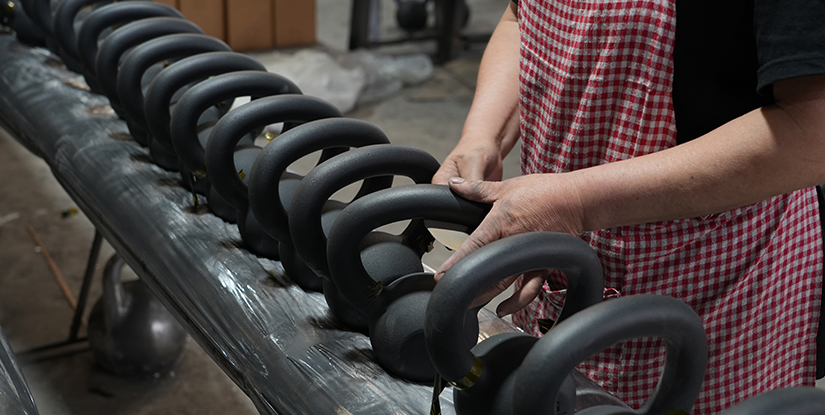
Scaling a fitness brand requires more than just high-quality products; it requires a reliable heavy duty kettlebell manufacturer that can translate your brand identity into physical inventory. For global distributors and gym equipment importers, the ability to move from generic stock to a specialized product line is a critical lever for increasing distributor margins and market presence.
Our China kettlebell factory provides comprehensive OEM and ODM solutions designed to meet the specific requirements of professional fitness brands. Whether you are looking to launch a specialized strength line or expand an existing catalog, we offer scalable production paths that accommodate various levels of customization. We understand that for a professional supplier, the transition from a standard product to a branded asset must be seamless, maintaining consistent quality across every batch.
Custom Branding and Product Customization
A successful private label strategy relies on precision and consistency. We offer diverse options to ensure your brand stands out in a competitive commercial market. Our customization capabilities include:
- Logo Placement: High-precision branding through sandblasting, embossed casting directly into the gray iron body, or high-durability silk-screen printing for surface logos.
- Color Customization: Beyond standard bare iron, we provide various powder coating colors to match your brand's specific color palette, ensuring a cohesive look across your entire equipment line.
- Technical Specifications: Adjusting handle textures, knurling depth, or specific weight increments to meet your unique market demands.
To maintain efficiency in production and manage sourcing costs, certain customization levels are tied to a specific MOQ. For example, specialized color coatings or custom mold shapes typically require higher volumes than standard logo imprinting. We work closely with your procurement team to define these requirements early, ensuring that your wholesale orders are optimized for both brand impact and landed cost.
When evaluating your next wholesale project, we recommend discussing your specific custom branding needs with our technical team to confirm MOQ requirements and potential impact on lead times. We are ready to assist with sample approval and technical spec sheets to ensure your brand identity is executed to your exact standards.
Customization Tiers and Procurement Specifications
Choosing the right level of customization is a strategic decision that impacts your total landed cost and long-term inventory management. To assist your procurement planning, we have outlined the three primary tiers of customization offered by our commercial kettlebell supplier services. These tiers differentiate between standard stock orders and fully customized product lines.
| Customization Level | Branding Options | Material & Process | Typical MOQ Impact | Production Lead Time |
|---|---|---|---|---|
| Standard Wholesale | None or Basic Logo | Standard gray iron casting with standard powder coating | Lowest | Shortest (Stock availability) |
| Professional Branding | Embossed Logo or Silk-screen | Customized color powder coating and handle texture | Moderate | Standard Production Cycle |
| Full OEM/ODM | Custom Mold & Unique Spec | Specialized casting shapes or bespoke handle designs | Highest | Extended (Includes Tooling) |
For distributors seeking to maximize efficiency, the Standard Tier offers the fastest way to secure wholesale cast iron kettlebells without the complexity of custom tooling. However, for brands building a premium identity, the Full OEM path allows for complete control over the product'0s physical form and aesthetic, which is essential for high-end commercial facility contracts. We recommend reviewing these tiers during your initial consultation to ensure your heavy duty kettlebell manufacturer can meet your specific launch timeline and budget requirements.
Logistics, Quality Control, and Export Readiness
Reliable procurement from a heavy duty kettlebell manufacturer requires more than just product availability; it requires a transparent supply chain that protects your margins. For professional importers, the complexity of international logistics—from managing lead times to ensuring safe arrival—can become a significant barrier to scaling. We mitigate these risks through a standardized, rigorous operational framework designed for high-volume B2B trade.
Every stage of our production process is integrated with strict quality control protocols to ensure that your wholesale cast iron kettlebells arrive meeting commercial-grade expectations. Our workflow begins with a systematic casting and machining phase, followed by surface treatment, and concludes with a multi-point pre-shipment inspection. This structured approach reduces the risk of receiving defective units, which is critical for maintaining your reputation as a premium supplier in your local market.
Our export-ready logistics strategy focuses on three key procurement pillars:
- Pre-shipment Inspection: Before any container is loaded, our QC team performs spot checks on weight accuracy, coating adhesion, and base flatness. This ensures that every unit in your bulk order aligns with the approved sample.
- Export Packaging: To prevent damage during maritime transit, we utilize reinforced, heavy-duty corrugated boxes and optimized palletizing techniques. This protects the integrity of the cast iron and prevents shifting during ocean freight.
- Lead Time & Cost Management: We provide clear timelines for both standard wholesale orders and complex OEM projects. By optimizing container loading density, we help you minimize the landed cost per unit, maximizing your distributor margins.
Whether you are managing a single factory-direct shipment or coordinating large-scale ODM production, our goal is to provide the visibility needed for efficient inventory planning. We recommend contacting our team to request a detailed spec sheet, confirm your specific MOQ, and discuss how our export-standard packaging can best support your regional distribution requirements.
Logistics, MOQ, and Export Packaging Optimization
Efficient logistics management is a critical factor in reducing the total landed cost when sourcing from a heavy duty kettlebell manufacturer. For distributors and gym equipment importers, the goal is to balance high-volume wholesale capacity with rigorous protection against transit damage. Optimizing container loadability through strategic palletization and precise weight distribution ensures that your China factory shipments arrive with maximum space efficiency and minimal breakage.
Standard export packaging for heavy iron goods must move beyond simple boxing. A professional commercial kettlebell supplier utilizes reinforced corrugated cartons, edge protectors, and heavy-duty pallets to stabilize the load during sea freight. Because cast iron products are prone to impact damage and surface abrasion, we implement bulk order protection protocols that include moisture-resistant liners and customized dividers. This systematic approach to shipping optimization prevents the shifting of weight within a container, which is a common failure mode in long-distance maritime transport. By adhering to strict commercial shipping standards, we help you maintain healthy distributor margins and ensure that your wholesale cast iron kettlebells reach your warehouse in pristine, retail-ready condition.
Shipping and Packaging Tier Comparison
Selecting the right logistics configuration depends heavily on your specific MOQ and inventory strategy. A professional commercial kettlebell supplier provides tiered packaging solutions to accommodate everything from small boutique studio replenishments to full-scale distributor imports. Understanding these variations helps you project your final landed cost and warehouse storage requirements more accurately.
| Order Type | Packaging Method | Typical Logistics | Primary Benefit |
|---|---|---|---|
| Sample / Small Batch | Single reinforced carton with internal bubble protection | Air Freight or Express Courier | Rapid arrival for product validation |
| Standard Wholesale | Multi-unit master cartons on reinforced pallets | LCL (Less than Container Load) Sea Freight | Balanced cost-to-protection ratio |
| High-Volume Container Load | Customized heavy-duty palletization with shrink wrap and edge protectors | FCL (Full Container Load) Sea Freight | Maximum space efficiency and lowest per-unit landed cost |
For large-scale procurement, we recommend consulting with your China kettlebell factory partner to design a customized loading plan. Whether you require specialized crates for premium coated units or standard palletizing for high-volume iron orders, our team ensures your shipment is optimized for stability and sea-freight durability. Contact us to confirm your specific requirements or to request a detailed shipping quote for your next bulk order.
Production Cycles and Customization Timelines
Planning a successful product launch or inventory replenishment requires a deep understanding of the standard production cycle. When engaging in OEM or ODM services, the timeline is influenced by the complexity of the design and the total volume of the order. For standard cast iron models, the process typically moves from raw material casting to precision machining, surface finishing, and finally, a rigorous pre-shipment QC phase. For buyers requiring customization—such as specific handle textures, unique logo imprints, or specialized coating colors—the lead time will naturally extend to accommodate mold development and specialized painting or powder coating runs.
To maintain a predictable procurement timeline, we advise distributors to initiate the sourcing process well in advance of peak seasonal demand. While standard wholesale orders of existing stock can often be fulfilled within a shorter window, customized private label projects require additional time for sample approval and production calibration. We provide transparent updates throughout the manufacturing process, ensuring you can accurately manage your inventory levels and client expectations. Whether you are managing a single container or a recurring quarterly shipment, our factory works closely with your logistics team to align production completion with your preferred vessel departure dates, effectively minimizing warehouse downtime and optimizing your overall supply chain efficiency.