Kettlebell Supply Chain Manufacturer: OEM Contract
The Economic Value of a Reliable Kettlebell Supply Chain Manufacturer
For a regional gym equipment distributor or a large-scale fitness warehouse, the difference between a profitable quarter and a logistical deficit often rests on the stability of their upstream partners. When managing high-volume inventory, relying on a professional kettlebell supply chain manufacturer ensures that your product catalog remains consistent, reducing the risk of uneven weight distribution or surface defects that trigger costly returns. A streamlined wholesale kettlebell production process allows you to scale your inventory rapidly during peak seasons without facing unexpected stockouts or quality fluctuations.
Optimizing your landed cost is the primary driver for professional importers. Beyond the unit price, your total procurement expenditure is heavily influenced by shipping density, packaging efficiency, and the reliability of the China factory. A manufacturer that understands export-grade container loading and provides optimized palletization helps reduce the volumetric weight of each shipment. Furthermore, working with a direct supplier that offers clear MOQ tiers allows you to balance your cash flow against inventory depth, ensuring you are not over-leveraged in stock while maintaining the ability to fulfill large commercial orders on short notice.
Evaluating Sourcing Models for Maximum Distributor Margin
Selecting the appropriate sourcing route is a critical decision for procurement managers looking to optimize their commercial kettlebell OEM operations. While trading companies offer convenience, direct engagement with a specialized manufacturer provides the transparency required for high-stakes distribution. Understanding how different models impact your procurement cost and product consistency is essential for long-term scalability.
| Sourcing Model | Primary Focus | Quality Control Access | Production Scale | Typical MOQ |
|---|---|---|---|---|
| Direct Factory | High-volume wholesale and custom branding | Direct pre-shipment inspection and technical oversight | High; optimized for large container loads | Higher; volume-driven |
| Trading Company | Small-batch variety and low-volume stock | Limited; relies on third-party reports | Moderate; limited by stock availability | Lower; retail-friendly |
| Commercial kettlebell OEM | Custom specifications and private label identity | Full control over material and coating processes | High; customized to client production cycles | Negotiable; based on specification complexity |
For distributors aiming to build a premium brand identity, the ability to control the manufacturing sequence—from the initial sand casting to the final powder coating application—is a significant competitive advantage. Engaging in professional commercial kettlebell OEM partnerships allows you to dictate the exact handle texture and coating adhesion standards, ensuring your branded products meet the rigorous demands of commercial gym environments. To ensure your specific requirements are met, we recommend that buyers request a detailed specification sheet, confirm the current MOQ for custom colors, and book a factory audit to verify production capacity and quality standards before finalizing large-scale orders.
Protecting your brand reputation requires more than just a low unit price; it requires a manufacturer that treats quality control as a non-negotiable step in the production cycle. When sourcing through a professional kettlebell supply chain manufacturer, you are investing in the longevity of your product line. A failure in coating adhesion or a deviation in weight tolerance can lead to high return rates, damaging your standing with gym owners and commercial facilities. By prioritizing a China factory that integrates rigorous pre-shipment inspections—checking everything from the handle-to-body junction to the final weight calibration—you secure a reliable source for your long-term ROI.
The ultimate goal of any procurement professional is to minimize the total cost of ownership while maximizing product durability. High-quality wholesale kettlebell production ensures that your inventory can withstand heavy commercial use without premature surface wear or structural fatigue. Whether you are looking for specialized powder coating or high-durability PU encapsulation, working with a dedicated supplier allows you to standardize your offerings. We encourage partners to initiate the sourcing process by requesting a sample evaluation, discussing OEM customization options for private labeling, and verifying the export-grade packaging standards to ensure your shipment arrives in optimal condition for immediate distribution.
Material Integrity and Casting Precision in Commercial Kettlebell Production
Reliability in high-volume procurement begins with the fundamental metallurgical quality of the unit. A professional kettlebell supply chain manufacturer must prioritize the structural integrity of the base material to prevent cracking or handle failure under heavy usage. For distributors and gym operators, sourcing high-quality cast iron through established sand casting methods ensures a consistent density that supports long-term commercial durability and predictable weight performance across a full set.
When evaluating a commercial kettlebell OEM partner, the technical focus should shift from simple appearance to the precision of the manufacturing route. A standard production sequence typically involves casting, followed by precision machining of the handle area, and finishing with a specialized coating process. This rigorous approach minimizes the risk of weight deviation and ensures that the wholesale kettlebell production meets the strict weight tolerance standards required for professional training environments. High-quality sourcing from a specialized China factory allows importers to verify these technical benchmarks through direct inspection of the casting uniformity and surface finish before the final QC stage.
Comparison of Surface Finishing and Coating Durability
Selecting the appropriate surface treatment is a critical decision for procurement leads focused on Total Cost of Ownership (TCO). While bare iron is cost-effective, it requires frequent maintenance to prevent oxidation. For professional facilities, choosing a specialized coating provides a layer of protection that extends the product lifecycle and reduces replacement frequency. A professional kettlebell supply chain manufacturer typically offers various finishes to match different market tiers, from budget-friendly options to high-end competition-grade finishes.
The following table outlines the primary finishing options available during wholesale kettlebell production to assist in your selection process. This comparison focuses on the technical trade-offs between material protection and long-term commercial utility.
| Material Base | Surface Finishing Type | Key Component Detail | Commercial Duty Tier | MOQ Impact | Factory QC Point |
|---|---|---|---|---|---|
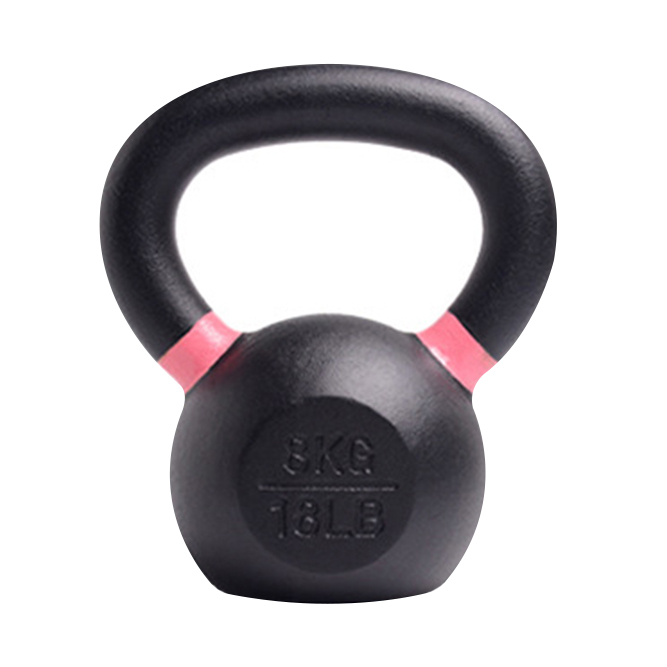
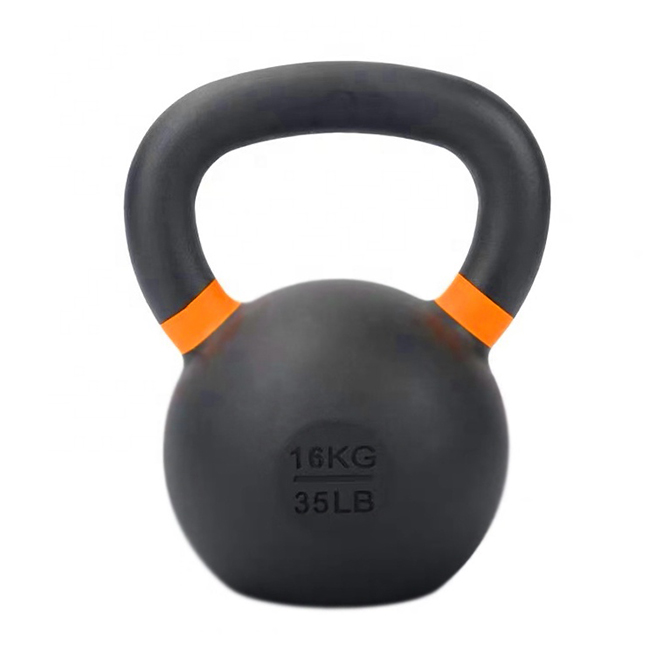
| Cast Iron | Powder Coating | Smooth handle texture | Standard Commercial | Standard | Coating adhesion at base |
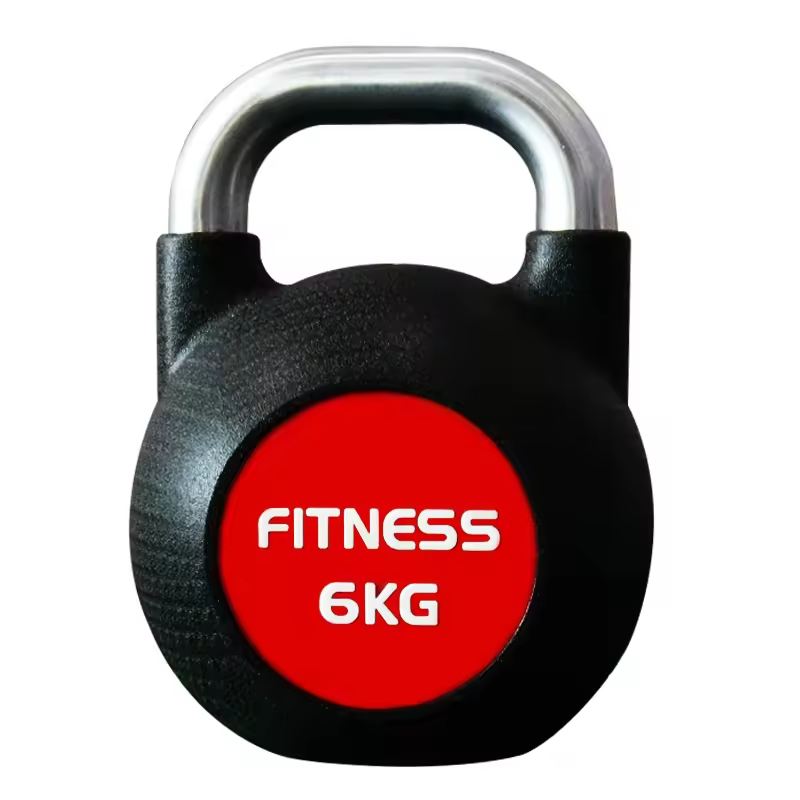
| Cast Iron | PU Coating | Soft-touch grip layer | Premium Commercial | Higher | Encapsulation thickness |
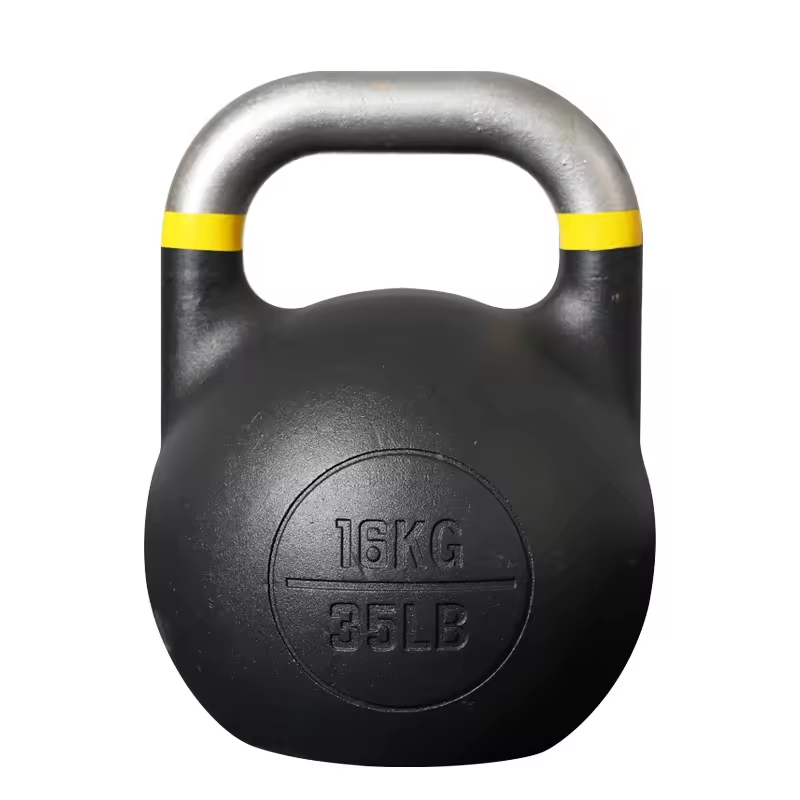
| Solid Steel | Chrome Finish | Precision knurling | Competition Grade | High | Handle-to-body junction |
| Cast Iron | Enamel/Paint | Basic color layer | Budget/Entry | Low | Surface uniformity |
When managing commercial kettlebell OEM orders, it is essential to verify how these coatings interact with the underlying metal. For example, a high-quality powder coating must demonstrate strong adhesion to the cast surface to prevent chipping during high-impact training. Similarly, a PU coating should be applied via a consistent molding or dipping process to ensure the layer is uniform across the handle and the bell body. For importers, requesting a sample evaluation of the coating durability and the weight tolerance band is a necessary step in the sourcing process to ensure the final landed cost reflects a durable, high-performance product.
Critical QC Checkpoints for Export-Grade Compliance
For distributors managing high-volume imports, the risk of high return rates often stems from overlooked manufacturing defects that only surface after the product reaches the end-user. A reliable kettlebell supply chain manufacturer implements a multi-stage inspection protocol to mitigate these risks. During wholesale kettlebell production, quality control must move beyond simple visual checks to include technical validation of critical touchpoints such as handle knurling, base flatness, and coating adhesion. Ensuring these elements meet industry-standard specifications is essential for maintaining professional brand reputation and minimizing after-sales costs.
A rigorous pre-shipment inspection should focus on three primary technical zones. First, the handle texture must be consistent to prevent grip failure; second, the base flatness must be verified to ensure stability during ground-based movements; and third, the coating or encapsulation layer must be tested for adhesion strength to prevent premature peeling. When coordinating with a China factory, procurement leads should request specific documentation regarding these checkpoints. Understanding how these technical variables influence your MOQ and total lead time allows for more accurate inventory planning and ensures that the final shipment aligns perfectly with your commercial quality standards.
Comparing Commercial Kettlebell Tiers for Wholesale Procurement
When sourcing from a kettlebell supply chain manufacturer, professional buyers must look beyond the initial unit price to evaluate the long-term TCO. For distributors and gym owners, the total cost of ownership is a function of material durability, replacement frequency, and maintenance requirements. Choosing the wrong tier can lead to premature surface degradation or weight inconsistencies, increasing your long-term operational expenses.
Effective wholesale kettlebell production strategies involve selecting the appropriate material finish based on the end-use environment. While basic options serve entry-level studios, high-traffic commercial facilities require specialized coatings to ensure longevity. Understanding these tiers allows importers to optimize their sourcing strategy for maximum ROI.
| Commercial Tier | Primary Material & Finish | Typical Application | Durability Profile | Procurement Value |
|---|---|---|---|---|
| Standard Commercial | Cast Iron with Powder Coating | General Fitness Studios | High resistance to surface chipping | Balanced wholesale cost/longevity |
| Premium Commercial | PU or Rubber Encapsulated | High-Traffic Gyms / CrossFit | Superior impact and floor protection | Higher initial MOQ; lower replacement rate |
| Competition Grade | Solid Steel or Chrome-Manganese | Professional Training / Events | Precision weight and handle texture | Premium OEM investment for specialized use |
Selecting a reliable commercial kettlebell OEM partner ensures that your chosen tier meets industry-standard weight tolerances and coating adhesion requirements. By aligning your product selection with the specific durability needs of your target market, you can minimize the frequency of replacement cycles and stabilize your long-term inventory costs.
| Tier Category | Core Material | Surface Process | Key Component Focus | Commercial Duty | Sourcing Strategy |
|---|---|---|---|---|---|
| Budget/Entry | Cast Iron | Paint or Enamel | Standard Handle Texture | Low-Impact Studio Use | High-Volume wholesale |
| Standard Commercial | Cast Iron | Powder Coating | Coating Adhesion at Base | High-Traffic General Gyms | Balanced MOQ & Durability |
| Premium/Specialized | Solid Steel or Chrome-Manganese | PU or Rubber Encapsulation | Handle-to-Body Junction | Professional Training/CrossFit | High-Margin OEM/Private Label |
When evaluating a kettlebell supply chain manufacturer, procurement leads should prioritize the technical distinction between surface finishes. A common failure mode in low-tier sourcing is poor coating adhesion at the handle junction or the logo emboss area, which leads to rapid oxidation and aesthetic degradation in humid environments. For high-performance distribution, selecting a commercial kettlebell OEM that utilizes a specialized powder coating line or advanced molding processes will significantly reduce your replacement-related overhead.
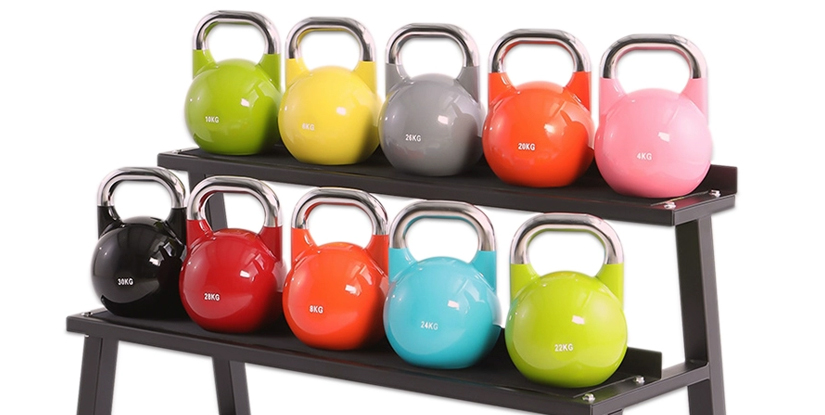
To ensure the highest return on investment, we recommend requesting a sample evaluation for each tier before finalizing a bulk order. This allows your team to inspect the weight calibration, handle knurling consistency, and the thickness of the encapsulation layer. Contact our factory team to confirm current lead times, discuss custom branding options, or request a detailed specification sheet for your upcoming procurement cycle.
When evaluating a kettlebell supply chain manufacturer, procurement leads should prioritize the technical distinction between surface finishes. A common failure mode in low-tier sourcing is poor coating adhesion at the handle junction or the logo emboss area, which leads to rapid oxidation and aesthetic degradation in humid environments. For high-performance distribution, selecting a commercial kettlebell OEM that utilizes a specialized powder coating line or advanced molding processes will significantly reduce your replacement-related overhead.
To ensure the highest return on investment, we recommend requesting a sample evaluation for each tier before finalizing a bulk order. This allows your team to inspect the weight calibration, handle knurling consistency, and the thickness of the encapsulation layer. Contact our factory team to confirm current lead times, discuss custom branding options, or request a detailed specification sheet for your upcoming procurement cycle.
Customization Capabilities: Commercial Kettlebell OEM and Private Labeling
For distributors and fitness brands looking to differentiate their product lines, a professional kettlebell supply chain manufacturer provides more than just standard inventory; they provide a foundation for brand identity. Engaging in commercial kettlebell OEM services allows you to transition from a generic importer to a specialized brand owner by controlling the specific material aesthetics and functional finishes that your target market demands.
Effective wholesale kettlebell production must balance high-volume efficiency with the precision required for private label differentiation. Whether your clients require the rugged look of bare cast iron or the premium, high-visibility finish of color-coded PU coating, the factory must be capable of executing these specifications consistently across large batches. Customization typically extends beyond the surface, involving the integration of your brand logo through precision sand casting or high-durability heat-transfer methods to ensure the logo remains intact through years of heavy commercial use.
From a procurement standpoint, these customization options directly impact your MOQ and landed cost. For example, a standard powder-coated finish is a common industry-standard choice for commercial gyms, whereas specialized rubber encapsulation or chrome-manganese steel for competition-style bells may require different production timelines and higher minimums. Working directly with a China factory that understands these trade-offs ensures that your custom specifications do not lead to unexpected delays in your seasonal sourcing cycles.
Strategic Selection: Standard Wholesale vs. Full Customization
When planning your procurement cycle, understanding the technical and financial differences between stock availability and bespoke development is essential. A kettlebell supply chain manufacturer typically offers two distinct tiers of service: standardized wholesale for rapid fulfillment and full-scale OEM services for market-specific differentiation. While standard stock maximizes speed and minimizes MOQ, customized production allows for the control of specific material-to-finish ratios that define a premium brand.
The following table outlines the qualitative differences in sourcing depth to assist in your budget and branding alignment:
| Feature | Standard Wholesale Tier | Full OEM/ODM Tier |
|---|---|---|
| Material Base | Common cast iron or standard steel | Chrome-manganese steel or specialized alloys |
| Surface Finish | Standard powder coating or bare iron | Custom PU coating, rubber dip, or chrome finish |
| Branding (Logo) | Generic or no branding | Custom sand casting or heat-transfer logo |
| Customization Depth | Pre-set weight increments and colors | Bespoke handle texture and custom colorways |
| Lead Time Impact | Short (Ready-to-ship inventory) | Extended (Production-dependent) |
| Sourcing Complexity | Low (Standardized SKU selection) | High (Requires technical spec approval) |
For high-volume distributors, selecting the appropriate tier is a balance between immediate availability and long-term brand equity. A supplier capable of both tiers can help you scale from a standard product catalog to a specialized, high-margin branded line. We recommend requesting a detailed spec sheet and confirming the specific MOQ for custom finishes during your initial inquiry to ensure your landed cost and delivery timelines remain within your commercial project's margins.
Factory QC Standards and Export Packaging Protocols
Maintaining strict quality control is the primary differentiator for a professional kettlebell supply chain manufacturer. For importers and distributors, the risk of receiving shipments with inconsistent weight or surface defects can significantly impact the landed cost and long-term distributor margins. A reliable China factory must implement multi-stage protocols to ensure every unit meets commercial-grade expectations before leaving the facility.
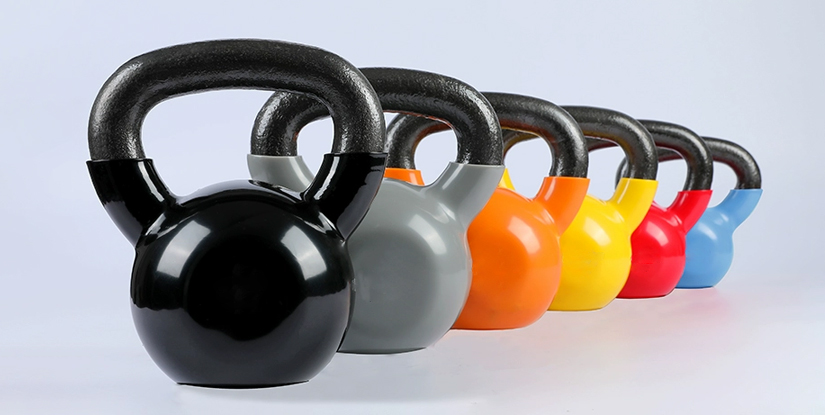
A professional commercial kettlebell OEM process begins with weight calibration and material integrity checks. During pre-shipment inspection, technicians typically verify the weight tolerance of each batch to ensure consistency across the entire wholesale order. This prevents the logistical headache of receiving underweight or overweight units that fail to meet professional gym standards. Beyond weight, the factory must also inspect the coating adhesion on the handle and body to prevent premature peeling during heavy commercial use.
To safeguard the investment of global buyers, specialized export packaging is mandatory. Because kettlebells are high-density, heavy-duty items, they require reinforced solutions to survive sea freight durability requirements. Standard protocols involve heavy-duty corrugated cartons, corner protectors, and palletization to prevent impact damage during transit. Proper wholesale kettlebell production planning must account for these packaging dimensions to optimize container loading efficiency and reduce overall shipping expenses.
The final stage of wholesale kettlebell production involves rigorous structural and surface validation. A professional kettlebell supply chain manufacturer conducts specific inspections on the handle texture and base flatness to ensure ergonomic safety and stability. For high-end commercial orders, technicians verify the handle-to-body junction and the precision of the knurling to prevent grip failure. Any irregularity in the casting or the coating layer must be identified before the product reaches the final packing stage to avoid costly returns or client dissatisfaction.
For large-scale bulk order logistics, the packaging must be engineered for maximum stability. Each unit is secured within a heavy-duty carton, often utilizing custom dividers to prevent metal-on-metal friction. Once boxed, the units undergo palletization, where they are stacked and shrink-wrapped to withstand the mechanical stresses of sea freight. This systematic approach to shipping safety ensures that your inventory arrives at the warehouse in optimal condition, protecting your margins and ensuring the reliability of your brand identity in the international market.
Optimizing Shipping Costs Through Packaging Selection
Strategic procurement requires balancing protection with the total landed cost. Depending on your shipping distance and the sensitivity of your target market, selecting the appropriate packaging level is essential for maintaining distributor margins. A professional kettlebell supply chain manufacturer provides tiered options to accommodate different logistics requirements, from short-haul regional distribution to long-distance transoceanic sea freight.
| Packaging Tier | Primary Use Case | Protection Level | Logistics Benefit |
|---|---|---|---|
| Standard Bulk | Regional distribution or short-haul land freight | Basic corrugated carton with minimal dividers | Maximum volume density for lower shipping costs |
| Commercial Export | Standard international sea freight and ocean transit | Reinforced double-wall cartons with internal separators | High stability for bulk order shipments |
| Premium Protection | Long-distance global export and high-end retail distribution | Heavy-duty reinforced boxing with palletization and shrink-wrap | Maximum sea freight durability for high-value inventory |
When managing wholesale kettlebell production for international markets, we recommend the Commercial or Premium tiers to mitigate the risks of heavy-duty transit. Using optimized palletization and custom dividers not only protects the coating and handle integrity but also improves container loading efficiency. For buyers focused on long-term ROI, investing in superior export-grade packaging reduces the likelihood of transit-related damage, ensuring that your commercial kettlebell OEM inventory arrives ready for immediate commercial sale.
Optimizing Sourcing Strategy for Global Distributors
For international importers and large-scale distributors, selecting a professional kettlebell supply chain manufacturer is a critical decision that directly impacts long-term profitability and market positioning. Relying on a stable kettlebell supply chain manufacturer allows you to secure consistent weight tolerances and surface finish quality, which are essential for maintaining professional brand reputation in the commercial fitness sector.
A fragmented procurement process often leads to high landed cost through unexpected shipping delays or inconsistent product quality. By establishing a direct relationship with a China factory that specializes in wholesale kettlebell production, distributors can better manage their distributor margin. Strategic sourcing from a dedicated supplier ensures that MOQ requirements align with your warehouse capacity and that lead time fluctuations do not disrupt your seasonal inventory cycles.
Whether you are looking for a commercial kettlebell OEM partner to develop a private label line or requiring high-volume wholesale replenishment, understanding the underlying production capabilities is vital. A professional factory provides the transparency needed to validate OEM or ODM requests, ensuring that the final product meets the durability standards required by premium commercial gym operators.
Evaluating Sourcing Models for Scalability and Margin
Distributors must differentiate between sourcing from a direct production facility versus a middleman to protect their bottom line. While trading companies may offer smaller quantities, a professional kettlebell supply chain manufacturer provides the structural advantages necessary for high-volume expansion and consistent branding. The following comparison outlines the standard metrics used to evaluate different procurement paths.
| Sourcing Model | Primary Focus | Production Control | Customization Capability | Typical MOQ | Logistics & Cost Efficiency |
|---|---|---|---|---|---|
| Direct Factory | Scale and Margin | Full oversight of casting and coating | High (Full OEM/ ODM support) | Higher/Volume-based | Optimized for container loading |
| Trading Company | Variety and Low Volume | Limited to finished product inspection | Low (Mostly stock items) | Lower/Flexible | Higher landed cost per unit |
When refining your sourcing strategy, prioritize partners who offer transparency in their manufacturing sequence—from the initial sand casting to the final powder coating or PU encapsulation. For those aiming for premium market positioning, a commercial kettlebell OEM partner can facilitate custom handle textures or specialized logo embossing, ensuring your brand identity remains distinct. We recommend requesting a detailed spec sheet and confirming the MOQ for custom colors or specialized coatings before finalizing your bulk order to ensure optimal warehouse turnover and predictable lead times.
To ensure long-term commercial success, distributors should move beyond simple price-per-unit calculations and evaluate the technical reliability of the kettlebell supply chain manufacturer. A high-performing commercial kettlebell OEM partner does more than just fulfill orders; they provide the technical infrastructure to support your brand's growth through specialized production capabilities and rigorous quality assurance.
The complexity of wholesale kettlebell production—ranging from the precision of the casting mold to the adhesion of the final powder coating—requires a partner who understands the nuances of export-grade requirements. When you engage with a professional factory, you gain access to standardized production workflows that mitigate the risks of weight deviation and surface defects. This level of control is essential for maintaining high margins and reducing the frequency of customer returns or replacement claims in the professional fitness market.
Before finalizing your next procurement cycle, we recommend conducting a thorough evaluation of a potential supplier. This includes requesting a sample for physical inspection, verifying the specific MOQ for custom branding requests, and discussing potential lead time-saving strategies for large-scale container shipments. Establishing these technical benchmarks early ensures that your inventory meets the durability and aesthetic standards expected by high-end commercial clients.