Machined Cast Iron Plates: a Procurement Quality Checklist
Optimizing SKU Breadth and Inventory Turnover for Distributors
Machined cast iron plates are precision-engineered weights used in high-end commercial strength equipment to ensure uniform thickness and concentricity. B2B buyers prioritize these precision machined iron plates because they offer the durability required for heavy-duty gym use while maintaining the strict tolerances necessary for professional barbell compatibility.
Balancing Variety with Inventory Carrying Costs
For distributors, managing the relationship between SKU breadth vs. turnover is a critical financial lever. While offering a wide range of weights improves service levels, over-extending your catalog with niche sizes can significantly increase inventory carrying costs. When sourcing, it is more profitable to master a core set of high-demand weights that strictly adhere to standard commercial weight plate specifications. By focusing on high-velocity items, you reduce the capital tied up in slow-moving stock while ensuring that your machined cast iron plates meet the rigorous quality expectations of your commercial clients.
To maximize warehouse ROI, procurement managers must decide whether to stock a diverse assortment of niche weights or a streamlined selection of high-volume essentials. This decision impacts your shipping frequency, storage density, and overall capital efficiency.
| Strategy Type | Primary Focus | Weight Increments | Storage Footprint | Logistics Efficiency |
|---|---|---|---|---|
| High-SKU Variety | Specialized/Boutique Gyms | Fractional & Niche Sizes | High (Diverse SKU spacing) | Lower (Complex picking) |
| Standardized High-Turnover | Commercial Strength Hubs | Standard Metric/Imperial | Low (Uniform stacking) | High (Bulk palletized) |
Standardized models that follow industrial cast iron machining standards typically offer a much higher turnover rate. By prioritizing these high-velocity weights, distributors can optimize pallet density and reduce the lead time for large-scale facility replenishment orders.
The Cost of Tolerances and Surface Consistency
A critical procurement decision involves weighing the initial unit price against the long-term durability and maintenance requirements. Neglecting surface finish consistency can lead to premature oxidation or abrasive wear, which increases replacement cycles for facility owners. Furthermore, slight deviations in thickness can have a major tolerance impact on logistics, as non-uniform dimensions often result in unstable stacking and damaged packaging during transit.
To achieve optimal ROI, buyers should seek MOQ optimization by bundling high-precision items with standard stock. Investing in higher-grade machined cast iron plates reduces the frequency of returns and service calls, ultimately lowering the total cost of ownership. Rather than chasing the lowest entry price, prioritize manufacturers that demonstrate strict adherence to industrial cast iron machining standards to protect your long-term margins and brand reputation.
Evaluating Precision Machining and Tolerance Standards
For distributors and gym facility managers, the long-term durability of strength equipment depends heavily on the dimensional stability of the components. When sourcing machined cast iron plates, the precision of the machining process directly dictates how the plates stack, balance, and endure high-volume commercial usage.
The Impact of Machining Accuracy on Longevity
High-quality precision machined iron plates must adhere to strict commercial weight plate specifications to ensure seamless integration with barbell sleeves and storage racks. Inconsistent thickness or uneven edges can lead to mechanical wear and premature degradation of both the plates and the bar. Beyond basic shape, a controlled surface roughness is essential; a smooth, consistent finish prevents friction-induced damage and ensures that the weight remains stable during heavy lifts, reducing the frequency of replacement cycles for the end user.
Selecting the appropriate level of machining precision involves a trade-off between production cost and the rigorous demands of the end-user environment. While standard finishes may suffice for basic fitness centers, professional-grade facilities require tighter tolerances to prevent mechanical imbalance and long-term wear on premium barbell sleeves.
Machining Standards Comparison Table
| Precision Level | Surface Finish (Ra) | Typical Commercial Application | Procurement Focus |
|---|---|---|---|
| Standard | > 6.3 μm | Local commercial gyms & hotel fitness centers | Cost-efficiency & high MOQ availability |
| Precision | 3.2 – 6.3 μm | Full-service strength & conditioning clubs | Consistent stacking & durability |
| High-Tolerance | < 3.2 μm | Professional lifting facilities & competition venues | Extreme dimensional stability & sleeve protection |
When evaluating factory capability, request specific industrial cast iron machining standards regarding edge beveling and center hole concentricity. High-tolerance plates ensure that the weight distribution remains uniform, which minimizes the mechanical vibration that often leads to premature equipment fatigue in high-traffic strength training environments.
Verifying Durability Through Quality Control
To secure a high return on investment, procurement managers must move beyond surface-level visual checks. During a QC inspection or factory audit, verify that the supplier monitors dimensional deviation across entire production batches. A critical procurement checklist item should include a test for thickness uniformity; plates with fluctuating profiles create uneven load distributions that compromise the structural integrity of barbell systems over time.
Ensuring compliance with industrial cast iron machining standards prevents the common issue of "wobble" in high-traffic facilities. When auditing a factory, ask for documentation regarding their tolerance testing protocols. Confirming that the machined cast iron plates maintain strict concentricity and edge consistency will protect your long-term durability targets and reduce the overhead costs associated with premature equipment replacement or client complaints regarding gear stability.
Surface Finish Integrity and Long-Term Oxidation Control
The surface texture of machined cast iron plates directly dictates their long-term durability in high-traffic environments. A controlled surface finish acts as the first line of defense against environmental degradation, ensuring the equipment remains a reliable asset rather than a maintenance liability.
Managing Surface Roughness and Oxidation
When sourcing precision machined iron plates, procurement managers must evaluate the specified surface roughness (Ra) values. A consistent, smooth finish is critical for oxidation control; overly porous or irregular surfaces provide microscopic entry points for moisture, which accelerates rust formation. In demanding commercial gym settings, where humidity and frequent handling are standard, maintaining a precise surface profile reduces the frequency of cleaning cycles and prevents the aesthetic degradation often seen in lower-grade industrial castings. Establishing a strict standard for surface smoothness during the factory inspection process ensures the longevity of the shipment and lowers the total cost of ownership for the end-user.
Choosing the right coating involves a strategic trade-off between initial procurement costs and the long-term labor required for upkeep. Depending on whether you are supplying a boutique studio or a high-volume commercial facility, your choice of surface treatment will impact both the shipment's aesthetic longevity and the maintenance frequency expected by the end-user.
Comparing Surface Treatment Options
| Treatment Type | Durability Level | Maintenance Frequency | Cost Impact | Industrial Standard Alignment |
|---|---|---|---|---|
| Raw Machined | Low (Prone to Oxidation) | High (Regular Oil/Wipe) | Lowest | Basic Machining Standards |
| E-coating | Moderate | Medium | Mid-Range | Precision Industrial Standards |
| Powder Coating | High (Impact Resistant) | Low | Highest | Advanced Commercial Specifications |
For distributors focusing on high-volume, cost-effective inventory, raw machined finishes offer the lowest MOQ impact but require more rigorous moisture control during shipping. Conversely, facilities prioritizing low operational overhead should opt for powder-coated finishes, as the superior barrier protection significantly mitigates the risks of surface corrosion in humid environments.
Quality Control and Inventory Preservation Protocols
Effective procurement extends beyond the initial purchase to include rigorous receiving inspections and systematic storage. To protect your investment, implement a standardized QC checklist that validates both the dimensional accuracy and the physical condition of each unit upon arrival.
A robust inspection protocol should focus on verifying that the commercial weight plate specifications match the purchase order, specifically checking for edge burrs, concentricity, and surface defects. Once verified, move inventory into controlled environments. To mitigate oxidation risks, ensure all shipments utilize moisture-resistant packaging, such as VCI (Volatile Corrosion Inhibitor) films or heavy-duty poly-wrapping. Store all inventory in climate-controlled or low-humidity areas to prevent the structural degradation of untreated surfaces. These disciplined storage protocols are essential for reducing the TCO (Total Cost of Ownership) by minimizing replacement cycles and long-term maintenance overhead.
Dimensional Consistency Across Bulk Weight Increments
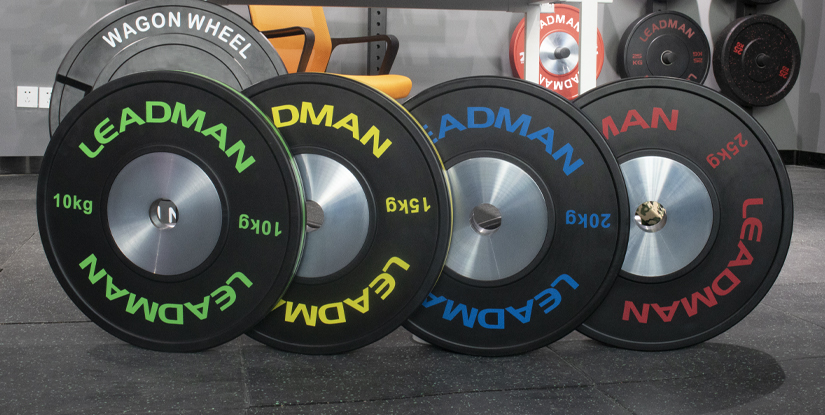
When sourcing high-volume orders, the physical profile of each unit is as critical as its mass. Precision in the machining process ensures that machined cast iron plates maintain a uniform thickness and diameter regardless of the weight increment. This dimensional consistency is a fundamental requirement for professional facility layouts where space optimization is a priority.
Inconsistent thickness across a weight set leads to uneven loading on barbell sleeves and, more critically, compromises stacking stability. For distributors and gym owners, plates with irregular profiles create "wobble" in storage trees or vertical racks, increasing the risk of mechanical wear or accidental tipping. Adhering to strict commercial weight plate specifications ensures that heavy fractional increments stack flush, maximizing vertical storage density and long-term safety.
| Procurement Factor | Standard Cast Iron | Precision Machined Plates |
|---|---|---|
| Stacking Profile | Variable thickness | Uniform thickness |
| Storage Stability | Moderate risk of leaning | High stability for vertical stacking |
| Long-term TCO | Higher maintenance/replacement | Lower maintenance/extended life |
| Barbell Loading | Potential uneven weight distribution | Balanced load distribution |
Optimizing Facility Footprint Through Precision
The relationship between machining tolerances and logistical efficiency is often overlooked during the initial RFQ process. While standard casting may meet weight requirements, the lack of dimensional uniformity can degrade your facility's organization over time. High-quality precision machined iron plates provide a predictable geometric profile, which is vital for managing high-density storage environments.
For wholesalers and large-scale distributors, the cumulative effect of slight deviations in thickness becomes apparent when managing inventory. If the profiles are not perfectly flat, the effective stacking height per rack decreases, and the storage footprint expands due to the inability to nest units tightly. Aligning with rigorous industrial cast iron machining standards helps mitigate these hidden logistical costs.
| Metric Impact | Standard Casting Tolerance | Precision Machined Iron Plates |
|---|---|---|
| Stacking Height Efficiency | Reduced due to uneven gaps | Maximum vertical density |
| Storage Footprint | Larger area required for stability | Optimized for compact layouts |
| Rack Load Uniformity | Variable center of gravity | Consistent center of gravity |
| Procurement Cost/Value | Lower upfront; higher logistical friction | Higher upfront; optimized TCO |
When calculating your shipping volume and warehouse capacity, factor in these dimensional variances. Investing in higher-spec machining ensures that your bulk shipments arrive with a profile that supports both high-density vertical storage and stable, long-term facility management.
Verifying Production Capability and Storage Durability
Successful procurement extends beyond the initial RFQ to the actual factory inspection. To ensure long-term durability in high-traffic environments, buyers must look past the sample and evaluate the manufacturer's broader operational infrastructure. A high-quality supplier should demonstrate a facility layout designed for precision, where CNC machining stations are clearly segregated from raw casting areas to prevent contamination and dimensional drift.
During site visits or third-party audits, verify the manufacturer's QC protocols regarding surface finish and edge beveling. Consistent machining prevents the "burring" that often leads to premature wear on storage pegs and barbell sleeves. Furthermore, confirm that the factory can meet your specific MOQ without compromising on the precision machined iron plates' surface integrity. A robust maintenance schedule for their machining equipment is a key indicator of whether the supplier can consistently deliver high-spec batches that remain stackable and stable for years.
Mitigating Common Sourcing Errors in Industrial Casting
The Hidden Cost of Low-Precision Bids
When sourcing machined cast iron plates, the lowest initial unit price often masks significant long-term liabilities. Procurement teams frequently encounter budget overruns when a supplier lacks the technical capacity to maintain strict dimensional stability. Relying on substandard precision machined iron plates can lead to catastrophic tolerance errors, resulting in uneven weight distribution or poor fitment on high-end barbell sleeves.
These technical discrepancies trigger substantial rework costs and logistical headaches. If a bulk shipment arrives with inconsistent specifications, the expense of returns, replacement manufacturing, and delayed distribution can far exceed the initial savings. Prioritizing cost-efficiency through verified factory capability ensures that your investment in machined cast iron plates delivers predictable performance rather than expensive corrective cycles.
Surface Finishes and Total Cost of Ownership
Evaluating the relationship between industrial cast iron machining standards and long-term durability is essential for calculating the true Total Cost of Ownership (TCO). While basic finishes offer a lower entry price, they may increase maintenance frequency or reduce the lifespan of the product in high-traffic commercial settings. Selecting the appropriate finish allows distributors to balance initial procurement budgets with the expected longevity of the equipment.
| Finish Type | Typical Application | Cost Impact |
|---|---|---|
| Raw Machined Surface | Budget-friendly training facilities | Lowest initial cost; higher oxidation risk |
| Bead Blasted / Sanded | Standard commercial strength equipment | Moderate; improved surface uniformity |
| Powder Coated | High-end boutique or premium gyms | Higher upfront; superior corrosion resistance |
| Precision Polished | Specialized precision weight sets | Highest cost; maximum durability and fit |
A smart procurement strategy involves weighing these commercial weight plate specifications against the intended facility environment. For instance, high-humidity regions necessitate a more robust coating to avoid premature degradation, even if it requires a higher MOQ or higher unit price to justify the investment.
Optimizing Bulk Procurement and Logistics
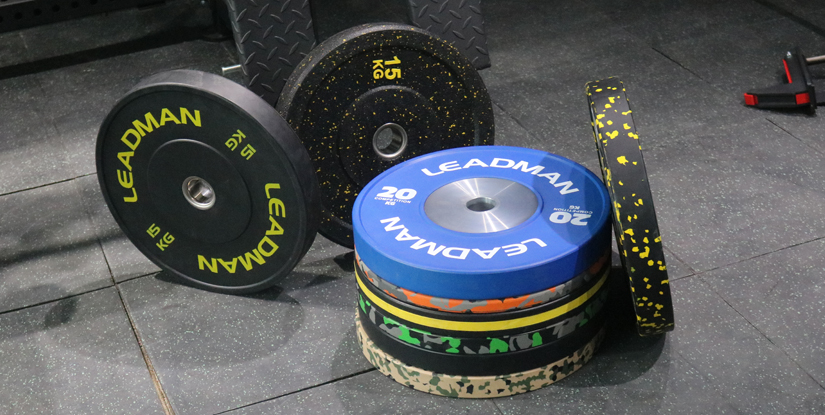
To avoid the friction of fragmented shipments, professional buyers must align their procurement cycles with realistic MOQ requirements. When ordering machined cast iron plates, the weight-to-volume ratio is a critical factor in your landed cost. Because iron is a high-density material, maximizing container density is the most effective way to achieve logistics optimization.
Avoid the trap of small, frequent orders that inflate freight expenses per unit. Instead, leverage bulk procurement strategies that focus on full container loads. By coordinating your order volume to match standard shipping dimensions, you reduce the dead space that often leads to inefficient shipping volume utilization. This structured approach ensures that your commercial weight plate specifications are met without the disproportionate overhead of high-frequency, low-volume international transit.
Logistics and Packaging Requirements for High-Density Iron Goods
High-density machined cast iron plates require specialized logistical handling to maintain their precision tolerances and surface integrity. Unlike standard cast products, the high-grade finishes on these items are susceptible to environmental degradation if the packaging protocols do not meet industrial cast iron machining standards.
Oxidation Prevention and Moisture Protection
During long-haul sea freight, even brief exposure to humidity can compromise the surface of machined cast iron plates. To ensure products arrive in showroom condition, manufacturers must implement rigorous moisture protection. This typically involves applying a high-quality, rust-resistant coating or a thin layer of industrial protective oil before sealing the units. Without these preventative measures, oxidation can mar the precision surfaces, leading to rejection during quality control inspections upon arrival at your facility.
Transit Durability and Structural Integrity
The sheer weight of bulk orders poses a significant risk of physical impact damage. High-density shipments require heavy-duty, reinforced packaging designed for transit durability. Utilizing custom-fit palletization and shock-absorbent dividers prevents metal-on-metal contact, which can chip edges or deform the precision-machined dimensions. For distributors and large-scale gym suppliers, verifying that the factory utilizes reinforced crates and stabilized pallet layouts is a critical step in mitigating the risk of damaged inventory during international transit.
Selecting the Right Configuration for Your Scale
Choosing between standard and premium packaging depends largely on your business model and storage duration. Distributors managing high-volume inventory typically require more robust protection to safeguard against long-term warehouse environmental shifts, whereas gym owners may prioritize cost-effective logistics for single-order shipments.
| Configuration Type | Protection Level | Primary User Base | Palletization & Logistics |
|---|---|---|---|
| Standard Bulk | Basic moisture barrier; anti-rust oil coating | Boutique Gyms & Studio Owners | Standard wooden pallets; manual or forklift loading |
| Premium Industrial | Double-layer VCI film; heavy-duty reinforced crates | Distributors & Large-Scale Wholesalers | Stabilized, heat-treated pallets; high-density stacking |
When evaluating commercial weight plate specifications for your procurement order, always confirm the palletization method. High-density shipments must be structurally stabilized to prevent shifting. For international distributors, requesting reinforced crate packaging is a necessary investment to ensure that precision-machined surfaces remain intact from the factory floor to the final retail shelf.
Warehouse Management and Long-Term Storage Protocols
Once the shipment arrives, maintaining the quality of precision machined iron plates requires strict facility layout considerations. To prevent surface degradation, warehouses must prioritize humidity control, as fluctuating moisture levels can trigger oxidation on exposed metal. For long-term inventory, we recommend vertical vs. horizontal storage assessments based on your shelving capacity. While horizontal stacking is common, excessive weight in high-density piles can compromise stackability and even deform lower layers. Efficient inventory turnover is essential; ensure your stock rotation follows a strict first-in, first-out protocol to minimize the duration these machined surfaces remain in a single warehouse environment.
Verification Protocols for Incoming Quality Control
Effective incoming quality control (IQC) for machined cast iron plates must bridge the gap between raw casting and final assembly. For distributors, ensuring that the transition from the foundry to precision machining maintains strict dimensional tolerance is critical for preventing compatibility issues during high-volume gym installations.
Prioritizing Surface Integrity and Durability
A rigorous inspection protocol focuses on the surface integrity of precision machined iron plates to mitigate long-term wear. Buyers should verify that the machining process has eliminated casting flash and surface porosity, as these defects often lead to structural fatigue. In high-traffic commercial settings, consistent thickness and concentricity are non-negotiable to uphold commercial gym durability and prevent uneven weight distribution on barbell sleeves.
To prevent costly returns or equipment failure, procurement teams should implement a technical checklist that goes beyond simple weight verification. Verifying industrial cast iron machining standards requires a focus on the mechanical stability of the unit under load.
Technical Inspection Checklist
When conducting batch sampling, inspectors should utilize precision tools to validate the following critical metrics:
- Flatness and Concentricity: Use a surface plate to ensure the plate face is perfectly level and that the central bore is centered. Poor concentricity creates vibration and uneven wear on barbell sleeves.
- Surface Roughness: Inspect the contact surfaces for an even finish. Excessive roughness or pitting can indicate poor machined cast iron plates quality, leading to decreased load-bearing stability.
- Structural Integrity: Use high-intensity lighting to scan for micro-cracks or thermal stress fractures that often occur during the cooling phase of production.
Failure to audit these dimensions can result in unbalanced lifting environments, a significant liability for commercial strength facilities.
Selecting the appropriate tolerance level depends heavily on the intended application and the expected operational intensity of the facility. A higher grade of precision is essential for professional training environments where equipment lifespan and user safety are paramount.
Tolerance Requirements by Usage Intensity
| Inspection Parameter | Standard Use (Boutique/Home Gym) | High-Impact Use (Commercial/Competition) |
|---|---|---|
| Thickness Tolerance | ± 1.5% to 2% deviation | ± 0.5% to 1% deviation |
| Bore Diameter | Standard fit for 50mm sleeves | Precision concentricity for high-speed rotation |
| Surface Finish | Smooth, non-porous finish | High-grade, polished industrial finish |
| Edge Profile | Beveled for basic handling | Uniform, precision-tapered edges |
When negotiating MOQs with manufacturers, clarify whether the production line utilizes CNC machining or basic casting molds. For large-scale distributors, requesting a higher specification for machined cast iron plates in high-impact zones reduces long-term maintenance costs and prevents premature wear on premium barbell sleeves.