Olympic Weight Plate Distributor: Material and Specs Guide
Essential Material and Specification Standards for an Olympic Weight Plate Distributor
Reliability in high-volume procurement begins with understanding the fundamental physical properties of the goods being imported. For any professional olympic weight plate distributor, the primary risks involve inconsistent weight tolerances, uneven surface finishes, and premature material degradation that increases long-term maintenance costs. Successful commercial weight plate sourcing requires a rigorous evaluation of how base materials like cast iron or steel interact with surface coatings to ensure long-term durability in high-traffic gym environments. By verifying the manufacturing sequence—from initial casting to final calibration—importers can mitigate the risk of receiving substandard batches that damage brand reputation and increase landed costs.
The structural integrity of a plate is determined by its core material and the precision of its machining. High-quality wholesale olympic plates typically utilize high-grade gray iron or solid steel to ensure consistent density and impact resistance. During the production cycle at a professional China factory, the transition from raw casting to a finished product involves several critical steps, including bore machining to ensure the center hole is perfectly concentric and surface treatment to prevent oxidation. A failure in these early stages often leads to uneven wear or weight discrepancies that can disqualify a shipment during a pre-shipment inspection.
Material and Manufacturing Tier Comparison
Understanding the technical distinctions between different product tiers allows for better inventory planning and margin management. The following table outlines the standard material and process variations encountered during olympic weight plate manufacturing.
| Material | Surface Finish | Core Process | Commercial Duty | QC Focus Point |
|---|---|---|---|---|
| Cast Iron | Powder Coating | Sand Casting & Machining | Standard Commercial | Coating Adhesion |
| Steel | Rubber or Urethane | Steel Hub & Injection Molding | Premium/High-Impact | Edge Seam Integrity |
| Solid Steel | Chrome or Enamel | Precision Machining | Competition Grade | Bore Concentricity |
Technical Precision in Sourcing and Quality Control
Beyond the basic material selection, the technical execution of the finishing process dictates the longevity of the product. For example, when a olympic weight plate distributor evaluates a batch of rubber-coated or urethane-encapsulated plates, they must look beyond the surface aesthetics. A critical inspection point is the bonding integrity between the internal steel hub and the external coating layer. In many commercial settings, poor vulcanization or improper molding can lead to delamination, which significantly increases the replacement rate for the end-user and negatively impacts the distributor's TCO (Total Cost of Ownership) calculations.
During the final stages of olympic weight plate manufacturing, the weight calibration and concentricity check are the most vital steps for ensuring professional-grade performance. A professional China factory will typically employ a sequence that includes centrifugal casting or high-precision CNC machining to ensure the center bore remains perfectly circular. This prevents the plate from wobbling on the barbell, a common failure mode in lower-tier, non-calibrated units. When conducting a pre-shipment inspection, importers should request data or visual confirmation regarding the weight tolerance bands and the smoothness of the bore edges to ensure compatibility with high-end Olympic barbells.
To maintain high margins and minimize after-sales claims, we recommend that buyers request a sample evaluation for each new specification. Whether you are pursuing an OEM or ODM agreement, confirming the specific thickness of the coating and the precision of the weight-marking embossment is essential. This technical due diligence ensures that your bulk orders arrive with the structural integrity required for high-performance commercial environments, protecting both your brand identity and your landed cost efficiency.
Comparing Material and Manufacturing Routes for Commercial Use
Selecting the right material profile is a critical sourcing decision for any olympic weight plate distributor looking to balance durability with landed cost. When managing high-volume orders from a China factory, understanding the trade-offs between weight stability and impact resistance is essential for long-term commercial viability.
A professional olympic weight plate distributor must differentiate between standard cast iron units, designed for static strength and cost-efficiency, and high-performance rubber bumper or polyurethane (PU) plates intended for high-impact environments. Choosing the wrong specification can lead to increased maintenance costs and premature floor damage, impacting your overall commercial weight plate sourcing ROI.
| Material Type | Primary Process | Commercial Duty Tier | Durability Profile | Sourcing Context |
|---|---|---|---|---|
| Cast Iron | Sand Casting & Machining | Budget / Standard Commercial | High density; best for static lifting | Ideal for high wholesale volume |
| Rubber Bumper | Compression Molding | Premium / High-Impact | Excellent shock absorption | Standard for CrossFit/Olympic training |
| Polyurethane (PU) | Injection Molding | Elite / Professional | Highest abrasion resistance | Top-tier commercial weight plate sourcing |
For distributors focusing on wholesale olympic plates for traditional strength gyms, cast iron remains the industry standard due to its predictable manufacturing route and lower MOQ requirements. However, for premium studio operators, the transition toward polyurethane (PU) coatings offers a significant advantage in protecting facility flooring and extending the lifecycle of the equipment under heavy use.
Technical Specifications and Surface Treatments
When evaluating the technical integrity of a batch, a professional olympic weight plate distributor must look beyond the surface to the underlying manufacturing sequence. The durability of the product is often determined by the transition from the primary casting phase to the final surface treatment. For instance, the transition from sand casting to a precision-machined bore is a critical step that ensures the plate remains concentric and fits standard Olympic bars without excessive play.
In many commercial weight plate sourcing scenarios, the choice between a powder coating and a specialized coating like PU affects both the aesthetic longevity and the maintenance load of the facility. While powder coating provides a robust, textured finish that resists chipping in high-traffic strength gyms, a high-grade coating offers superior resistance to moisture and chemical cleaners, making it a preferred specification for high-end commercial environments. Understanding these technical nuances allows an olympic weight plate distributor to better advise clients on the total cost of ownership and long-term durability.
To ensure high-quality standards, we recommend that all buyers perform a pre-shipment inspection focusing on the following technical checkpoints: verify the bore smoothness, check the coating adhesion through a spot-check, and confirm the weight tolerance across a random sample of the shipment. If you are planning a large-scale rollout, please contact us to request a detailed spec sheet or to discuss your specific MOQ and customization requirements for your next bulk order.
Manufacturing Processes and Precision Machining Requirements
Selecting a reliable olympic weight plate distributor requires a deep understanding of how manufacturing precision impacts long-term commercial utility. For importers, the difference between a high-performing batch and a high-maintenance liability lies in the technical execution of the production line. A professional olympic weight plate distributor must ensure that every unit meets strict commercial quality standards to prevent uneven loading or frequent replacement cycles in high-traffic facilities.
In high-volume commercial weight plate sourcing, the manufacturing sequence typically follows a rigorous path from raw material to finished product. A standard China factory workflow begins with sand casting or centrifugal casting of the iron core, followed by precision machining of the center bore to ensure concentricity. Without high-grade precision machining, the plates may exhibit uneven weight distribution or imperfect fit on the barbell sleeve, which increases wear on expensive commercial bars and reduces the lifespan of the equipment. For those managing wholesale olympic plates orders, verifying these technical steps is essential for maintaining consistent product quality and protecting your distributor margins.
Standard Production Workflow and Technical Specifications
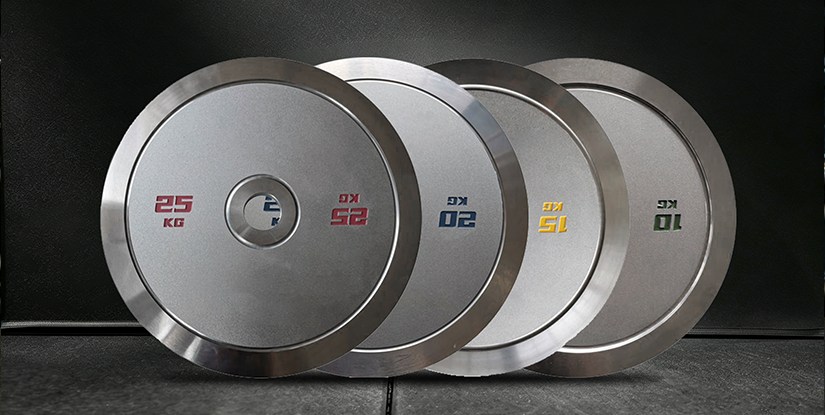
A professional manufacturing sequence is vital for maintaining the structural integrity of high-density plates. The process typically begins with high-grade sand casting to create the primary iron body, followed by a critical CNC machining stage. This machining ensures the center bore is perfectly centered and smooth, a requirement for any professional olympic weight plate distributor looking to supply premium facilities. After the core is shaped, the plates undergo surface treatment—such as powder coating or rubber encapsulation—to ensure durability and prevent oxidation during long-term storage or transit.
To assist in your procurement planning, the following table outlines the qualitative differences between common production tiers found during commercial weight plate sourcing. This helps buyers align their budget with the intended commercial application and expected durability.
| Material Tier | Primary Process | Key Component Focus | Commercial Use Case | QC Inspection Point |
|---|---|---|---|---|
| Cast Iron | Sand Casting & Paint | Surface Coating Adhesion | Standard Commercial Gyms | Weight Spot-Check |
| Rubber Coated | Molding & Vulcanization | Rubber-to-Iron Bonding | High-Traffic Training Centers | Edge Smoothness |
| Steel/Competition | CNC Machining & Precision Finishing | Bore Concentricity | Professional Training/Events | Bore Fit & Balance |
When managing wholesale olympic plates orders, we recommend focusing on the pre-shipment inspection of the center bore and the quality of the surface finish. For high-end distributors, verifying the thickness and adhesion of the coating is a necessary step to avoid common failure modes like peeling or rust, which can increase maintenance costs for the end-user. We suggest requesting a sample or a detailed technical spec sheet to confirm these manufacturing standards before finalizing your bulk order or olympic weight plate manufacturing contract.
Critical Quality Control and Pre-Shipment Inspection for China Factory Exports
For any professional olympic weight plate distributor, the cost of a single defective batch can outweigh the initial savings of low-cost sourcing. Inconsistent weight distribution or poor surface finish leads to high return rates and damaged brand reputation among gym operators. To maintain high margins and long-term reliability, importers must move beyond basic pricing and focus on rigorous technical standards during the commercial weight plate sourcing process.
A reliable China factory does not merely ship products; they implement a multi-stage verification system to ensure every unit meets commercial-grade expectations. This includes checking the precision of the center bore, the adhesion of the coating, and the overall concentricity of the plate. Without a structured pre-shipment inspection, distributors risk receiving shipments with uneven weight distribution or fragile surface treatments that fail under heavy commercial use.
Standardizing Quality in Olympic Weight Plate Manufacturing
Successful olympic weight plate manufacturing requires a strict sequence of casting, machining, and finishing. For high-volume wholesale olympic plates, the quality is often determined by how well the manufacturer manages the transition from raw casting to the final calibrated product. Buyers should prioritize suppliers who provide transparency regarding their calibration and coating processes to ensure a lower total cost of ownership (TCO) for their end clients.
| Material Type | Surface Finish | Primary Process | Commercial Duty | Factory QC Point |
|---|---|---|---|---|
| Cast Iron | Powder Coating | Sand Casting & Machining | Standard Commercial | Coating Adhesion |
| Steel | Chrome or Paint | Precision Machining | Premium/Competition | Weight Tolerance |
| Rubber/PU | Encapsulation | Molding & Vulcanization | High-Impact/Bumper | Edge Bonding |
When evaluating a potential supplier, it is essential to confirm if their quality control covers logistics safety as well. This includes inspecting the thickness of export packaging and the durability of carton corners to prevent damage during long-distance sea freight. A professional factory will offer detailed documentation on these steps to minimize the risk of arrival-stage defects.
Technical Inspection Checklist for Bulk Orders
To minimize the risk of high return rates, importers must validate specific physical attributes before finalizing the landed cost and shipping arrangements. A professional olympic weight plate distributor should request a technical spec sheet that details the tolerance bands for the center bore and the thickness of the outer coating. For rubber or urethane-coated units, verifying the edge bonding and the uniformity of the encapsulation layer is critical, as improper molding can lead to premature peeling in high-traffic commercial environments.
During the final stages of olympic weight plate manufacturing, the following technical benchmarks should be part of the pre-shipment verification:
- Bore Precision: Ensuring the center hole maintains consistent concentricity to prevent uneven loading on barbell sleeves.
- Coating Adhesion: Testing the bond strength of powder coating or rubber layers to ensure they do not flake or crack under standard impact.
- Weight Calibration: Conducting spot-checks on weight accuracy across the batch to ensure consistency within the agreed-upon commercial tolerance.
- Structural Integrity: Inspecting the casting for surface cracks or air bubbles that could compromise the long-term durability of the plate.
Establishing these protocols early in the sourcing phase allows for more predictable inventory management. When negotiating with a China factory, always clarify the MOQ and expected lead time for both standard stock and OEM custom branding requests. This clarity ensures that your procurement cycle remains efficient and that your distributor margins are protected from unexpected quality-related delays or shipping surcharges.
Optimizing Sourcing Strategy: MOQ, Lead Times, and OEM Capabilities
For a professional olympic weight plate distributor, balancing inventory turnover with reliable supply chain predictability is a constant challenge. Managing high-volume orders requires a deep understanding of how production scale impacts your landed cost and stock availability. Successful commercial weight plate sourcing depends on selecting a partner that can align their manufacturing cycles with your market demand fluctuations.
When engaging with a China factory, the relationship between order volume and operational efficiency becomes highly visible. Larger orders typically allow for better economies of scale, but they also require advanced planning to manage the lead time associated with raw material procurement and specialized coating processes. For instance, high-spec rubberized or PU-coated plates often require longer production windows than standard cast iron units due to the additional vulcanization or molding steps involved.
To maintain healthy distributor margins, it is essential to evaluate the wholesale capacity of your supplier across different product tiers. A robust olympic weight plate manufacturing partner should offer clear MOQ thresholds for both standard stock items and OEM or ODM custom branding requests. Whether you are looking for private label solutions with specific colorways or high-volume shipments of industry-standard plates, understanding these variables ensures you can meet your clients' expectations without unexpected stockouts or inflated shipping costs.
Technical Precision in Customization and Quality Control
Reliability in high-volume procurement is not merely about the final product, but the rigor of the manufacturing sequence. For a professional olympic weight plate distributor, the risk of receiving batches with inconsistent weight or poor surface adhesion can significantly impact long-term TCO and brand reputation. High-tier olympic weight plate manufacturing must follow a disciplined progression: starting with precision sand casting or centrifugal casting, moving through CNC machining for the center bore, and concluding with specialized surface treatments such as powder coating or rubber encapsulation.
To ensure commercial-grade durability, a reliable supplier must implement a multi-stage QC protocol. This includes checking the concentricity of the center hole to ensure a smooth fit on Olympic barbells, verifying the adhesion of the coating to prevent chipping during heavy use, and performing weight tolerance spot-checks across the batch. When pursuing OEM or ODM projects, such as custom branding or specific color requirements, the factory should provide detailed technical specifications for approval before mass production begins. A thorough pre-shipment inspection—focusing on base flatness, coating integrity, and even the durability of the export packaging—is a non-negotiable step for reducing the risk of transit damage and ensuring your landed cost remains predictable.
Sourcing Model Comparison for Procurement Decision-Making
Selecting the right procurement model is critical for optimizing your inventory strategy and maintaining competitive pricing. A professional olympic weight plate distributor must decide between the speed of ready-to-ship stock and the long-term brand value of custom production. Each approach carries different implications for your MOQ, production timelines, and overall landed cost.
| Sourcing Model | Typical Product Type | Customization Level | Lead Time | MOQ Requirement | Primary Business Benefit |
|---|---|---|---|---|---|
| Stock Order | Standard Cast Iron / Painted | Low (Standard Colors/Sizes) | Short (Ready to Ship) | Low | High Inventory Turnover |
| Custom Production | Rubberized / PU / High-Spec | High (Private Label/Color) | Long (Production + QC) | High | Strong Brand Identity |
| OEM / ODM | Full Specification Control | Maximum (Custom Mold/Logo) | Extended (R&D + Batch) | Very High | Market Differentiation |
When evaluating wholesale olympic plates, consider the trade-offs between immediate availability and long-term margin protection. While a stock order allows for rapid replenishment of your catalog, a specialized China factory can offer significant advantages through OEM services, enabling you to build a unique product line that stands out in the commercial market. We recommend requesting a detailed spec sheet and confirming the specific MOQ for any custom branding or specialized material requests before finalizing your procurement plan.
Evaluating Total Cost of Ownership and Long-Term Durability
For a professional olympic weight plate distributor, the initial purchase price is only one component of the long-term financial equation. When managing commercial weight plate sourcing, decision-makers must account for the total cost of ownership, which includes replacement cycles, maintenance requirements, and potential liability from material failure. Selecting a wholesale partner that prioritizes structural integrity over the lowest possible unit cost ensures that your inventory remains a high-value asset rather than a recurring expense.
Low-quality manufacturing often leads to premature defects such as uneven weight distribution, coating delamination, or structural cracks in the cast iron core. For those engaged in commercial weight plate sourcing, these issues translate directly into high replacement costs and diminished trust from end-users like gym owners or studio operators. By vetting the China factory production standards and ensuring rigorous quality control, a distributor can mitigate the risks of shipping damaged or substandard goods, thereby protecting their profit margins and brand reputation.
Material Selection and Technical Specifications
Understanding the distinction between material grades is essential for effective wholesale olympic plates procurement. Most commercial-grade units utilize a sand casting process to create the base weight, which is then subjected to secondary machining to ensure the center bore meets industry-standard concentricity. While budget options often rely on basic paint, premium tiers utilize advanced powder coating or polyurethane encapsulation to increase impact resistance and longevity.
When managing olympic weight plate manufacturing orders, importers must evaluate how specific finishes impact the landed cost and product lifecycle. A higher-tier coating may increase the initial unit price but significantly reduces the frequency of replacement due to rust or surface chipping. A professional olympic weight plate distributor should always request technical details regarding the bonding strength of the coating to the core material to avoid long-term maintenance liabilities.
| Material | Primary Process | Typical Coating | Commercial Duty Tier | Weight Tolerance Profile | QC Focus Point |
|---|---|---|---|---|---|
| Cast Iron | Sand Casting | Paint or Enamel | Budget / Entry-Level | Standard Commercial | Surface Smoothness |
| Cast Iron | Machined Casting | Powder Coating | Mid-Tier Commercial | High Precision | Coating Adhesion |
| Steel / Urethane | Injection Molding | Polyurethane (PU) | Premium / Competition | Strict Calibration | Bore Centricity |
To ensure high-quality olympic weight plate manufacturing, we recommend requesting a sample evaluation or a factory audit before committing to high-volume orders. A reliable supplier will provide transparency regarding their weight tolerance protocols and pre-shipment inspection steps. Contact our team to confirm MOQ requirements, request a detailed specification sheet, or discuss OEM branding options for your next bulk shipment.