Cast Iron Weight Plate Procurement: Production Process
Standardizing Cast Iron Weight Plate Procurement for Commercial Gyms
For large-scale fitness chains and high-traffic strength centers, the reliability of weight sets directly impacts long-term maintenance costs and facility reputation. When managing high-volume inventory, professional buyers must prioritize cast iron weight plate procurement strategies that focus on structural integrity and surface consistency. Unlike boutique studio setups, commercial environments demand equipment that survives constant loading and unloading cycles without premature degradation of the finish or weight accuracy.
Standardization is the foundation of successful commercial weight plate manufacturing. Without strict adherence to industry-standard casting and coating protocols, distributors face increased replacement frequencies and diminished profit margins. A reliable China factory provides the necessary scale to ensure that every batch meets the same dimensional and aesthetic benchmarks, which is critical for maintaining a professional brand image across multiple locations.
Effective gym equipment export QC begins with understanding the material-to-finish workflow. Whether sourcing bare iron for a budget-friendly strength zone or high-grade powder-coated units for a premium facility, the procurement process must validate the stability of the bond between the iron core and the protective layer. This ensures that the plates remain functional and visually consistent throughout their service life in demanding environments.
Manufacturing Processes and Surface Finish Comparison
Selecting the correct manufacturing route is a critical decision in the cast iron weight plate procurement process. For importers, the choice between different casting and coating methods determines the total cost of ownership and the durability of the product in high-traffic environments. A high-quality factory will typically utilize standardized sequences to ensure consistency across large-scale orders.
The most common method for commercial-grade production is sand casting. This process involves pouring molten iron into a sand mold, which creates a robust, heavy-duty plate suitable for high-impact use. Following the casting stage, the plates undergo CNC machining to ensure the center bore is concentric and the weight tolerance is within industry-standard limits. The final step—the surface finish—is where the most significant quality variations occur. For instance, simple paint applications may suffer from poor adhesion, whereas advanced powder coating provides a much more durable, chip-resistant layer that protects the iron core from oxidation and moisture.
| Material Tier | Primary Process | Surface Finish | Commercial Duty | QC Focus Point |
|---|---|---|---|---|
| Standard Cast Iron | Sand Casting | Bare Iron / Phosphate | Budget / Basic Strength | Weight Tolerance |
| Enhanced Cast Iron | Sand Casting | Enamel / Paint | Standard Commercial | Coating Adhesion |
| Premium Cast Iron | Sand Casting + CNC | Powder Coating | High-Traffic / Premium | Bore Concentricity |
When evaluating commercial weight plate manufacturing capabilities, buyers should request technical details regarding the coating application. A reliable supplier will be able to confirm if the powder coating is applied via a professional line to prevent peeling during heavy use. Furthermore, during gym equipment export QC, it is standard practice to perform spot-checks on the bore fit and the surface bond to ensure the plates can be loaded onto Olympic bars without friction issues or finish degradation.
Before finalizing a bulk order, we recommend requesting a sample to verify the coating thickness and the weight consistency. Understanding these technical nuances allows distributors to manage their landed cost effectively while ensuring their clients receive durable, professional-grade equipment.
Critical Inspection Points for Bulk Export Orders
The true cost of a shipment is not just the unit price, but the total landed cost, which includes any expenses related to replacement, shipping damages, or client dissatisfaction. For professional importers, the risk of receiving a batch with uneven surfaces or poorly finished edges can significantly erode distributor margins. This is why a rigorous pre-shipment inspection protocol is mandatory when managing large-scale cast iron weight plate procurement.
A professional China factory focuses on several key inspection points to ensure high-volume orders meet commercial standards. First, the base flatness and concentricity of the center bore must be verified to prevent wobbling during high-intensity training. Second, the coating adhesion is a vital metric; a high-quality finish must resist chipping and peeling when plates are stacked or dropped. Finally, weight spot-checks are essential to ensure that the casting process has maintained the promised weight tolerances across the entire batch. Neglecting these steps often leads to high return rates and increased maintenance loads for the end-user.
To optimize your logistics reliability and minimize unexpected costs, we recommend coordinating with your supplier to establish a clear inspection checklist. This should include a review of the export packaging—ensuring that heavy plates are secured in reinforced cartons to prevent damage during sea freight. Additionally, confirming the MOQ and exact lead time before production begins will help you manage your inventory turnover and warehouse efficiency more effectively. By prioritizing these technical validation steps, you can ensure a smooth transition from the manufacturing floor to your distribution center.
Material Specifications and Surface Finishing Options
Effective cast iron weight plate procurement requires a deep understanding of how base materials dictate long-term commercial durability. For most distributors and gym operators, the primary goal is sourcing units that withstand high-frequency use without surface degradation or structural failure. In the context of large-scale wholesale, the selection between different casting methods and finishes directly impacts the total cost of ownership and the maintenance load for the end-user.
The industry standard for high-volume commercial weight plate manufacturing typically relies on gray iron. This material is processed through sand casting to create a dense, stable plate that is ideal for heavy-duty gym environments. When managing sourcing for a large facility, understanding the relationship between the casting quality and the final coating is essential to avoid common issues like premature oxidation or coating peel.
| Material Base | Standard Process | Surface Finish | Commercial Duty Tier | Maintenance Requirement |
|---|---|---|---|---|
| Gray Iron | Sand Casting | Bare Iron (Phosphate) | Budget Commercial | Low (Occasional Oil) |
| Gray Iron | Sand Casting | Powder Coating | Standard Commercial | Very Low (Highly Resistant) |
| Ductile Iron | Precision Casting | Enamel or Paint | Premium Commercial | Minimal |
When evaluating a supplier, it is vital to verify the gym equipment export QC protocols regarding the bond line between the iron and the coating. A well-executed powder coating process ensures that the plate remains resistant to moisture and physical impact, which is a critical factor for maintaining high asset value in high-traffic commercial settings. Professional buyers should always confirm if the factory utilizes a multi-stage surface treatment to ensure consistent commercial durability across all bulk shipments.
Effective cast iron weight plate procurement requires a deep understanding of how base materials dictate long-term commercial durability. For most distributors and gym operators, the primary goal is sourcing units that withstand high-frequency use without surface degradation or structural failure. In the context of large-scale wholesale, the selection between different casting methods and finishes directly impacts the total cost of ownership and the maintenance load for the end-user.
The industry standard for high-volume commercial weight plate manufacturing typically relies on gray iron. This material is processed through sand casting to create a dense, stable plate that is ideal for heavy-duty gym environments. When managing sourcing for a large facility, understanding the relationship between the casting quality and the final coating is essential to avoid common issues like premature oxidation or coating peel.
| Material Base | Standard Process | Surface Finish | Commercial Duty Tier | Maintenance Requirement |
|---|---|---|---|---|
| Gray Iron | Sand Casting | Bare Iron (Phosphate) | Budget Commercial | Low (Occasional Oil) |
| Gray Iron | Sand Casting | Powder Coating | Standard Commercial | Very Low (Highly Resistant) |
| Ductile Iron | Precision Casting | Enamel or Paint | Premium Commercial | Minimal |
When evaluating a supplier, it is vital to verify the gym equipment export QC protocols regarding the bond line between the iron and the coating. A well-executed powder coating process ensures that the plate remains resistant to moisture and physical impact, which is a critical factor in maintaining high asset value in high-traffic commercial settings. Professional buyers should always confirm if the factory utilizes a multi-stage surface treatment to ensure consistent commercial durability across all bulk shipments.
Effective cast iron weight plate procurement requires a deep understanding of how base materials dictate long-term commercial durability. For most distributors and gym operators, the primary goal is sourcing units that withstand high-frequency use without surface degradation or structural failure. In the context of large-scale wholesale, the selection between different casting methods and finishes directly impacts the total cost of ownership and the maintenance load for the end-user.
The industry standard for high-volume commercial weight plate manufacturing typically relies on gray iron. This material is processed through sand casting to create a dense, stable plate that is ideal for heavy-duty gym environments. When managing sourcing for a large facility, understanding the relationship between the casting quality and the final coating is essential to avoid common issues like premature oxidation or coating peel.
| Material Base | Standard Process | Surface Finish | Commercial Duty Tier | Maintenance Requirement |
|---|---|---|---|---|
| Gray Iron | Sand Casting | Bare Iron (Phosphate) | Budget Commercial | Low (Occasional Oil) |
| Gray Iron | Sand Casting | Powder Coating | Standard Commercial | Very Low (Highly Resistant) |
| Ductile Iron | Precision Casting | Enamel or Paint | Premium Commercial | Minimal |
When evaluating a supplier, it is vital to verify the gym equipment export QC protocols regarding the bond line between the iron and the coating. A well-executed powder coating process ensures that the plate remains resistant to moisture and physical impact, which is a critical factor in maintaining high asset value in high-traffic commercial settings. Professional buyers should always confirm if the factory utilizes a multi-stage surface treatment to ensure consistent commercial durability across all bulk shipments.
The Manufacturing Workflow from Casting to Calibration
Efficient cast iron weight plate procurement requires a deep understanding of the technical sequence used by a professional factory to ensure dimensional stability and weight accuracy. For distributors and large-scale gym operators, the production cycle must move logically from raw material molding to final precision testing to minimize the risk of uneven weight distribution or structural defects in bulk shipments.
The process begins with high-grade sand casting, where molten gray iron is poured into specialized molds to form the base plate shape. This stage is critical for commercial weight plate manufacturing, as the quality of the sand mold determines the surface texture and the integrity of the embossed branding. Following the cooling phase, the plates undergo CNC machining to ensure the central bore is perfectly concentric and meets industry-standard fitment for Olympic barbells. This precision step is vital for reducing friction and wear on high-end barbell sleeves during heavy usage.
Once the structural dimensions are finalized, the plates move to the surface finishing and weight calibration stages. Depending on your OEM specifications, the plates may receive a phosphate treatment or a durable powder coating to prevent oxidation. The final step involves a rigorous gym equipment export QC protocol, where technicians perform weight spot-checks and inspect the bore diameter to ensure every unit in the container meets the agreed-upon tolerances. For a supplier, maintaining this level of consistency is essential to reducing the landed cost of returns and ensuring high distributor margins.
Surface Finishing and Durability Standards
The longevity of a commercial facility depends heavily on the quality of the surface treatment applied during cast iron weight plate procurement. After the casting and machining phases, the plates must undergo a rigorous finishing process to prevent rust and withstand high-traffic environments. Most professional importers opt for a high-grade powder coating or an enamel finish, as these methods provide superior adhesion and a consistent aesthetic for private label collections. A high-quality powder coating process ensures that the plates remain resistant to oxidation and minor impacts, which is a critical factor in maintaining a low total cost of ownership for gym owners.
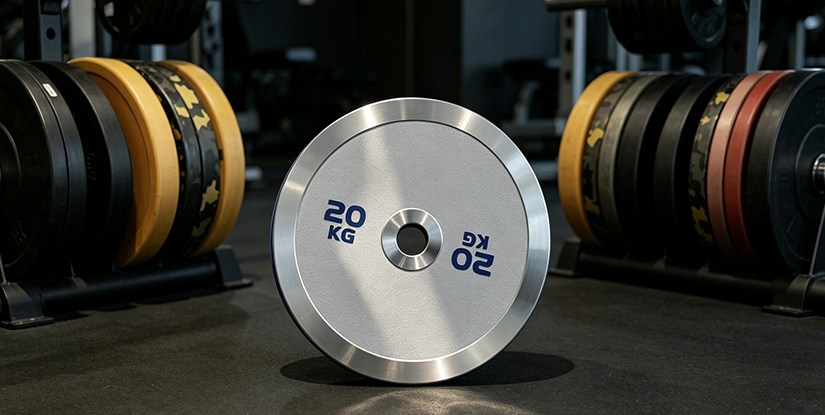
During the final stages of commercial weight plate manufacturing, the consistency of the finish is just as important as the weight itself. If the coating is applied unevenly, it can lead to chipping or unevenness that affects the plate's balance. Therefore, a reliable supplier will implement a systematic inspection of the surface texture and coating thickness. This level of attention to detail is a standard requirement for high-tier gym equipment export QC, ensuring that the products arriving at your warehouse are free from surface defects that could lead to premature wear or customer dissatisfaction.
To help you evaluate the technical tiers of surface treatments, the following table outlines the standard options available when sourcing from a China factory. This comparison focuses on the functional trade-offs between different finishing methods in a commercial setting.
| Material Finish | Primary Process | Commercial Duty Tier | Durability Profile | Procurement Advantage |
|---|---|---|---|---|
| Bare Iron | Phosphate Treatment | Budget / Entry-Level | Moderate (Requires regular oiling) | Lowest landed cost for high-volume sets |
| Painted / Enamel | Spray Coating | Standard Commercial | Good (Resistant to moisture) | Balanced cost and aesthetic appeal |
| Powder Coated | Electrostatic Application | Premium / High-Traffic | Excellent (High impact resistance) | Low maintenance and high brand value |
When finalizing your sourcing strategy, always confirm the specific finishing protocol with your partner. For large-scale wholesale orders, requesting a sample of the coating adhesion and the final weight tolerance can prevent costly discrepancies in your bulk shipments. We recommend verifying the pre-shipment inspection checklist to ensure that the finish meets your brand's specific quality standards before the container is sealed.
| Material Finish | Primary Process | Commercial Duty Tier | Durability Profile | Procurement Advantage |
|---|---|---|---|---|
| Bare Iron | Phosphate Treatment | Budget / Entry-Level | Moderate (Requires regular oiling) | Lowest landed cost for high-volume sets |
| Painted / Enamel | Spray Coating | Standard Commercial | Good (Resistant to moisture) | Balanced cost and aesthetic appeal |
| Powder Coated | Electrostatic Application | Premium / High-Traffic | Excellent (High impact resistance) | Low maintenance and high brand value |
When finalizing your sourcing strategy, always confirm the specific finishing protocol with your partner. For large-scale wholesale orders, requesting a sample of the coating adhesion and the final weight tolerance can prevent costly discrepancies in your bulk shipments. We recommend verifying the pre-shipment inspection checklist to ensure that the finish meets your brand's specific quality standards before the container is sealed.
Critical Export QC Standards for Bulk Shipments
For distributors and gym equipment importers, the cost of a failed shipment extends far beyond the initial cast iron weight plate procurement. Inconsistent batches lead to high return rates, damaged distributor margins, and unreliable brand reputations. To mitigate these risks, a China factory must implement a multi-stage inspection protocol that moves beyond simple visual checks to ensure every unit meets commercial-grade specifications before leaving the warehouse.
Rigorous gym equipment export QC begins with the fundamental physical properties of the unit. A professional supplier must verify the weight tolerance through systematic spot-checks, ensuring that the variance remains within industry-standard limits for commercial weight plate manufacturing. Without this calibration, bulk orders may arrive with significant weight discrepancies, complicating inventory management for the end-user.
Beyond mass, the surface finish consistency is a primary indicator of manufacturing maturity. Inspectors must evaluate the adhesion of the powder coating or paint to ensure it does not chip during high-volume transit or heavy commercial use. A high-quality factory will also conduct a concentricity check to ensure the center bore is perfectly aligned, preventing uneven wear on barbell sleeves and reducing long-term maintenance loads for your clients.
A comprehensive cast iron weight plate procurement strategy requires a technical checklist that addresses the most common failure modes observed during long-distance shipping. When managing large-scale orders, the goal is to identify structural or aesthetic flaws that could trigger costly returns or diminish the perceived value of your private label. A professional China factory should provide detailed reports covering the following critical inspection points during the pre-shipment phase.
Technical Inspection Checklist for Bulk Orders
The following checklist is designed for procurement managers to use during a factory audit or when requesting third-party inspection reports. These parameters ensure that the commercial weight plate manufacturing process has successfully addressed the inherent risks of sand casting and high-volume transit.
| Inspection Category | Specific Technical Focus | Commercial Impact | Inspection Method |
|---|---|---|---|
| Physical Integrity | Casting defects (voids, cracks, or porosity) | Prevents structural failure and breakage | Visual inspection under high-intensity light |
| Dimensional Accuracy | Concentricity and base flatness | Ensures smooth barbell rotation and stability | Manual gauge or alignment check on flat surface |
| Surface Quality | Coating adhesion and logo embossing clarity | Protects brand identity and prevents chipping | Scratch test and tactile inspection of embossed areas |
| Weight Precision | Batch weight deviation (spot-check) | Maintains inventory accuracy and trust | Randomized scale testing against spec sheet |
| Final Packaging | Bulk shipment inspection and carton integrity | Reduces transit damage and landed cost | Drop test simulation and pallet stability check |
Effective gym equipment export QC must also scrutinize the center bore and the quality of the logo embossing. A poorly executed bore can lead to uneven weight distribution, while shallow or inconsistent embossing can weaken your brand's presence in the market. Before finalizing any wholesale shipment, ensure that the factory has performed a final round of quality validation to confirm that all units within the batch maintain a uniform standard of excellence.
A successful cast iron weight plate procurement workflow relies on more than just a signed contract; it requires a proactive approach to verifying the final output. For high-volume wholesale importers, the most critical window for intervention is during the pre-shipment stage. At this point, a professional supplier should provide transparency regarding the specific failure modes they are monitoring, ensuring that the China factory is not merely checking for obvious flaws but is actively validating the structural and aesthetic integrity of the entire batch.
To ensure your commercial weight plate manufacturing requirements are met without exception, we recommend requesting a formal inspection report that covers the following technical dimensions. This documentation serves as a vital tool for assessing the reliability of your sourcing partner and can significantly reduce the risk of unexpected landed cost increases due to damaged or non-compliant goods.
Pre-Shipment Validation Protocol
The following table outlines the essential focus points for professional buyers when evaluating gym equipment export QC standards. Using these criteria during a factory audit or a third-party inspection will help ensure your OEM or ODM orders arrive in peak condition.
| QC Stage | Inspection Focus | Common Defect | Commercial Impact | B2B Sourcing Tip |
|---|---|---|---|---|
| Post-Casting | Surface Integrity | Porosity or surface voids | Reduces perceived value of premium lines | Verify casting smoothness in high-density areas |
| Machining | Bore Alignment | Non-concentric center hole | Causes barbell instability and uneven wear | Request concentricity validation for Olympic specs |
| Surface Treatment | Coating Adhesion | Peeling or uneven paint thickness | Increases maintenance and replacement costs | Check bond line durability on embossed logos |
| Final Calibration | Weight Consistency | Batch-to-batch weight variance | Complicates inventory and distributor trust | Confirm weight tolerance standards in the MOQ agreement |
| Export Packing | Container Loading | Crushed corners or pallet instability | Increases transit damage and insurance claims | Specify reinforced carton standards for bulk shipping |
When managing large-scale wholesale orders, always confirm the specific QC protocols with your manufacturer before the production run begins. A clear understanding of how the factory handles weight spot-checks and coating adhesion tests will provide the necessary confidence to scale your distribution and protect your long-term margins.
Optimizing Sourcing via OEM and Private Label Services
For distributors and large-scale importers, successful cast iron weight plate procurement extends beyond mere unit pricing; it relies heavily on the ability to build a recognizable product line. Engaging with a factory that offers robust OEM and ODM capabilities allows you to transition from a generic commodity buyer to a specialized brand owner. This strategic move is essential for those looking to increase distributor margins and establish long-term market presence.
Customization through private label services enables you to control your brand identity by integrating your specific logo, unique color-coding systems, or specialized texturing onto the cast iron surface. Whether you require a specific embossed logo or a particular powder coating color to match your existing gym equipment sets, these services provide the differentiation needed in the global market. However, buyers must account for the MOQ typically associated with custom branding, as specialized molds or unique paint runs require higher volume commitments compared to standard stock orders.
Strategic Customization Options for Global Distributors
When evaluating commercial weight plate manufacturing partners, it is vital to understand how different customization levels impact your sourcing efficiency and landed cost. Most professional supplier agreements will outline specific tiers for customization, ranging from simple silk-screened markings to full structural branding.
| Customization Tier | Process Detail | Brand Identity Impact | Typical MOQ Impact |
|---|---|---|---|
| Standard Stock | Basic sand casting and standard black paint | Low; generic commercial appearance | Lowest; ideal for quick replenishment |
| Basic Private Label | Silk-screened or laser-etched logo on surface | Medium; establishes brand recognition | Moderate; requires minimum order volume |
| Full OEM/ODM | Custom mold casting and specialized powder coating | High; unique product differentiation | Highest; tailored to specific brand specs |
By leveraging these gym equipment export QC standards and customization workflows, procurement leads can ensure that their branded products meet the rigorous durability demands of commercial environments while maintaining a professional, high-end aesthetic.
For distributors and large-scale importers, successful cast iron weight plate procurement extends beyond mere unit pricing; it relies heavily on the ability to build a recognizable product line. Engaging with a factory that offers robust OEM and ODM capabilities allows you to transition from a generic commodity buyer to a specialized brand owner. This strategic move is essential for those looking to increase distributor margins and establish long-term market presence.
Customization through private label services enables you to control your brand identity by integrating your specific logo, unique color-coding systems, or specialized texturing onto the cast iron surface. Whether you require a specific embossed logo or a particular powder coating color to match your existing gym equipment sets, these services provide the differentiation needed in the global market. However, buyers must account for the MOQ typically associated with custom branding, as specialized molds or unique paint runs require higher volume commitments compared to standard stock orders.
Logistics and Container Loading for Global Distributors
For international distributors and gym equipment importers, the cast iron weight plate procurement process extends far beyond selecting the right material; it encompasses the complex calculation of total landed cost. When sourcing high-density items, the relationship between shipping volume and container optimization directly dictates your final profit margins. Inefficient loading patterns lead to wasted space, effectively increasing the freight cost per unit and eroding the competitive advantage of buying directly from a China factory.
Maximizing bulk order efficiency requires a strategic approach to how weight plates are nested and stacked within a 20ft or 40ft container. Because cast iron is a high-density, low-volume cargo, the goal is to minimize air gaps through precision palletization or loose-loading techniques. A professional supplier will provide detailed loading plans to ensure that the commercial weight plate manufacturing output is packed to utilize every cubic meter of available space. By optimizing the weight-to-volume ratio, importers can significantly lower their landed cost, making cast iron weight plate procurement a more scalable and profitable venture for large-scale distribution.
Optimizing Sea Freight and Export Packaging Strategies
Choosing between palletized shipments and loose loading is a critical decision for any distributor managing a large-scale cast iron weight plate procurement budget. While palletization offers superior protection and faster unloading times at your warehouse, it introduces more volume, which can increase your sea freight expenses. Conversely, loose loading maximizes the number of units per container but requires more labor-intensive handling and increases the risk of surface abrasions during transit. A reliable factory should provide a detailed loading plan that accounts for both weight distribution and volume efficiency to protect your margins.
To prevent damage during long-distance maritime transit, high-quality export packaging is non-negotiable. Standard commercial-grade protocols typically involve heavy-duty corrugated cartons and reinforced pallets to ensure stability. Without proper structural support, the sheer weight of the plates can cause crushing or deformation of the bottom layers. Professional gym equipment export QC processes must include a final check of the packaging integrity—ensuring that the load is secure and that the weight distribution within the container is balanced to prevent shifting. By prioritizing these structural standards, importers can mitigate the risk of breakage and ensure that the bulk shipment arrives in a condition ready for immediate retail or commercial distribution.
| Loading Method | Space Efficiency | Protection Level | Unloading Speed | Best Use Case |
|---|---|---|---|---|
| Loose Loading | High (Maximized Density) | Moderate (Higher Risk of Surface Scratches) | Slow (Manual Handling Required) | Large-scale bulk distribution with low labor costs |
| Palletization | Lower (Includes Pallet Volume) | High (Reduced Impact and Friction) | Fast (Forklift Compatible) | Premium distribution and rapid warehouse turnover |
Before finalizing your next shipment, we recommend requesting a detailed packing list and a container loading diagram. This allows your logistics team to verify the total weight and volume against your warehouse capacity. Confirming these details early in the sourcing stage ensures that your cast iron weight plate procurement remains predictable, helping you manage lead times and inventory turnover effectively.
Understanding the nuances of transport is essential for maintaining a competitive edge in the wholesale market. A well-executed logistics strategy ensures that your cast iron weight plate procurement remains cost-effective while minimizing the potential for transit-related damage. Whether you are managing a boutique studio distribution or a large-scale warehouse, the way you approach container loading will directly impact your final margins.
| Shipping Method | Volume Efficiency | Cost Impact | Lead Time | Risk Level |
|---|---|---|---|---|
| LCL (Less than Container Load) | Low (Shared Space) | Higher per unit cost | Variable/Unpredictable | Moderate (Handling Risks) |
| FCL (Full Container Load - Loose) | Maximum (High Density) | Lowest per unit cost | Standard/Predictable | Higher (Requires Skilled Unloading) |
| FCL (Full Container Load - Palletized) | Moderate (Lower Density) | Balanced/Efficient | Fastest (Optimized Unloading) | Low (Superior Protection) |
To achieve the lowest possible landed cost, many high-volume distributors opt for FCL loose loading. While this method requires more intensive labor at the destination, it maximizes the density of the heavy cast iron cargo. However, when speed of turnover and product safety are the priority, palletized shipments offer a more streamlined workflow for your warehouse team. We suggest consulting with your supplier to review specific loading simulations before the production phase concludes. This proactive step ensures that your gym equipment export QC standards extend to the very moment the container is sealed, protecting your investment from the factory floor to your local distribution center.