Quality Kettlebell Manufacturer: China Source Factory
Strategic Sourcing with a Quality Kettlebell Manufacturer
For international distributors managing high-volume inventory, the choice of a quality kettlebell manufacturer determines the stability of your supply chain and the long-term health of your distributor margins. Whether you are supplying large-scale commercial fitness chains or regional boutique studio networks, sourcing through a factory-direct supply model eliminates unnecessary middleman markups, allowing for more competitive retail pricing and higher turnover rates in your local market.
A professional wholesale kettlebell supplier provides more than just physical products; they offer the scalability required to manage complex SKU sets. By working with a direct China kettlebell factory, procurement leads can better control the landed cost of their shipments by optimizing container loading density and negotiating more favorable MOQ levels for specialized finishes or custom weight increments. This direct relationship is essential for maintaining a diverse SKU breadth without the volatility often found in secondary trading markets.
Evaluating Sourcing Models for Optimized Procurement
Navigating the complexities of global procurement requires a clear understanding of how different supply chains impact your overhead and scalability. For distributors, the decision between a specialized manufacturer and a general trading company often hinges on the balance between agility and long-term margin protection. A professional commercial kettlebell manufacturing partner provides the technical documentation and structural stability necessary for large-scale imports, whereas traders may offer variety at the cost of transparency and direct quality oversight.
The following table outlines the operational differences between common sourcing paths to assist in your strategic decision-making process. Selecting the right quality kettlebell manufacturer involves weighing the initial MOQ requirements against the long-term benefits of direct technical control and customization capabilities.
| Sourcing Model | Typical MOQ | Pricing Structure | Customization (OEM/ODM) | Quality Control | Lead Time Predictability | Best For |
|---|---|---|---|---|---|---|
| Direct Factory-Direct | Higher | Low (FOB/EXW) | Full (High) | Direct Inspection | High | Large Distributors & Large Chains |
| Specialized Trading Company | Lower | Mid (Landed/CIF) | Limited (Low) | Third-party/Sample-based | Moderate | Small Studios & Boutique Gyms |
| Local Wholesale Importer | Very Low | Highest (Retail/Bulk) | None | Standardized | Immediate/Stock-based | Retailers & Small Gym Owners |
When managing a wholesale account, we recommend evaluating the total landed cost rather than just the unit price. A direct factory relationship allows for deeper integration into your product development cycle, particularly when you require specific handle textures, unique powder coating colors, or custom branding to strengthen your own market presence. Engaging with a supplier that offers comprehensive OEM and ODM services ensures that your inventory remains distinct and high-performing within your regional market.
Scalability Through Customization and Technical Control
Expanding your product catalog requires more than just adding items; it requires a partner capable of executing complex OEM and ODM requests without compromising production speed. For distributors, the ability to implement custom branding—such as precision-embossed logos on the cast iron body or specific color-coded powder coating—is a critical tool for building brand equity. A professional quality kettlebell manufacturer ensures that these aesthetic requirements do not interfere with the structural integrity of the handle or the weight calibration of the bell.
Operational efficiency also depends on how a China kettlebell factory manages the transition from small-batch prototyping to high-volume bulk orders. To minimize logistical friction, we prioritize specialized export packaging protocols designed to maximize container density while protecting the surface finish of each unit. Whether you are sourcing standard gray iron units or premium coated versions, our production workflows are optimized to ensure that high-volume shipments arrive with consistent dimensions and compliant packaging, reducing the risk of transit damage and simplifying your warehouse receiving processes.
Material Composition and Casting Standards for Wholesale Tiers
When sourcing from a quality kettlebell manufacturer, the foundational value of your inventory depends on the integrity of the base material and the precision of the casting process. For distributors and gym owners, selecting high-grade cast iron ensures that the product remains a durable asset rather than a high-maintenance liability. A professional wholesale kettlebell supplier understands that material consistency directly impacts the landed cost and long-term replacement cycles for your end-users.
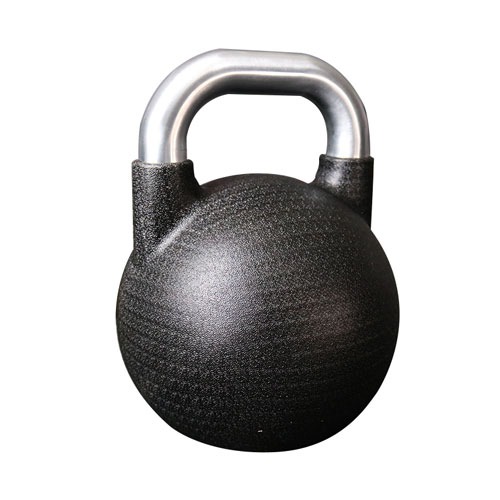
Standard commercial-grade units typically utilize gray iron or high-density cast iron to achieve the necessary mass-to-volume ratio. This material choice is critical for maintaining a stable center of gravity during high-intensity movements. A reliable China kettlebell factory will implement a rigorous sequence involving sand casting or centrifugal casting to ensure the bell body is free from structural voids or surface fractures that could compromise safety during heavy use.
Material and Surface Finish Specifications
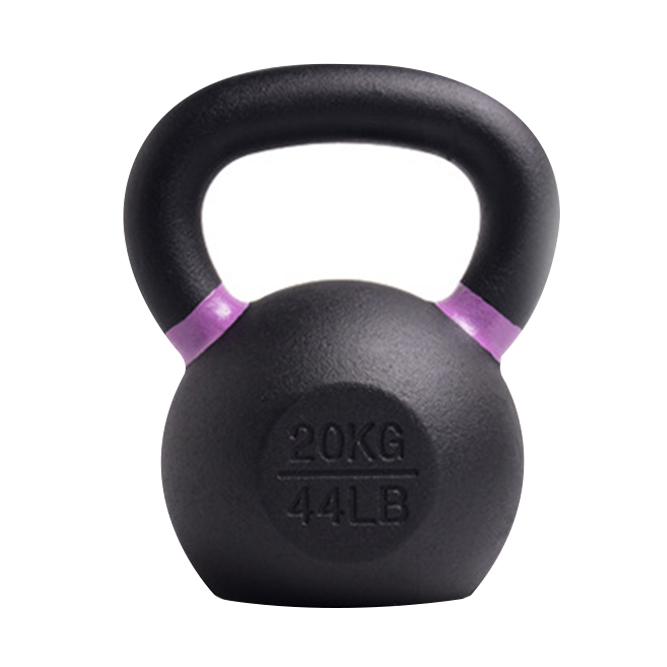
The durability of a kettlebell is defined by its ability to withstand repetitive impact and environmental exposure. In commercial kettlebell manufacturing, the secondary finishing process is just as vital as the initial casting. Most premium commercial tiers utilize a high-grade powder coating to protect the iron from oxidation and to provide a consistent, non-slip texture that remains comfortable even during prolonged training sessions.
A professional factory will focus heavily on the handle-to-body junction and the uniformity of the surface coating. This ensures that the grip remains ergonomic and that the coating does not chip or peel under standard commercial wear. For buyers evaluating OEM or ODM options, verifying the adhesion quality of the finish is a key step in the pre-shipment QC process to prevent premature rust or aesthetic degradation in humid gym environments.
| Material Type | Primary Process | Key Component Focus | Commercial Duty Tier | Sourcing/MOQ Impact |
|---|---|---|---|---|
| Cast Iron | Sand Casting | Handle-to-body junction | Standard Commercial | Standard wholesale |
| Cast Iron + Powder Coating | Casting & Powder Line | Coating adhesion/Grip | Premium Commercial | Higher MOQ |
| Steel (Solid) | Machining/Welding | Weight calibration | Professional/Competition | Custom OEM |
Selecting the appropriate manufacturing route is a strategic decision that balances product durability with your overall procurement budget. For importers, the choice between traditional sand casting and specialized coatings like PU coating determines whether the product fits a budget-friendly fitness center or a high-end boutique studio. A specialized quality kettlebell manufacturer will offer these distinct tiers to help you diversify your SKU breadth and meet various market demands.
Casting and Coating Technical Comparison
The technical differentiation between casting methods and surface treatments affects both the weight tolerance and the longevity of the equipment. While sand casting is the industry standard for mass-market commercial production, more advanced processes provide different levels of protection and tactile feedback. When managing a large-scale wholesale order, understanding these nuances helps in setting realistic expectations for product lifespan and maintenance requirements.
For instance, while cast iron provides the necessary density, the surface finish is what protects the core from oxidation. A China factory producing high-end units may utilize a PU coating process to create a smooth, durable layer that is highly resistant to scratches and moisture. This is particularly beneficial for distributors targeting high-traffic commercial environments where equipment durability is a primary concern for the end-user. During the pre-shipment QC, a thorough inspection of the coating adhesion and the handle texture is standard practice to ensure the product meets the required commercial specifications.
| Manufacturing Method | Surface Treatment | Weight Tolerance Focus | Primary Commercial Use | Procurement Context |
|---|---|---|---|---|
| Sand Casting | Bare Iron / Phosphate | Standard Mass Production | Budget Gyms / Basic Training | High-volume wholesale |
| Sand Casting | Powder Coating | Uniformity & Grip | Commercial Fitness Centers | Standard MOQ tiers |
| Advanced Casting | PU Coating | Precision & Smoothness | Boutique Studios / Premium Home | Custom OEM requirements |
Quality Control and Export Readiness
Beyond the initial casting, the final utility of a kettlebell is determined by precise technical calibrations. A professional quality kettlebell manufacturer ensures that every unit adheres to strict dimensional standards, particularly regarding base flatness and handle concentricity. If the base is not perfectly level, the unit may wobble or tip during ground-based movements, which increases the risk of equipment damage or user injury in a commercial setting. For distributors, these small technical failures can lead to high return rates and damaged brand reputation.
To mitigate these risks, a high-standard China factory implements a multi-stage pre-shipment QC protocol. This sequence typically includes a weight tolerance spot-check, an inspection of the handle-to-body junction for structural integrity, and a rigorous test of the coating adhesion. For example, in commercial kettlebell manufacturing, the coating must be tested to ensure it does not chip or flake when subjected to the impact of being placed on a gym floor. Verifying these details before the container is loaded is essential for maintaining a low landed cost by avoiding the massive expenses associated with shipping faulty inventory back or replacing broken SKUs.
When you engage in wholesale procurement, the final stage of the process involves optimized export packaging to protect the product during long-distance sea freight. A reliable supplier will use reinforced cartons and proper palletization to ensure that the weight of the bells does not crush the bottom layers of the shipment. Whether you are requesting a standard stock order or a specialized OEM production run, confirming these logistics and QC steps during the sampling phase is the best way to secure your distributor margins and ensure a smooth replenishment cycle for your clients.
Manufacturing Processes: From Sand Casting to Surface Finishing
For distributors and large-scale fitness retailers, the structural integrity of a kettlebell begins with the precision of the initial pour. A professional quality kettlebell manufacturer utilizes established industrial routes to ensure every unit meets the rigorous demands of high-traffic commercial environments. When sourcing in bulk, understanding the transition from raw material to finished product is essential for predicting long-term durability and reducing replacement costs.
The foundational method for producing standard commercial-grade units is sand casting. This process involves creating a mold from specialized sand to house molten cast iron, which is then cooled to form a solid, high-density bell. This method is the industry standard for commercial kettlebell manufacturing because it produces a robust, single-piece body that can withstand heavy impact. A reliable China factory will implement a strict weight tolerance check during the cooling and machining stages to ensure consistency across an entire shipment, preventing discrepancies that can damage a distributor's reputation.
Beyond the core shape, the surface treatment determines the product's longevity and grip reliability. After the casting is complete, the bell undergoes various finishing stages to protect the iron from oxidation and improve user experience. The following table outlines the common manufacturing tiers encountered during wholesale procurement.
| Material Type | Primary Process | Surface Finish | Commercial Duty Tier | Sourcing Focus |
|---|---|---|---|---|
| Cast Iron | Sand Casting | Powder Coating | Premium Commercial | Durability & Grip |
| Gray Iron | Sand Casting | Enamel / Paint | Standard Commercial | Cost-Efficiency |
| Cast Iron | Sand Casting | Bare Iron | Budget/Entry | Basic Strength |
Selecting the right supplier depends on your target market's needs. For example, a wholesale kettlebell supplier offering powder-coated options provides a product with superior coating adhesion, making it ideal for high-end studios where aesthetics and rust resistance are critical. Conversely, unpainted or basic painted options may be better suited for high-volume, cost-sensitive distribution. We recommend reviewing the specific finishing specifications and requesting a sample to evaluate the handle texture and base flatness before finalizing your MOQ or large-scale sourcing agreement.
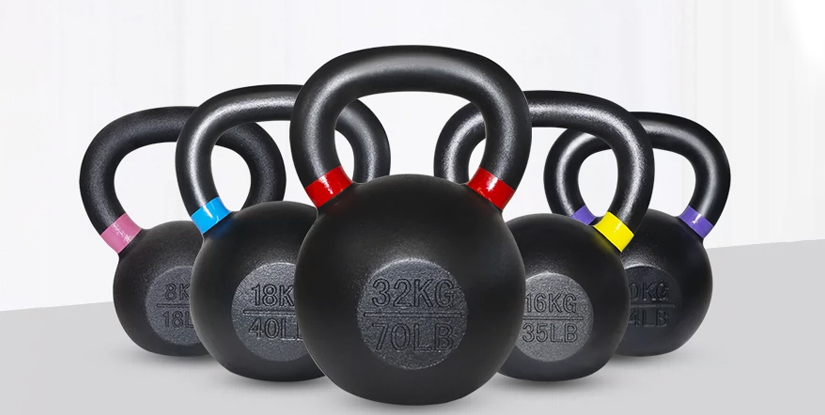
Evaluating Surface Finishing: Powder Coating vs. Pu Coating
A critical decision for procurement managers involves choosing between surface treatments that affect both the landed cost and the long-term maintenance load of a gym facility. While the core casting remains consistent, the application of the final layer dictates how the equipment performs under heavy use. A professional quality kettlebell manufacturer typically offers several finishing tiers to allow distributors to match their SKU offerings to specific client budgets, ranging from high-traffic strength clubs to premium boutique studios.
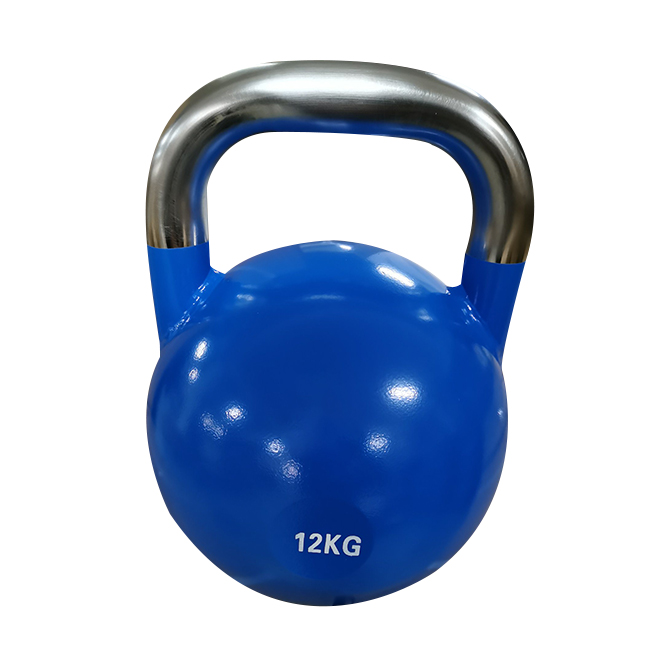
Powder coating is a widely used industrial process where dry particles are electrostatically applied to the cast iron bell and then cured under heat. This creates a hard, durable skin that provides excellent resistance to chipping and oxidation. This is a common choice for high-volume commercial kettlebell manufacturing because it offers a high level of durability with a relatively efficient production cycle. On the other hand, PU coating (polyurethane) involves a thicker, more seamless encapsulation process. This results in a smooth, rubber-like texture that is often preferred for high-end or specialized training environments due to its superior grip and impact-absorbing qualities. While PU coating offers a premium feel, it may involve different lead time considerations and higher unit costs during the sourcing phase.
When negotiating with a wholesale kettlebell supplier, it is vital to clarify the exact application method for each weight class. For instance, a China factory might use different coating thicknesses for larger, heavier units compared to lighter ones to ensure the coating remains intact during high-velocity movements. We suggest requesting a detailed specification sheet to confirm the adhesion properties and the texture profile of the handle and bell body. Evaluating these technical nuances during the sample approval stage will ensure that your bulk order meets the expected commercial-grade standards for your specific market.
Optimizing SKU Breadth and Inventory Efficiency
For distributors and large-scale importers, managing a diverse inventory without overextending warehouse space or capital is a constant challenge. Partnering with a professional quality kettlebell manufacturer allows you to leverage diverse product lines to meet various market demands, from entry-level studios to high-end strength facilities. By sourcing directly from a China kettlebell factory, you can access a wide range of material finishes and weight increments that broaden your catalog while maintaining a lean wholesale operation.
A strategic wholesale kettlebell supplier provides the technical flexibility required to build a comprehensive product hierarchy. Whether your clients require the traditional durability of cast iron for heavy lifting or the premium tactile feel of PU coated bells for boutique studios, a versatile commercial kettlebell manufacturing partner ensures you can fulfill diverse procurement requests. Offering multiple material options—such as standard powder coating for high-traffic commercial gyms or specialized finishes—enables you to capture different market segments without needing to manage multiple disparate sourcing streams.
Effective inventory management also relies on optimized weight increments. Instead of stocking an unmanageful number of unique items, a professional factory can help you select the most commercially viable weight jumps (such as 2kg or 4kg steps) that maximize SKU diversity while optimizing shipping density and container loading efficiency. This approach ensures that your MOQ requirements remain balanced against the need for a complete, professional-grade product range.
Material and Process Selection for Margin Optimization
Distributors must decide between high-volume, cost-effective lines and premium, specialized offerings. Selecting the right manufacturing route directly impacts your landed cost and the long-term value proposition for your end-users. A strategic partnership with a quality kettlebell manufacturer allows you to tier your inventory based on specific commercial needs, ensuring that your capital is allocated toward the highest-margin or highest-turnover products.
The following table illustrates how different manufacturing approaches and material choices influence your inventory strategy, from initial MOQ considerations to final distributor margins. Understanding these qualitative tiers helps in planning long-term sourcing cycles and predicting replacement rates for your clients.
| Material Type | Manufacturing Process | Key Component Focus | Commercial Duty Tier | MOQ/Lead Time Context | Margin Impact |
|---|---|---|---|---|---|
| Cast Iron (Gray Iron) | Sand Casting & Powder Coating | Handle Texture & Base Flatness | Standard Commercial | Standard MOQ / Fast Lead Time | High Volume / Moderate Margin |
| Cast Iron (Premium) | Precision Casting & Enamel Finish | Weight Calibration & Grip Smoothness | Premium / Boutique Studio | Higher MOQ / Extended Lead Time | Low Volume / High Margin |
| Steel / Iron Core | Molding / Dip Coating (PU or Rubber) | Encapsulation Layer & Floor Protection | High-End Professional | Custom OEM / Variable Lead Time | Specialized / Premium Margin |
When evaluating a China kettlebell factory, it is essential to verify the consistency of the casting and the adhesion of the surface finishes. For example, a reliable supplier will ensure that the coating does not chip during heavy use, which protects the underlying iron from oxidation and maintains the aesthetic value of your branded stock. A well-structured product hierarchy, supported by a capable factory, ensures your warehouse remains efficient while your SKU breadth meets the evolving demands of the global fitness market.
To maintain a competitive edge, procurement leads should focus on the total cost of ownership and long-term replenishment stability. A professional quality kettlebell manufacturer does more than just produce units; they act as a strategic partner in managing your supply chain volatility. By establishing clear protocols for OEM and ODM production, you can ensure that your brand identity remains consistent across all weight increments and material finishes.
Reliability in lead time is often the deciding factor between a successful seasonal launch and a missed market opportunity. When working with a specialized China kettlebell factory, transparency regarding production cycles—from the initial sand casting stage through to final weight calibration and pre-shipment QC—is vital. This transparency allows distributors to optimize their warehouse turnover and avoid the high costs associated with sudden stockouts or emergency air freight. Whether you are managing bulk orders for a global distributor network or specialized small-batch runs for boutique studios, a structured approach to sourcing ensures that your landed cost remains predictable and your inventory levels remain lean and efficient.
China Factory QC Protocols and Export Packaging Standards
For distributors and large-scale importers, the reliability of a quality kettlebell manufacturer is measured by the rigor of their technical oversight. Relying on a China factory that maintains strict internal controls is essential to prevent the high landed cost of defective or inconsistent inventory. Without standardized QC protocols, a shipment may arrive with unacceptable weight variances or surface flaws that damage your professional brand reputation.
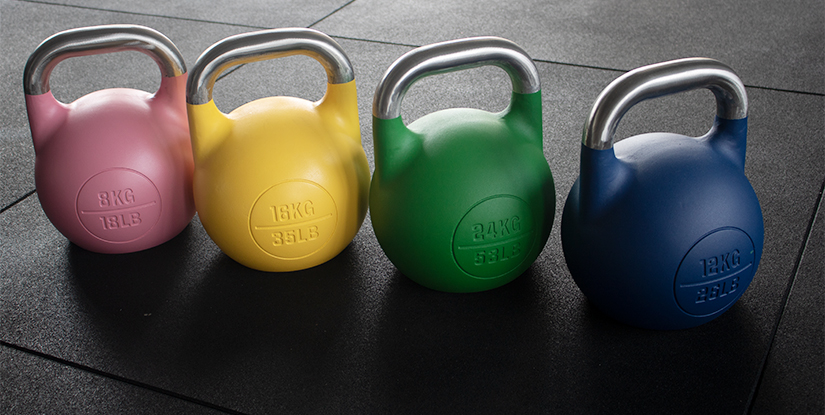
A professional wholesale kettlebell supplier must implement a multi-stage inspection routine to ensure commercial durability. This process typically begins with a weight tolerance check, where individual units are verified against the target weight to ensure consistency across the entire batch. Following weight verification, a surface finish inspection is conducted to identify any casting defects, such as uneven textures, rust spots, or poor powder coating adhesion that could lead to premature wear in a high-traffic gym environment.
To mitigate the risk of damage during long-distance sea freight, the pre-shipment inspection must also cover export-grade packaging. High-density cartons and reinforced palletization are industry standards to protect the integrity of the iron bodies and prevent denting. For wholesale buyers, these steps ensure that the MOQ ordered arrives ready for immediate stock replenishment without the need for costly returns or replacements, effectively protecting your distributor margins.
Standardized Inspection and Export Optimization
Effective commercial kettlebell manufacturing requires more than just successful casting; it demands a rigorous verification of the final product's physical and logistical readiness. For a professional quality kettlebell manufacturer, the goal is to minimize the total cost of ownership for the importer by ensuring that every unit meets commercial-grade specifications before it leaves the factory floor.
A comprehensive inspection checklist for bulk shipments must focus on the structural and aesthetic integrity of each unit. This includes a meticulous weight calibration check to ensure consistency across the SKU range, a surface inspection to verify coating adhesion at the handle-to-body junction, and a tactile check of the knurling or grip texture. These technical audits prevent common failure modes such as peeling paint or uneven weight distribution, which can lead to costly customer returns and diminished brand trust.
| Inspection Focus | Standard Procedure | Commercial Requirement | Impact on Distributor Margin |
|---|---|---|---|
| Weight Calibration | Batch-level weight verification | Consistent weight within tolerance | Reduces returns and SKU discrepancies |
| Surface Integrity | Visual and tactile adhesion check | Uniform powder coating or finish | Prevents rust and surface degradation |
| Export Packaging | Reinforced carton and palletization | High-density protection for sea freight | Minimizes transit damage and loss |
| Loading Efficiency | Shipping container optimization | Maximizing volumetric density | Lowers landed cost per unit |
Beyond the product itself, the China kettlebell factory must demonstrate expertise in logistics-driven packaging. For large-scale wholesale orders, optimizing the weight-to-volume ratio through efficient palletization and shipping container optimization is critical. By using heavy-duty corrugated boxes and securing loads to prevent shifting during transit, a reliable supplier ensures that the shipment arrives in pristine condition. This level of attention to detail directly protects your distributor margin by reducing the overhead associated with damaged goods and inefficient freight utilization.
For distributors and large-scale importers, the reliability of a quality kettlebell manufacturer is measured by the rigor of their technical oversight. Relying on a China factory that maintains strict internal controls is essential to prevent the high landed cost of defective or inconsistent inventory. Without standardized QC protocols, a shipment may arrive with unacceptable weight variances or surface flaws that damage your professional brand reputation.
A professional wholesale kettlebell supplier must implement a multi-stage inspection routine to ensure commercial durability. This process typically begins with a weight tolerance check, where individual units are verified against the target weight to ensure consistency across the entire batch. Following weight verification, a surface finish inspection is conducted to identify any casting defects, such as uneven textures, rust spots, or poor powder coating adhesion that could lead to premature wear in a high-traffic gym environment.
To mitigate the risk of damage during long-distance sea freight, the pre-shipment inspection must also cover export-grade packaging. High-density cartons and reinforced palletization are industry standards to protect the integrity of the iron bodies and prevent denting. For wholesale buyers, these steps ensure that the MOQ ordered arrives ready for immediate stock replenishment without the need for costly returns or replacements, effectively protecting your distributor margins.
Customization Capabilities for Private Label Partners
Scaling a fitness brand requires more than just standard stock; it requires a strategic quality kettlebell manufacturer that can translate a designer's vision into a market-ready product. For distributors, the ability to move beyond generic items into specialized private label offerings is the most effective way to build long-term brand identity and capture premium market segments.
Standardized inventory often limits your SKU breadth, forcing you to compete solely on price rather than unique product features. By leveraging professional OEM and ODM services, importers can introduce differentiated textures, specific weight increments, or custom handle ergonomics that set their catalog apart from generic competitors. This level of customization allows a China factory to produce units that meet the specific aesthetic and functional standards of high-end boutique studios or specialized strength training brands.
While wholesale buyers often prioritize low landed costs, the most successful distributors use sourcing to optimize for long-term value. Negotiating a tailored MOQ for customized colors or specialized powder coating finishes allows you to maintain a lean inventory while offering a "signature" product line. Working directly with a wholesale kettlebell supplier ensures that your custom specifications—from the embossed logo on the cast iron body to the specific handle texture—are integrated into the initial sand casting and weight calibration stages, preventing costly downstream errors.
Customization Tiers for Strategic Sourcing
Selecting the appropriate level of customization is a critical decision for distributors aiming to balance investment risk with market differentiation. A professional quality kettlebell manufacturer typically offers tiered production paths, allowing you to choose between high-velocity stock items and high-margin specialized products. Understanding these tiers helps in planning your sourcing budget and managing MOQ requirements effectively.
The following comparison outlines the standard requirements and technical variations between high-volume stock and premium customized orders. This guide is designed to assist procurement leads in evaluating the commercial kettlebell manufacturing options available through a direct China factory.
| Specification Category | Standard Wholesale Tier | Premium Private Label Tier |
|---|---|---|
| Primary Material | Cast Iron / Gray Iron | Ductile Iron or Competition Steel |
| Surface Finish | Basic Paint or Enamel | High-Grade Powder Coating or PU Coating |
| Branding Method | Standard Molded Logo | Custom Embossed or Laser Engraved Logo |
| Weight Tolerance | Industry-Standard Commercial | Precision Calibration Spec |
| Packaging Type | Standard Export Carton | Branded Retail-Ready Packaging |
| Commercial Duty | General Fitness / Commercial Gym | High-Intensity / Professional Studio |
| Typical MOQ Impact | Lower MOQ / Faster Lead Time | Higher MOQ / Longer Lead Time |
When evaluating a wholesale kettlebell supplier, consider that the Premium Tier often involves more complex sand casting and specialized surface finishing steps. While the Standard Tier is optimized for rapid replenishment and lower landed cost, the Premium Tier is engineered for distributors looking to establish a high-end brand identity. We recommend requesting a sample for each tier to inspect the coating adhesion and knurling quality before finalizing a bulk wholesale contract.
Technical QC and Logistics for Bulk Procurement
For professional importers, the success of a bulk shipment depends entirely on the rigor of the pre-shipment inspection process. A high-tier quality kettlebell manufacturer must demonstrate control over both the physical product integrity and the logistical readiness of the cargo. Relying on a generic China kettlebell factory without strict quality protocols often results in hidden costs, such as high return rates due to uneven weight distribution or poor coating adhesion.
During the final inspection stages, technical oversight focuses on several critical touchpoints to ensure the product meets commercial-grade standards. Inspectors typically verify the handle texture to ensure the knurling is consistent and non-abrasive, as well as the seamlessness of the handle-to-body junction. Furthermore, the pre-shipment process must include a weight tolerance spot-check and a visual inspection of the powder coating or enamel finish to prevent chips or unevenness that could damage the brand identity upon arrival.
Logistical efficiency is just as vital as product quality when calculating your total landed cost. Professional commercial kettlebell manufacturing requires robust export packaging designed to withstand long-distance maritime transit. This includes reinforced corrugated cartons and optimized palletization to maximize container utilization. By coordinating closely with your wholesale kettlebell supplier regarding lead time and container loading patterns, distributors can reduce shipping overhead and ensure that high-volume bulk orders arrive in a condition that allows for immediate retail or commercial deployment.
To mitigate procurement risks, we suggest that buyers request a detailed inspection report or a sample approval process before the final production run. Confirming the MOQ and exact lead time for customized orders early in the sourcing cycle will ensure your warehouse replenishment remains consistent and your distributor margins are protected.