Rock Solid Adjustable Kettlebell Procurement Checklist
Essential Criteria for High-Volume Adjustable Kettlebell Procurement
Adjustable kettlebells are versatile, weight-modulating strength tools designed to replace multiple fixed-weight units within a single footprint. Commercial buyers prioritize these systems to maximize floor space and streamline inventory, provided the mechanism can withstand the rigorous, high-frequency usage typical of professional training environments.
Analyzing the Economic Scope and TCO
When conducting a rock solid adjustable kettlebell review for your facility, looking only at the unit price is a common procurement oversight. High-volume orders require a deep dive into the Total Cost of Ownership (TCO) to ensure the investment remains viable over several years. While a lower initial investment might appeal to strict budget constraints, it often ignores the long-term costs associated with mechanical failure, frequent part replacements, or premature decommissioning.
A professional fitness equipment procurement guide must emphasize the durability-to-cost ratio. You are not just buying a weight; you are buying a mechanical system. Evaluating commercial adjustable kettlebell specs—such as the precision of the locking pins, the grade of the steel housing, and the wear resistance of the adjustment tracks—is vital. A premium unit with a higher upfront cost often delivers superior ROI by reducing maintenance cycles and extending the product's operational lifespan in high-traffic commercial settings.
To assist with long-term budget planning and inventory forecasting, facility managers must weigh the immediate savings of small-batch purchasing against the logistical advantages of wholesale sourcing. The following table outlines the primary economic differences between procurement models to help you determine the best fit for your operational scale.
| Procurement Model | Initial Unit Cost | Scalability | Maintenance/Replacement Frequency |
|---|---|---|---|
| Single Unit / Small Batch | Higher (Retail/Small Wholesale) | Low (Limited to immediate demand) | Higher (Individual part sourcing can be slow) |
| Bulk / Wholesale Order | Lower (Volume-based discounts) | High (Ready for rapid expansion) | Lower (Standardized parts/Direct factory support) |
Choosing the right model depends heavily on your facility's growth trajectory and your ability to manage inventory. While single-unit purchasing offers flexibility for boutique studios, large-scale distributors and commercial gym chains typically benefit from the economies of scale found in bulk procurement. This approach not only lowers the per-unit cost but also ensures that any necessary replacement components or specialized maintenance tools are readily available through established supply chains.
Mitigating Hidden Costs Through Rigorous Quality Control
A common pitfall in high-volume sourcing is neglecting the impact of logistics and testing on the final landed cost. Low-quality alternatives often present a deceptively low price point, but these savings are quickly erased by high replacement cycles and unexpected shipping damage. If the internal mechanisms lack proper adjustable kettlebell durability testing, even minor transit vibrations can cause misalignment, leading to defective units upon arrival.
To protect your margins, ensure your supplier adheres to strict quality control protocols that extend beyond simple visual inspections. This includes stress-testing the weight-switching mechanisms and verifying the structural integrity of the casing. Furthermore, when negotiating MOQ (Minimum Order Quantity), consider how volume impacts the logistics/shipping impact on unit cost. A higher MOQ may optimize container utilization and reduce the risk of per-unit damage, ultimately securing a more stable and predictable supply chain for your distribution or facility needs.
Evaluating Mechanical Reliability and Weight Transition Smoothness
In high-traffic gym environments, the longevity of your inventory depends entirely on the mechanical integrity of the internal adjustment systems. A faulty mechanism does more than just inconvenience a client; it creates significant liability and increases long-term maintenance costs for distributors and facility managers alike.
When conducting a professional rock solid adjustable kettlebell review, the primary focus must shift from external aesthetics to the precision of the internal locking components. High-quality commercial adjustable kettlebell specs should explicitly detail the material composition of the pins and plates to ensure they can withstand thousands of cycles without losing calibration. A critical benchmark for any wholesale procurement order is weight transition smoothness. If the mechanism feels granular, uneven, or requires excessive force to switch increments, the product will likely fail under the rigors of daily commercial use, leading to high return rates and diminished brand trust.
To assist in your procurement decision, we have categorized the three most common adjustment architectures found in the current market. Each mechanism offers a distinct trade-off between speed of use and long-term durability, which directly impacts the total cost of ownership (TCO) for your facility or retail stock.
| Mechanism Type | Durability Rating | Transition Speed | Maintenance Frequency | Best Use Case |
|---|---|---|---|---|
| Selector Pin | High | Moderate | Low | High-traffic commercial gyms |
| Dial-Based | Moderate | Fast | Medium | Boutique studios & HIIT classes |
| Plate-Loading | Maximum | Slow | Minimal | Strength & Conditioning facilities |
When vetting factory capability, prioritize suppliers that offer transparent testing data regarding cycle counts for dial and pin mechanisms. While plate-loading systems offer the highest durability due to their simplicity, dial-based systems are often preferred by distributors targeting the premium boutique market where rapid transitions are essential. However, ensure your quality control protocols include a stress test on the locking teeth to prevent premature wear in high-volume environments.
Beyond the initial selection of a mechanism, rigorous adjustable kettlebell durability testing must be a non-negotiable part of your sample evaluation. Relying solely on a single unit test is a common procurement mistake; instead, implement a stress-test protocol that simulates heavy usage. This involves repeated, rapid-fire weight transitions under varying load conditions to identify potential mechanical failure points, such as pin misalignment or spring fatigue.
A professional wholesale procurement tip for distributors is to request specific QC protocols from the manufacturer that address wear and tear on moving parts. Do not merely ask if the product is durable—ask for the specific cycle count the mechanism can withstand before precision degrades. During factory inspections, observe how the adjustment components respond to dust, sweat, or slight impact, as these environmental factors frequently compromise the longevity of high-end adjustable equipment in commercial settings.
Commercial Adjustable Kettlebell Specs: Precision and Tolerance Standards
In high-traffic gym settings, the margin for error regarding mechanical tolerance is virtually zero. A lack of precision in the weight selection mechanism leads to uneven load distribution, which can cause premature failure of the internal locking components. When conducting a rock solid adjustable kettlebell review for your inventory, you must prioritize mechanical precision to ensure long-term reliability.
Evaluating Structural Integrity and Weight Stability
Standard commercial adjustable kettlebell specs should mandate strict tolerances for both the shifting weight plates and the handle interface. If the internal components lack tight tolerances, the device may suffer from "weight wobble" during high-velocity movements. For distributors and facility managers, this instability translates directly into increased maintenance costs and potential liability. High-quality builds ensure that the center of gravity remains consistent throughout the adjustment range, providing the weight stability required for professional strength training.
| Durability Factor | Standard Consumer Grade | Commercial-Grade Standard |
|---|---|---|
| Mechanism Tolerance | Loose/Variable | High Precision/Tight Fit |
| Load Stability | Subject to shifting | Fixed/Rigid during swings |
| Material Fatigue Resistance | Moderate | High-Impact Rated |
| Maintenance Cycle | Frequent/High | Low/Extended |
Procuring equipment that meets these rigorous standards protects your ROI. Investing in units with superior mechanical engineering reduces the frequency of replacement cycles and ensures the product can withstand the rigorous demands of daily commercial usage without losing its functional integrity.
Understanding the distinction between mechanism types is critical for long-term durability testing and lifecycle cost-benefit analysis. The choice between dial-based and pin-based systems significantly impacts how a unit handles repetitive weight transitions and mechanical wear in a professional training environment.
Mechanism Comparison: Dial vs. Pin Systems
When evaluating adjustable kettlebell durability, the method used to secure the internal weight plates dictates the product's lifespan. While consumer models often utilize simplified adjustment methods, commercial-grade procurement requires a more robust approach to prevent mechanical failure under heavy use.
| Feature | Dial-Adjustment Systems | Pin-Lock/Selector Systems |
|---|---|---|
| Adjustment Speed | Faster, continuous rotation | Step-based, discrete increments |
| Precision Level | Variable; prone to slight drift | High; fixed positions ensure accuracy |
| Mechanical Wear | Higher friction on internal gears | Lower wear; relies on physical pins |
| Typical Use Case | Boutique studios/Home fitness | High-volume commercial facilities |
For distributors and large-scale buyers, the pin-lock mechanism often represents a safer long-term investment due to its inherent structural stability. A robust pin system minimizes the risk of weight-increment errors, ensuring that the weight precision remains consistent even after thousands of adjustment cycles. When vetting factory capabilities, always request data regarding the material thickness of the internal chassis and the grade of steel used in the locking mechanisms to ensure they meet professional strength standards.
Quality Control Protocols for Wholesale Procurement
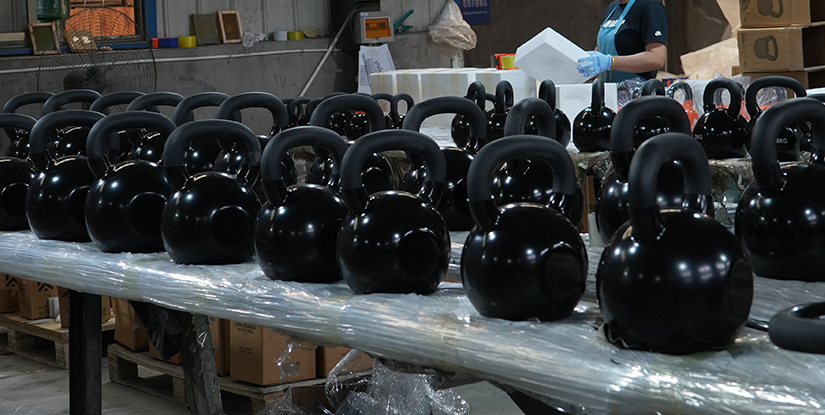
Effective wholesale procurement requires moving beyond superficial inspections to rigorous adjustable kettlebell durability testing. For bulk orders, a standardized quality control checklist must focus on the intersection of load-bearing capacity and mechanical endurance. Relying on a single sample test is insufficient for high-volume shipments; instead, implement a multi-stage verification process that simulates years of commercial usage.
The primary concern for facility managers should be mechanism wear under repetitive stress. During your vetting process, verify that the manufacturer performs high-cycle testing to ensure the internal locking components do not degrade after thousands of weight transitions. A critical checkpoint is the load-bearing capacity of the handle-to-body interface. Ensure the unit can sustain high-impact forces without structural deformation, as even minor fatigue in the internal chassis can lead to catastrophic failure in a professional setting. Establishing clear maintenance cycles during the initial sourcing phase will also allow you to provide better long-term support to your end-users, reducing total cost of ownership and ensuring the product remains a reliable asset for the life of the contract.
Optimizing Floor Space and Inventory Footprint
Maximizing usable square footage is a critical driver for high-density training environments. A thorough rock solid adjustable kettlebell review must account for how modular weight systems replace traditional, bulky kettlebell sets, allowing a single station to serve multiple training intensities without expanding the physical footprint.
Spatial Efficiency in Commercial Gym Layouts
For a boutique studio or a high-end commercial gym, floor real estate is often the most expensive asset. Traditional iron kettlebells require extensive rack systems or sprawling floor space to accommodate a full range of weights. By switching to adjustable models, procurement managers can achieve significant footprint optimization, effectively replacing a dozen individual SKUs with a single, compact unit.
However, professional buyers must navigate the inherent trade-off between weight range and mechanical complexity. While a wider weight spectrum offers more versatility for clients, it often necessitates a larger chassis. When planning your facility layout, consider whether the benefit of a broader weight transition justifies the additional volume required by the mechanism. Balancing these dimensions ensures that your strength training zones remain functional and uncluttered.
When evaluating inventory organization, the distinction between static and modular systems becomes clear through a density analysis. Traditional kettlebell sets demand extensive horizontal or vertical storage, whereas adjustable models centralize weight distribution. This shift significantly impacts how distributors and facility owners manage both training area capacity and shipping volume.
Storage Configuration Comparison
The following comparison highlights the logistical differences between traditional iron sets and modular adjustable systems. Procurement teams should consider these commercial adjustable kettlebell specs to determine the long-term ROI regarding floor-space utility.
| Storage Metric | Traditional Kettlebell Sets | Adjustable Kettlebell Systems |
|---|---|---|
| Footprint Density | High (requires large racks or floor area) | Low (single unit per weight range) |
| SKU Complexity | High (multiple individual weights) | Low (one unit replaces many SKUs) |
| Organization Style | Linear/Vertical Racks | Centralized/Station-based |
| Transit Volume | Bulky/High volume per unit | Compact/Optimized for shipping |
For distributors managing high-volume orders, the compact nature of adjustable units often translates to more efficient container loading and lower shipping overhead. When conducting adjustable kettlebell durability testing, ensure the mechanism remains easy to access within a compact storage station to prevent bottlenecks during peak gym hours.
Logistics and Bulk Procurement Planning
Effective distributor logistics require more than just assessing unit durability; they demand a precise understanding of how packaging volume affects landed costs. Unlike standard cast iron, adjustable units often feature specialized protective housing that increases the volumetric weight. When calculating your initial order, do not rely solely on the net weight of the kettlebell. You must account for the expanded cubic dimensions of the retail or bulk shipping cartons to avoid unexpected freight surcharges.
In this fitness equipment procurement guide, we emphasize the importance of negotiating a clear MOQ (Minimum Order Quantity) that aligns with full container load (FCL) or less-than-container load (LCL) efficiencies. Optimizing your warehouse optimization strategy involves balancing SKU variety against pallet density. High-density packing configurations can significantly reduce your per-unit shipping costs, but ensure that the packaging provides sufficient structural integrity to protect the internal adjustment mechanisms during long-haul transit.
Preventing Common Sourcing Pitfalls in Bulk Orders
When sourcing adjustable weight systems, the primary risk involves the long-term degradation of moving parts. A thorough rock solid adjustable kettlebell review must look beyond initial weight accuracy to assess how the internal locking mechanisms respond to constant user interaction and environmental factors.
The Impact of Mechanical Wear in High-Traffic Gym Settings
In high-traffic gym settings, the frequency of weight adjustments creates a significant burden on internal components. Unlike static kettlebells, adjustable models rely on precision-engineered pins, dials, or sliding tracks that are susceptible to mechanical wear over time. If the commercial adjustable kettlebell specs do not explicitly detail the durability of these adjustment interfaces, you risk high replacement rates and increased maintenance costs for your clients.
Failure to account for this friction-based degradation during the procurement phase often leads to premature failure of the adjustment mechanism. For distributors and facility managers, this means higher warranty claims and a loss of brand trust. Always verify the material grade of the adjustment tracks to ensure they can withstand thousands of cycles without losing structural integrity or precision.
Evaluating Total Cost of Ownership via Mechanism Type
To accurately project long-term operational expenses, buyers must evaluate the specific maintenance requirements associated with different adjustment technologies. A robust adjustable kettlebell durability testing protocol should focus on how often internal components require intervention to maintain smooth operation and weight stability.
| Mechanism Type | Lubrication Needs | Maintenance Interval | Part Replacement Frequency |
|---|---|---|---|
| Pin-Lock Systems | Minimal (Dry lubrication) | Low (6–12 months) | Rare (Pins/Springs) |
| Dial-Turn Mechanisms | Occasional (Silicone spray) | Moderate (4–6 months) | Medium (Gears/Dials) |
| Slide-Track Systems | Regular (Specialized grease) | High (3 months) | High (Tracks/Sliders) |
When reviewing wholesale options, prioritize mechanisms that offer a balance between ease of use and low service requirements. While slide-track systems may offer faster adjustments, they often demand more frequent technical attention, which can increase the total cost of ownership for large-scale commercial facilities.
Verifying Factory Quality Control and Component Longevity
A professional fitness equipment procurement guide must emphasize the necessity of auditing a manufacturer's internal quality control protocols. For adjustable weight systems, surface-level inspection is insufficient; you must demand evidence of rigorous factory testing regarding cycle counts and stress tolerances. Reliable suppliers should provide data on component longevity, specifically detailing how many adjustment cycles the mechanism can endure before losing precision or structural stability.
To mitigate risk during a bulk order inspection, request detailed specifications on the metallurgy of the locking pins and the friction-resistance of the adjustment tracks. In many commercial settings, the failure point is rarely the weight itself, but the degradation of the internal moving parts under heavy use. Ensuring your supplier utilizes high-grade, wear-resistant materials will significantly reduce the frequency of returns and long-term liability for your distribution network.
Logistics and Quality Control for International Shipments
When conducting a rock solid adjustable kettlebell review from a procurement standpoint, the focus must shift from mechanical performance to the total landed cost. For distributors and facility managers, the actual unit price is often secondary to the logistical overhead driven by weight and volume.
The Hidden Impact of Shipping Density
Unlike standard iron kettlebells, adjustable models feature complex internal components and specialized packaging that can significantly impact your freight budget. A common mistake in international sourcing is failing to account for volumetric weight versus actual weight. If the packaging for your commercial adjustable kettlebell specs is excessively large, you will be billed for space rather than mass, driving up the cost per unit.
To optimize your ROI, you must evaluate the shipping density of the product. High-density configurations minimize the dimensional weight penalties often encountered in air and sea freight. Before finalizing an MOQ, request detailed packing lists to calculate the precise landed cost, ensuring that shipping volumes do not erode your profit margins during transit.
Logistics Strategy and Cost Optimization
Selecting the right freight method is a strategic decision that balances speed against the total landed cost. For high-volume orders of adjustable kettlebells, the choice of shipping mode dictates not only your capital outlay but also your ability to maintain consistent inventory levels for your clients or retail channels.
| Shipping Method | Cost Impact | Lead Time | Ideal For | Quality Control Level |
|---|---|---|---|---|
| Air Freight | Highest | 7–14 Days | Small sample batches or urgent restocks | High (Rapid inspection possible) |
| LCL (Less than Container Load) | Moderate | 30–45 Days | Mid-sized distributor orders | Standard (Consolidated inspection) |
| FCL (Full Container Load) | Lowest per unit | 45–60 Days | Bulk wholesale and large gym deployments | Maximum (Rigorous factory-direct QC) |
When evaluating adjustable kettlebell durability testing protocols, remember that the transit method affects product integrity. FCL shipments allow for more robust, custom-engineered crating and palletization, which is essential for protecting the delicate internal adjustment mechanisms from the vibrations and impacts typical of long-distance maritime transport.
Verification of Production Standards and Final Inspection
Before releasing final payments, professional buyers must move beyond reviewing digital specifications to verifying physical production quality. Relying solely on a supplier's word is a high-risk strategy; instead, implement a rigorous pre-shipment inspection to ensure the mechanical components meet commercial gym standards. This stage is critical for confirming that the internal weight-selection mechanisms are as robust as the marketing suggests.
A thorough factory audit should be part of your initial vendor qualification process. This allows you to verify their manufacturing capacity and their ability to maintain consistency across large MOQ requirements. During the final inspection, demand specific adjustable kettlebell durability testing, such as repeated weight-switching cycles and drop tests, to ensure the hardware can withstand the high-frequency usage of a commercial environment without failure.