White Label Kettlebell Manufacturer: China OEM Production
Selecting a White Label Kettlebell Manufacturer for Global Distribution
Distributors and gym equipment importers must evaluate three critical checkpoints when sourcing: the stability of the supply chain, the precision of technical specifications, and the efficiency of international logistics. Selecting a professional white label kettlebell manufacturer allows your business to mitigate the risks of inconsistent weight tolerances and surface defects that often plague low-tier sourcing. By establishing a direct partnership with a China factory, you gain control over the entire production lifecycle, ensuring that every unit meets your brand's specific standards for durability and professional aesthetics.
The strategic advantage of working with a wholesale kettlebell supplier lies in the ability to scale your inventory according to market demand without the overhead of independent manufacturing. A professional white label kettlebell manufacturer provides the necessary infrastructure to transition from small-batch specialty items to high-volume commercial distributions. This scalability is essential for maintaining a competitive distributor margin while managing the complexities of global shipping and landed costs.
Through customized OEM and ODM services, you can move beyond generic stock items to offer custom branded kettlebells that reflect a premium identity. This level of customization—ranging from specific handle textures to unique coating colors—enables you to build brand equity and loyalty within the professional fitness community. Whether you require standard cast iron models or specialized polyurethane-coated units, a specialized factory can adjust production lines to meet your specific MOQ and technical requirements.
Technical Material Comparison for Commercial Procurement
When evaluating your next bulk order, the choice between different surface treatments and core materials directly impacts your long-term maintenance costs and product positioning. For high-traffic commercial environments, the decision often rests on whether to prioritize the rugged durability of cast iron or the premium protection offered by advanced coatings. Understanding these manufacturing nuances is essential for a professional wholesale kettlebell supplier to ensure the inventory provided aligns with the expected lifespan of the end-user equipment.
The following table provides a qualitative comparison to assist in your technical selection process. This guide focuses on the structural and surface-level differences that influence commercial-grade performance and your overall landed cost.
| Material Type | Manufacturing Process | Key Component Focus | Commercial Duty Tier | MOQ Impact | Factory QC Point |
|---|---|---|---|---|---|
| Cast Iron | Sand Casting & Machining | Handle-to-body junction | Standard Commercial | Lower | Base flatness & weight tolerance |
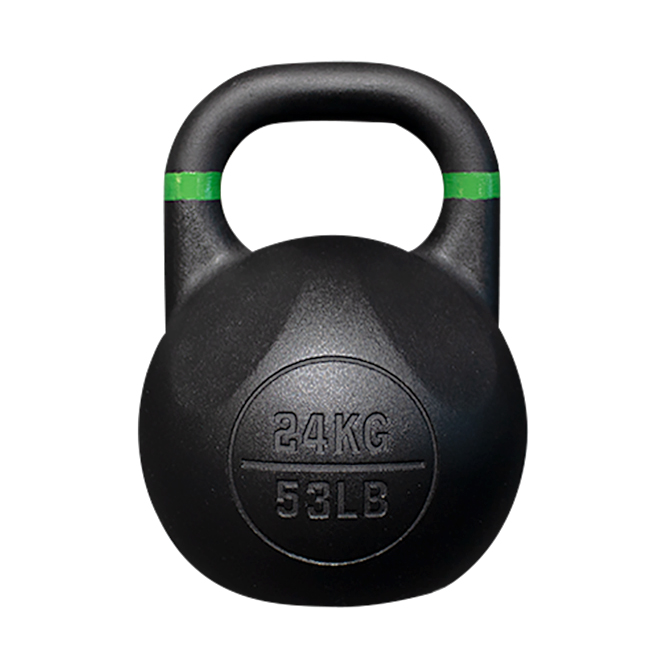
| Powder Coated | Casting & Powder Coating Line | Surface adhesion & knurling | Premium Commercial | Moderate | Coating thickness & finish consistency |
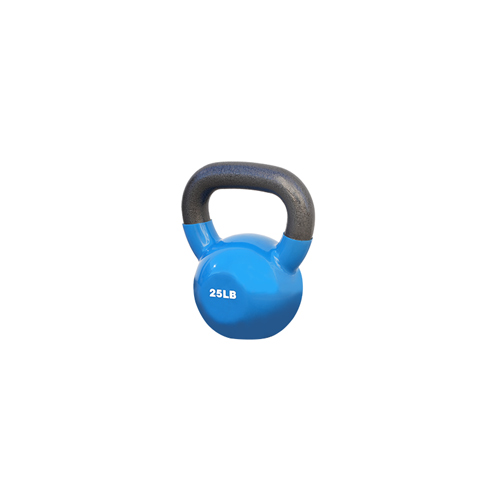
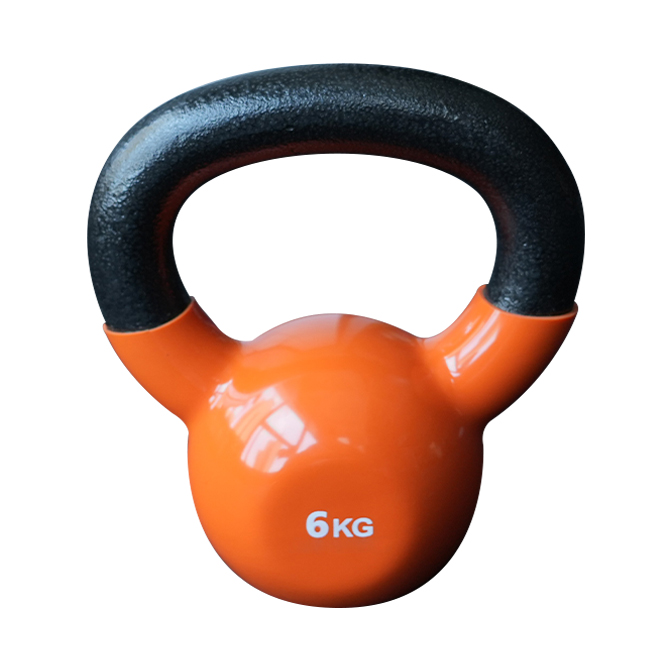
| PU Coated | Casting & Polyurethane Molding | Encapsulation layer integrity | High-End / Boutique | Higher | Coating adhesion & grip texture |
For distributors targeting high-intensity training centers, the durability of the powder coating or the protective layer of a PU coated unit is a critical factor in reducing replacement frequency. While cast iron remains a staple for its cost-effectiveness and traditional feel, the addition of a specialized coating process can significantly enhance the product's value proposition. When coordinating with a white label kettlebell manufacturer, it is advisable to request specific details regarding the coating adhesion and the precision of the knurling to ensure the final product meets the rigorous standards of global fitness professionals.
Critical Quality Control and Export Logistics Checkpoints
To maintain high distributor margins and minimize the risk of costly returns, professional buyers must implement rigorous inspection protocols during the manufacturing cycle. A reliable white label kettlebell manufacturer does not merely ship products; they provide a documented quality assurance framework that covers every stage from raw material casting to final container loading. For importers, the ability to verify technical consistency before the goods leave the China factory is the most effective way to control the total landed cost and ensure product reliability in the target market.
Effective procurement requires a deep understanding of the specific QC points that impact commercial-grade performance. During the pre-shipment inspection, technical teams should focus on several high-priority areas: weight calibration to ensure consistency across the batch, the structural integrity of the handle-to-body junction, and the durability of the surface finish. For example, testing coating adhesion and checking the uniformity of the handle texture are essential steps to prevent premature wear in high-use environments. A professional supplier will provide clear data on weight tolerances and surface finish consistency to satisfy professional procurement standards.
Beyond the physical product, logistical efficiency is a core component of successful global sourcing. Managing lead time and optimizing export packaging are critical for maintaining a steady inventory flow. High-quality export packaging—designed to withstand the rigors of sea freight and container stacking—is necessary to protect the integrity of the casting and prevent damage to the coating or knurling. When negotiating bulk orders, it is highly recommended to confirm the specific container loading plan and the lead time for production to ensure your distribution schedule remains uninterrupted. By aligning these technical and logistical requirements early in the sourcing process, you can build a more resilient and profitable supply chain.
Material Engineering and Surface Coating Specifications
For distributors sourcing high-volume fitness inventories, understanding the relationship between casting precision and long-term durability is essential. A professional white label kettlebell manufacturer must ensure that every unit meets strict commercial-grade standards to minimize replacement costs and maintain brand reputation. High-quality production begins with the selection of premium cast iron, utilizing refined sand casting techniques to ensure structural integrity and consistent weight distribution across a full set.
When selecting a wholesale kettlebell supplier, procurement leads should evaluate the complexity of the surface finishing process. The way a China factory handles the transition from raw casting to the final coating layer directly impacts the product's lifespan in high-traffic commercial environments. Standardized processes, such as phosphate treatment followed by a high-durability powder coating, are typical for ensuring long-term adhesion and preventing oxidation during transit and storage.
Commercial-Grade Material and Finish Comparison
| Material Base | Primary Process | Surface Finish | Commercial Duty | Durability Profile |
|---|---|---|---|---|
| Cast Iron | Sand Casting | Powder Coating | Standard Commercial | High impact resistance; excellent for bulk wholesale |
| Cast Iron | Sand Casting | PU Coating | Premium Studio | Enhanced floor protection and grip comfort |
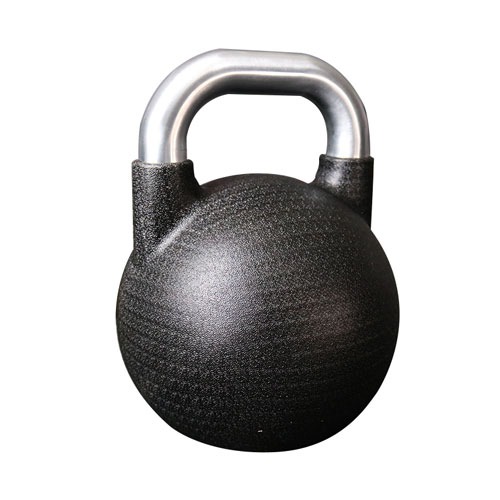
| Steel | Machined/Welded | Chrome Finish | Competition/Specialty | High precision; requires controlled environments |
Reliability in custom branded kettlebells depends heavily on the precision of the handle and the consistency of the coating. A reputable white label kettlebell manufacturer manages a strict sequence—from initial casting and machining to weight calibration and final coating—to ensure that the handle-to-body junction remains seamless. For importers, prioritizing these technical specifications during the sourcing phase ensures a lower total cost of ownership and higher client satisfaction for end-users.
Evaluating Surface Coating for Wholesale Value
Choosing between different finishes is a strategic decision for any distributor or studio owner. While a standard powder coating offers excellent durability and a cost-effective solution for large-scale gym fit-outs, specialized options like PU coating or rubber coating provide higher value in premium settings. These advanced coatings offer enhanced floor protection and a softer tactile feel, which can differentiate your product line in a competitive market. When evaluating your next batch, consider how the surface finish affects both the maintenance load and the perceived value of your inventory.
The technical execution of these coatings is a critical metric for quality control. A high-tier white label kettlebell manufacturer will utilize a controlled dipping or spraying process to ensure the coating layer is uniform across the bell and the handle. Inconsistent application can lead to peeling or uneven grip, which increases the risk of product returns. For those focused on long-term commercial efficiency, selecting a finish that balances aesthetic appeal with high resistance to abrasion and impact is a vital step in the procurement process.
To ensure the highest standards, we recommend that buyers request a sample evaluation or a detailed spec sheet before finalizing bulk orders. This allows you to inspect the coating adhesion, handle texture, and overall finish quality firsthand. Whether you are looking to expand your existing catalog or develop a new line of custom branded kettlebells, verifying these technical details during the initial consultation will safeguard your investment and optimize your landed cost.
Critical Quality Control Points in China Factory Production
For professional distributors and gym equipment importers, the reliability of a white label kettlebell manufacturer is defined by the precision of the manufacturing chain. When sourcing in bulk, the primary risk involves weight inconsistencies and surface defects that can lead to high return rates. A professional China factory mitigates these risks by implementing a rigorous QC process that begins at the raw material stage and extends through final packaging to ensure every unit meets commercial grade standards for global distribution.
The production of high-quality cast iron implements typically follows a structured sequence: sand casting, followed by intensive machining of the handle, surface treatment, and finally, weight calibration. For a wholesale kettlebell supplier, maintaining a strict weight tolerance is the most critical metric. Inconsistent casting can lead to eccentric weight distribution, which compromises the balance of the bell and reduces its lifespan in high-traffic commercial environments.
Casting Precision and Weight Calibration
Reliable custom branded kettlebells rely on high-quality sand casting to ensure the structural integrity of the bell and the handle. During the OEM production phase, the factory must monitor the mold integrity to prevent air bubbles or structural weak points in the iron. A single-piece cast construction is standard for premium commercial units to ensure the handle-to-body junction remains seamless and durable under heavy use.
Beyond the shape, the weight tolerance must be verified through a systematic calibration step. A professional white label kettlebell manufacturer utilizes precision scales to check each batch, ensuring that the deviation remains within industry-standard limits for commercial grade equipment. This prevents the common procurement issue where a set of kettlebells lacks uniformity, which can damage a distributor's reputation and increase the total cost of ownership for the end-user.
Surface Finish and Coating Adhesion Inspection
A frequent failure mode in lower-tier sourcing is the premature peeling or chipping of the surface layer, which can damage both the equipment and the gym flooring. To prevent this, a professional white label kettlebell manufacturer must implement a specialized inspection for the powder coating or encapsulation layer. The process begins with a thorough surface preparation, such as a phosphate treatment, to ensure maximum adhesion between the iron and the finish. This step is vital for maintaining a consistent surface finish that resists moisture and oxidation in high-humidity commercial environments.
During the pre-shipment phase, quality control teams perform visual and physical checks to verify the integrity of the coating. This includes inspecting the handle texture for any unevenness and checking the bell's surface for bubbles or thickness inconsistencies. For a wholesale kettlebell supplier, ensuring that the durability of the finish meets the expectations of high-traffic facilities is non-negotiable. High-quality custom branded kettlebells must not only look professional with a clean logo application but also withstand the mechanical stress of constant handling without the coating flaking off.
When evaluating your next batch, we recommend requesting a sample to verify the coating thickness and grip consistency. Our factory can provide detailed documentation regarding the surface treatment steps used to ensure your brand identity remains intact throughout the product's lifecycle. For bulk orders, we can also discuss specific customization options for the finish to better align with your target market's requirements.
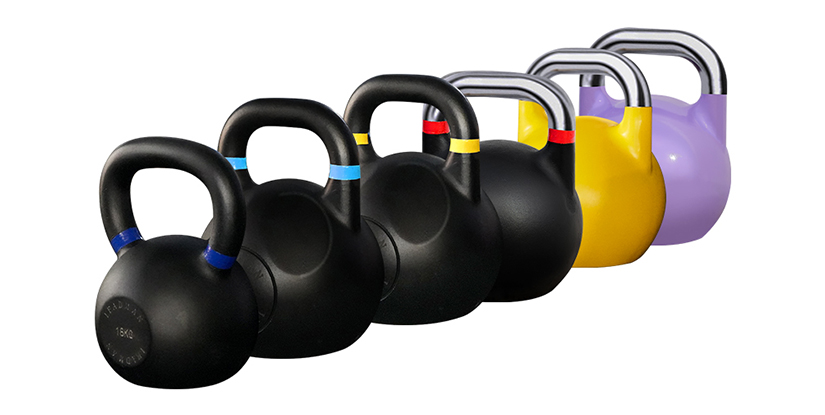
Technical Comparison of Commercial Kettlebell Tiers
Selecting the appropriate material and finish is a strategic decision that directly affects your landed cost and the durability of your brand. A professional white label kettlebell manufacturer provides various tiers to help distributors balance price-point competition with commercial-grade longevity. Depending on your target market—whether high-end boutique studios or budget-conscious commercial gyms—the choice of coating and casting method will impact both the MOQ and the long-term maintenance load for the end-user.
The following table outlines the standard material and process configurations used in the industry to assist in your sourcing decisions. This comparison highlights the qualitative differences between product tiers to ensure your procurement aligns with your brand positioning.
| Material | Process | Key Component | Commercial Duty | MOQ Impact | Factory QC Point |
|---|---|---|---|---|---|
| Cast Iron | Sand Casting & Powder Coating | Handle Grip / Knurling | Standard Commercial | Standard | Weight Calibration & Coating Adhesion |
| Cast Iron | Sand Casting & Enamel Paint | Base Flatness | Budget Commercial | Lower | Surface Smoothness & Paint Uniformity |
| Solid Steel | Machining & Chrome Finish | Precision Handle / Grip | Premium / Competition | Higher | Concentricity & Chrome Layer Integrity |
| Cast Iron | Injection / Dip Molding | PU or Rubber Layer | High-End Studio / Floor Protection | Moderate | Encapsulation Thickness & Layer Adhesion |
When managing a wholesale account, it is essential to understand that premium finishes, such as PU coating or chrome, require more intensive pre-shipment inspection steps compared to standard powder-coated units. For example, when ordering custom branded kettlebells with a rubberized finish, the factory must ensure the encapsulation layer is uniform to prevent peeling during heavy use. We suggest reviewing these technical specifications with your supplier to confirm that the selected finish matches your distributor margins and the durability requirements of your specific client base.
Custom Branded Kettlebells: OEM and ODM Capabilities
For distributors and fitness equipment importers, selecting a professional white label kettlebell manufacturer is a strategic decision that impacts long-term brand equity. Understanding the technical distinction between OEM and ODM is essential for optimizing your sourcing workflow and managing wholesale inventory effectively.
OEM (Original Equipment Manufacturing) typically involves a China factory producing products based on your specific technical blueprints or exact material requirements. This is the preferred route for established distributors who require strict control over the brand identity, such as specific powder coating colors or precise knurling textures. In contrast, ODM (Original Design Manufacturing) allows you to leverage the factory's existing, proven product lines while applying custom branded kettlebells elements like logo plates or specialized handle grips. This approach often offers a more streamlined sourcing process and lower MOQ requirements, making it an efficient way to launch custom branded kettlebells without the high R&D costs of a completely new mold.
Choosing the right model depends on your goal: whether you want to control the granular manufacturing details of a unique product or scale a proven design under your own label. Both paths allow a white label kettlebell manufacturer to provide the professional-grade finish required for commercial-grade retail and studio distribution.
Technical Comparison of Customization and Material Tiers
When evaluating your next bulk order, understanding the relationship between material base and surface finish is critical for calculating total landed cost and predicting long-term maintenance. A professional white label kettlebell manufacturer provides various tiers of production to suit different market segments, from budget-friendly commercial gyms to premium boutique studios.
The choice between a cast iron base and a specialized coating affects not only the visual appeal but also the durability of the product in high-traffic environments. For instance, a standard cast iron kettlebell with a high-quality powder coating offers excellent durability and color consistency for large-scale wholesale distribution. Conversely, a PU coating (polyurethane) provides a more premium, ergonomic grip and superior floor protection, which is a high-value selling point for studio-focused sourcing.
| Material Base | Surface Process | Key Component Detail | Commercial Duty | MOQ Impact | Factory QC Point |
|---|---|---|---|---|---|
| Cast Iron | Powder Coating | Standard Knurling | Budget Commercial | Lower | Coating Adhesion |
| Cast Iron | PU Coating | Smooth/Textured Grip | Premium Studio | Moderate | Encapsulation Uniformity |
| Solid Steel | Chrome Finish | Precision Knurling | Competition/High-End | Higher | Handle-to-Body Junction |
| Cast Iron | Vinyl Dip | Soft Touch Grip | General Commercial | Moderate | Base Flatness |
For distributors looking to optimize their custom branded kettlebells portfolio, we recommend selecting a finish that aligns with your target end-user's environment. A white label kettlebell manufacturer can often adjust the knurling depth or the thickness of the coating layer to meet your specific brand standards. Before finalizing your custom branded kettlebells order, we suggest requesting a sample to inspect the base flatness and the integrity of the logo placement under different lighting conditions. This ensures that your wholesale kettlebell supplier meets the exact quality benchmarks required for your domestic market.
Quality Control and Technical Execution in Production
Reliability in bulk procurement depends on the rigor of the production sequence. A professional white label kettlebell manufacturer follows a structured manufacturing route—moving from sand casting to machining, surface treatment, and finally, calibration. For importers, the primary risk is not just aesthetic inconsistency, but functional failure such as uneven weight distribution or poor coating durability. To mitigate these risks, a high-standard wholesale kettlebell supplier implements specific technical checkpoints throughout the process.
One critical area of inspection is the logo embossing and surface branding. Whether the branding is achieved through direct casting or secondary application, the integrity of the logo must withstand high-impact use without peeling or eroding. Furthermore, we prioritize powder coating adhesion testing to ensure the finish remains intact under heavy friction. In many commercial settings, poor coating adhesion leads to high return rates and damaged brand reputation; therefore, verifying the bond between the cast iron base and the outer layer is a non-negotiable step in our factory QC protocol.
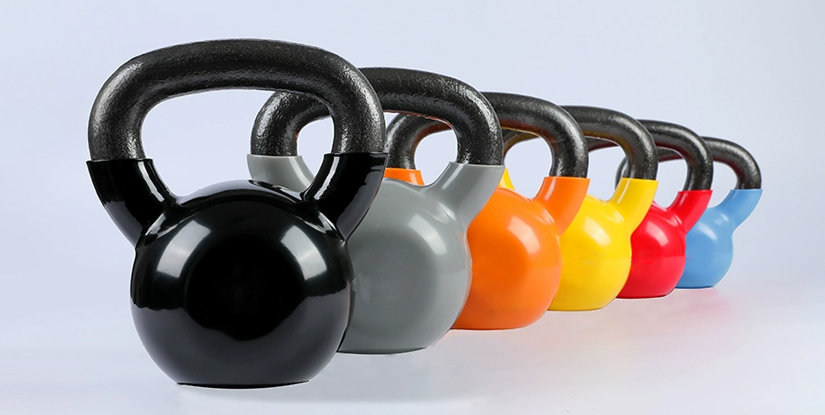
Weight accuracy is another pillar of export-grade production. To ensure every unit meets the specified weight tolerance, a strict calibration process is conducted after the final coating. This prevents the common issue of "weight drift" caused by excessive coating thickness. During our pre-shipment inspection, technicians perform spot-checks on handle-to-body junction integrity and base flatness to ensure each unit is fit for high-traffic commercial environments. This level of detail reduces the total cost of ownership for your clients and ensures your custom branded kettlebells maintain a premium market position.
Before finalizing your bulk order, we recommend a formal sample approval and a discussion regarding your specific MOQ and lead time requirements. Our team is available to provide detailed technical spec sheets or facilitate a virtual factory audit to confirm our production capabilities meet your international standards.
Optimizing Logistics and Export Packaging for Bulk Orders
When sourcing high-volume fitness inventory, the final landed cost is often determined by more than just the factory price. For distributors and gym owners, inefficient export packaging and poor container loading strategies can lead to unexpected surcharges, damaged goods, and diminished profit margins. A professional white label kettlebell manufacturer must prioritize structural protection and volume density to ensure that bulk orders arrive in pristine condition at your warehouse.
Standard shipping practices often fail to account for the extreme weight and irregular density of cast iron products. Without specialized palletization and reinforced outer casing, the vibration and shifting inherent in sea freight can cause surface coating abrasions or structural deformation. To mitigate these risks, a high-tier China factory utilizes heavy-duty corrugated boxes, corner protectors, and heat-treated pallets to stabilize the load. This focus on damage prevention and shipping efficiency ensures that your custom branded kettlebells maintain their premium appearance from the production line to the end-user, effectively protecting your brand identity and reducing the cost of returns or replacements.
Packaging Tier Comparison for International Distribution
Selecting the appropriate packaging configuration is a strategic decision that directly influences your total landed cost and product safety. As a professional wholesale kettlebell supplier, we provide tiered options to balance budget constraints against the distance and handling intensity of your specific supply chain. For regional distributors with local warehousing, standard solutions may suffice, but for long-distance sea freight, premium protection is essential to prevent coating damage and ensure high volume efficiency during container loading.
| Packaging Type | Protection Level | Volume Efficiency | Typical Use Case | Cost Impact |
|---|---|---|---|---|
| Standard Export | Basic | High | Short-distance regional shipping | Lower |
| Premium Reinforced | High | Medium | Long-distance international sea freight | Moderate |
| Full Brand Protection | Maximum | Optimized for Branding | High-end custom branded kettlebells | Higher |
When evaluating your next shipment, consider that the protection of the coating layer—whether it is a standard powder coating or a specialized PU coating—is highly dependent on the outer casing. A professional white label kettlebell manufacturer will often recommend reinforced corrugated cartons and specialized palletizing for wholesale shipments to ensure that the knurling and surface finish remain intact. We recommend confirming your specific MOQ and shipping requirements with your supplier to determine the most cost-effective packaging strategy for your target market.
Standardizing QC and Pre-Shipment Protocols
To maintain high margins and minimize the risk of faulty inventory, a reliable white label kettlebell manufacturer must implement a rigorous QC workflow that begins long before the container is sealed. For a professional supplier, quality control is not a single event but a continuous sequence of checks—from the initial casting and weight calibration to the final coating adhesion and structural integrity test. This systematic approach ensures that every unit in a wholesale order meets the exact specifications required for commercial-grade use.
The critical stage of pre-shipment inspection focuses on three main pillars: weight accuracy, handle durability, and coating uniformity. During this process, technicians perform spot-checks on the weight tolerance to ensure consistency across the entire batch, as even minor deviations can impact the reliability of a professional training set. Simultaneously, the handle-to-body junction and knurling depth are inspected to prevent structural failures or grip issues during high-intensity use. By verifying these components at the factory level, we reduce the likelihood of costly returns and protect your reputation as a provider of high-quality equipment. We recommend that all procurement leads schedule a final inspection or request detailed weight calibration reports to confirm that your custom branded kettlebells align with your brand's premium standards before final loading.
Sourcing Strategy for Wholesale Kettlebell Supplier Partnerships
Selecting a professional white label kettlebell manufacturer is a critical decision for distributors aiming to build a sustainable brand identity. For importers, the transition from small-batch orders to large-scale distribution requires a partner with proven China factory capability to ensure product consistency and supply chain reliability. Rely is on a high-tier wholesale kettlebell supplier to mitigate the risks of inconsistent casting or coating failures that can damage your reputation in the commercial fitness market.
Effective professional sourcing goes beyond finding the lowest unit price; it involves evaluating a supplier on their ability to support scaling business operations through predictable lead times and strict quality control. When you invest in custom branded kettlebells, you are not just buying equipment—you are outsourcing the manufacturing integrity of your brand to a specialized factory that understands the nuances of commercial-grade weight tolerances and surface durability.
To optimize your procurement strategy, you must differentiate between purchasing ready-to-ship inventory and investing in a full-scale OEM or ODM production run. While stock orders offer the fastest way to replenish warehouse levels, a dedicated white label kettlebell manufacturer provides the ability to control every variable from the casting core to the final surface finish. Choosing the right model depends on your current scale, your target market segment, and your willingness to manage higher MOQ requirements in exchange for better distributor margins.
Comparison of Sourcing Models for Commercial Distribution
| Sourcing Model | Customization Depth | Typical MOQ | Lead Time | Primary Commercial Use |
|---|---|---|---|---|
| Standard Stock Order | Minimal (Logo only) | Low | Short | Quick replenishment for retail/boutique |
| Custom Branded Kettlebells | High (Color & Logo) | Medium | Medium | Brand building for studio chains |
| Full OEM Production | Complete (Spec & Material) | High | Long | Global distribution and private label lines |
When evaluating these options, consider the long-term impact on your landed cost. A standard order from a wholesale kettlebell supplier is efficient for testing market demand, but true brand authority is built through specialized production. For example, a white label kettlebell manufacturer can execute specific requests such as specialized handle knurling depth or a specific PU coating thickness to meet your brand's premium positioning. Before finalizing your next wholesale contract, we recommend requesting a detailed spec sheet and confirming the MOQ for your desired customization level to ensure alignment with your shipping and warehouse planning.
Critical Checkpoints for Quality Assurance and Logistics
Mitigating risk during international procurement requires a rigorous focus on the final stages of the production cycle. A common pain point for distributors is receiving a shipment where the coating adhesion is inconsistent or the base flatness is compromised, leading to high return rates and damaged brand trust. To prevent these issues, professional buyers must implement a structured QC inspection protocol that covers both the physical product integrity and the stability of the export packaging.
A reliable white label kettlebell manufacturer will typically allow for a pre-shipment inspection focusing on key commercial-grade components. This includes a visual and physical audit of the handle-to-body junction, the consistency of the powder coating or PU layer, and the precision of the weight calibration. Ensuring these checkpoints are met before the container is sealed is the most effective way to protect your landed cost and maintain high distributor margins.
Beyond the product itself, your shipping logistics strategy must account for the high density and weight of these units. Efficient container loading—optimizing how much weight can be safely stacked without damaging the outer packaging—is essential for reducing the per-unit freight cost. We recommend coordinating closely with your supplier to confirm the exact dimensions of the export cartons and the palletization method to ensure your warehouse receives a safe, organized, and inspection-ready shipment.
To move forward with your procurement planning, we invite you to contact us to request a full technical specification sheet. Whether you are looking to confirm a specific MOQ for a new private label line or need to discuss customized wholesale pricing for a large-scale distribution project, our team is ready to provide the necessary documentation to support your sourcing decision.