For professional gym owners, global distributors, and fitness brand developers, the pursuit of high-performance equipment often meets a critical bottleneck: the gap between high-end retail specifications and cost-effective bulk sourcing. Navigating the diverse landscape of commercial fitness products requires more than just comparing price lists; it demands an understanding of manufacturing tolerances, material integrity, and the ability of a partner to execute complex OEM requirements. This guide is designed to assist procurement professionals in identifying the technical and operational benchmarks necessary to secure reliable supply chains. Whether you are scaling a boutique fitness franchise or managing a large-scale distribution network, the following insights address the core challenges of sourcing high-durability strength gear, cardio systems, and specialized accessories. We focus on the structural logic of the industry to help you move beyond surface-level metrics. Key procurement objectives covered in this technical overview include: By shifting the focus from simple product acquisition to strategic manufacturing partnership, buyers can mitigate risks related to equipment downtime, inconsistent build quality, and supply chain disruptions. Our objective is to provide the framework needed to vet potential partners against the high standards required by modern commercial environments. To make informed decisions, procurement officers must distinguish between different levels of the supply chain. The following table provides a structural comparison between the three most common sourcing models encountered in the commercial fitness products market. This comparison focuses on verifiable operational metrics rather than subjective brand prestige, allowing buyers to align their selection with their specific business model and budget constraints. Understanding these distinctions is vital when evaluating commercial strength and cardio equipment. While the "Specialized Brand Tier" offers high reliability, the "Direct Factory Tier" provides the necessary leverage for scaling a business through customized specifications and optimized margins. For instance, when a distributor requires a specific resistance profile for a rowing machine or a unique frame thickness for a multi-gym system, the OEM capability of a direct manufacturer becomes the decisive factor in successful product development. The choice between these models should be dictated by your long-term scaling strategy. A distributor looking to build a proprietary brand identity will find far more utility in a factory-direct model, where the ability to control the technical details of the product—from the thickness of the steel to the precision of the welding—is a core part of the service agreement. A common mistake in B2B procurement is equating a low unit price with high value. In the commercial fitness products sector, an artificially low price often signals hidden compromises in structural engineering or material grade. To avoid these pitfalls, procurement professionals must look beyond the surface finish and evaluate the underlying technical components that dictate long-term durability and operational safety. When sourcing strength training equipment, the most critical specification is often the steel gauge and the quality of the welding. A high-quality factory will not only specify the thickness of the steel tubing (e.g., 3mm vs. 2mm) but also the type of welding used—such as full-penetration MIG welding—to ensure structural stability under heavy load. A common error is overlooking the precision of the tolerances in moving parts; even a 1mm deviation in a multi-gym system's pivot point can lead to premature bearing wear and uneven resistance profiles over time. Lead time is rarely a static number; it is a function of production complexity and raw material availability. A reliable manufacturer provides a breakdown of the production cycle, including the time required for frame fabrication, powder coating, component assembly, and final QC testing. Relying on a supplier that cannot explain these stages often leads to unexpected delays during peak procurement seasons. Furthermore, compliance should be treated as a non-negotiable baseline. Whether it involves ISO quality management systems or specific safety certifications for cardio electronics, these standards ensure that the products can be legally and safely integrated into commercial environments across different jurisdictions. Many buyers fall into the trap of "spec-skimming," where they accept a supplier's standard catalog without verifying the actual material compositions. For example, a rowing machine might look identical to a premium brand model, but the internal resistance mechanism or the motor's duty cycle might be significantly lower. To mitigate this, procurement officers should demand detailed technical data sheets (TDS) and, where possible, request sample testing reports that cover specific stress points and mechanical endurance. A transparent manufacturer will provide these technical details readily, as it forms the basis of a professional B2B relationship. In the competitive landscape of commercial fitness, there is a persistent misconception that high-end performance is exclusive to premium-priced retail brands. However, through strategic procurement and direct-to-factory partnerships, businesses can secure equipment that aligns with high-tier standards while optimizing capital expenditure. This is achieved not by seeking "clones," but by focusing on the verifiable technical indicators that define professional-grade gear. When sourcing alternatives to high-priced retail models, procurement officers should move away from brand-driven decisions and toward metric-driven validation. A "premium-spec" alternative is successful only if it matches the core durability requirements of the high-end original. Key areas for alignment include: For distributors and large-scale fitness brands, the ability to leverage professional manufacturing lines is a significant competitive advantage. High-capacity production facilities that serve international markets operate under rigorous protocols that extend far beyond simple assembly. These facilities are structured to handle the entire lifecycle of a customized product, from initial conceptualization to mass-market distribution. A professional OEM workflow typically follows a structured sequence to ensure brand integrity and product reliability: By leveraging these sophisticated manufacturing capabilities, businesses can build a proprietary product line that offers high-performance value without the excessive overhead of traditional retail-led supply chains. Theoretical specifications are one thing, but the true value of a specialized manufacturer is demonstrated through its ability to solve real-world logistical and technical constraints. The following anonymous scenarios illustrate how professional manufacturing partners navigate the friction between ambitious product visions and rigid market realities. A rapidly expanding fitness franchise in Southeast Asia faced a significant hurdle: they needed to outfit ten new high-traffic locations within a strict six-month window. Their primary requirement was to maintain a unified brand identity across all branches, including a specific color palette for their multi-gym systems and rowing machines. However, their budget was constrained by the high costs of premium-tier retail brands, yet they could not compromise on the durability required for high-frequency usage. The client approached a direct-to-factory partner to develop a customized OEM solution. The challenge involved not just the color matching, but ensuring the structural gauge of the equipment could withstand the high-intensity training typical of their demographic. The manufacturer provided a comprehensive proposal that included a two-week prototyping phase where the specific powder coating finish was verified under various lighting conditions. Furthermore, the factory adjusted the steel tubing thickness to 3mm for the main frames to ensure long-term stability. By implementing a phased delivery schedule, the manufacturer managed the logistics to ensure each new location received its equipment exactly two weeks before the grand opening, allowing for local assembly and testing without delaying the launch schedule. A European-based distributor specializing in boutique home-gym accessories sought to launch a proprietary line of high-durability resistance bands and weightlifting gear. The project had two major constraints: the products had to meet stringent European safety and material standards, and the packaging needed to be optimized for high-density sea freight to minimize shipping costs without risking product damage. The manufacturing partner addressed these needs by providing detailed technical data sheets (TDS) that documented the tensile strength and elongation limits of the resistance bands, ensuring they met the required safety thresholds. To solve the logistics issue, the factory worked with the distributor's design team to develop bespoke, reinforced packaging. This packaging was engineered to be compact yet structurally robust, allowing for efficient palletization and reducing the volumetric weight during transit. The result was a successful product launch that met all regulatory compliance requirements while maintaining a healthy margin through optimized shipping density and high-quality, brand-aligned manufacturing. Transitioning from a theoretical procurement plan to a successful product launch requires a rigorous understanding of the operational touchpoints inherent in B2B manufacturing. Effective collaboration is built on clear communication protocols regarding Minimum Order Quantities (MOQ), prototyping timelines, and standardized inspection milestones. A professional partnership is defined not just by the final delivery, but by the transparency of the processes leading up to it. Successful B2B engagement typically follows a structured timeline to mitigate technical and financial risks. For customized commercial fitness products, the following stages are standard in a professional manufacturing environment: For international distributors and gym owners, the physical protection of the product during transit is as vital as the product's internal quality. Professional manufacturers offer tiered packaging solutions tailored to the specific vulnerability of the equipment. For example, high-precision components like rowing machine resistance modules or cardio consoles require specialized anti-static and shock-absorbent packaging. Heavier items, such as weightlifting gear and large strength machines, are typically palletized using reinforced corrugated boxes and high-density foam to optimize space and ensure structural integrity during sea or air freight. Logistics planning should also account for the complexity of "last-mile" delivery. Whether you are receiving a single container for a large-scale facility upgrade or managing frequent shipments for a distribution network, coordinating with a manufacturer that understands international shipping documentation, customs compliance, and efficient palletization is essential for minimizing total landed costs and ensuring timely facility openings. Before finalizing any purchase order or entering a long-term OEM agreement, procurement officers should utilize a standardized verification framework. Moving from a general inquiry to a formal contract requires a shift from discussing product features to auditing manufacturing capabilities. Use the following technical checkpoints to ensure your partner can deliver the durability and customization required for commercial environments. By integrating these rigorous vetting processes into your procurement workflow, you transition from a reactive buyer to a proactive strategic partner. This approach secures the technical reliability and supply chain stability necessary to scale your fitness brand or facility with confidence.Navigating the Complexities of Commercial Fitness Product Procurement
Comparative Analysis: Sourcing Tiers and Procurement Models
Procurement Dimension Mainstream Retail Tier Specialized Brand Tier Direct Factory/OEM Tier Core Value Proposition Immediate availability and brand-recognized aesthetics for small studios. High-end user experience and established global service networks. Optimized cost-to-performance ratio and high customization flexibility. Customization (OEM/ODM) Limited to color options or minor accessory changes. Strictly controlled; primarily for authorized global distributors. High; covers frame geometry, branding, and specialized components. Cost Structure High markup due to retail distribution and marketing overhead. Premium pricing based on brand equity and global support. Minimized middleman costs; direct factory-to-client pricing. Technical Specification Control Standardized; limited ability to request specific material adjustments. Rigidly standardized; highly reliable but inflexible for niche needs. Highly adjustable; can specify steel gauge, bearing type, and finish. Typical Target Client Boutique studios and premium home gym enthusiasts. Gym distributors, large-scale franchises, and private label brands. Lead Time & MOQ Short lead times for in-stock items; no MOQ constraints. Long lead times for customized orders; high MOQ requirements. Variable lead times; flexible MOQ based on production capacity. Technical Benchmarks for Evaluating Manufacturing Integrity
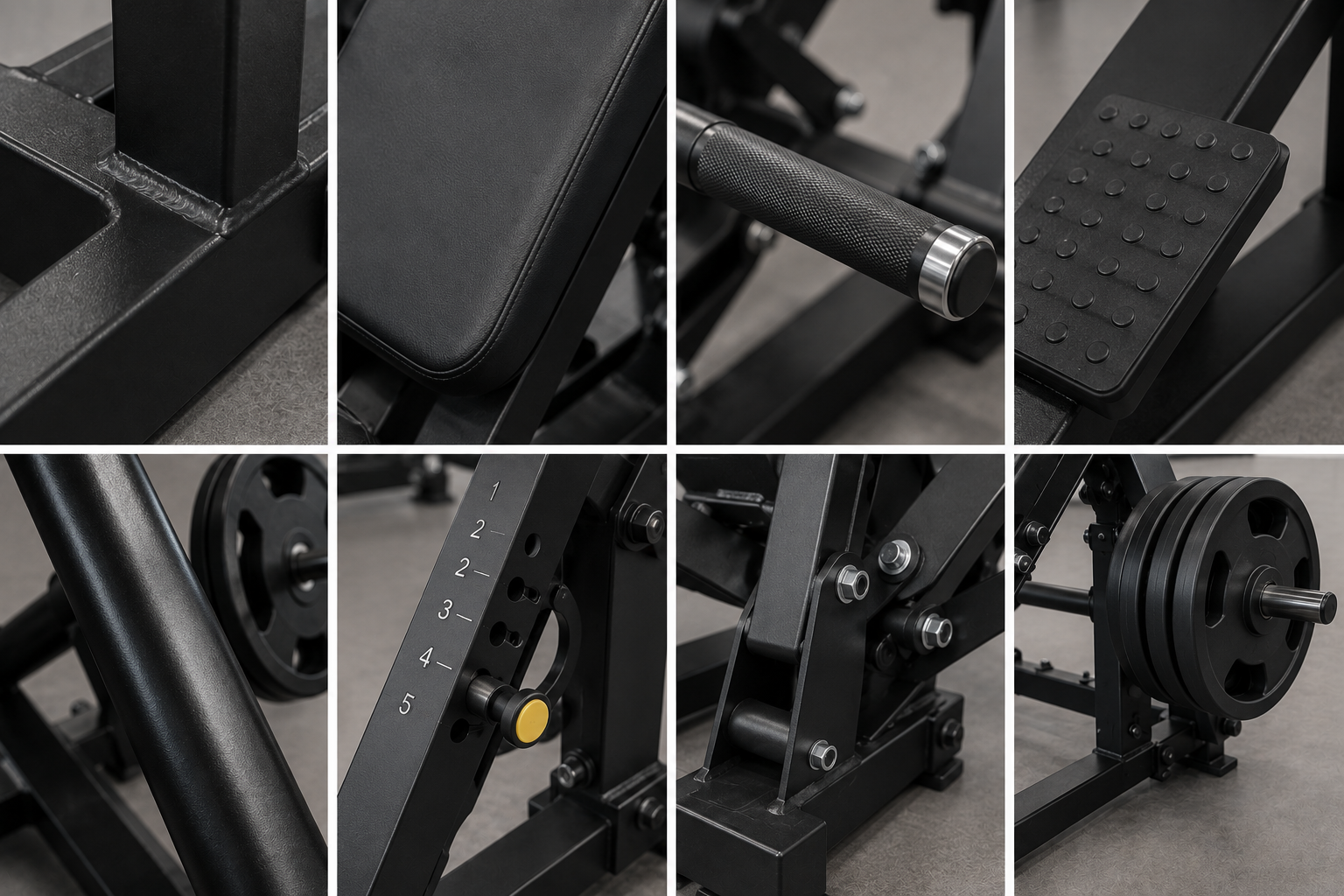
Structural Integrity and Material Standards
The Logic of Lead Times and Compliance
Common Procurement Pitfalls
High-Tier Performance: Bridging the Gap via OEM and High-Spec Alternatives
Achieving Parity Through Verifiable Metrics
OEM Excellence and Production Standards
Case Studies: Solving Complex Procurement Challenges via Customized Solutions
Scenario 1: Scaling a Regional Fitness Chain with Brand Consistency
Scenario 2: Navigating Certification and Packaging for a European Distributor
Operationalizing the Partnership: Execution and Logistics
The Lifecycle of an Order: From Prototyping to Mass Production
Packaging and Global Logistics Options
Pre-Procurement Checklist for Strategic Sourcing