Bumper Plate Wholesale: Material and Spec Comparison
Bumper Plate Wholesale: Material Composition and Commercial Utility
Selecting the wrong material profile during bumper plate wholesale procurement often leads to high replacement costs and damaged facility flooring. Many importers mistakenly prioritize the lowest initial unit price, only to face premature rubber degradation or excessive impact noise in high-traffic commercial environments. A professional sourcing strategy focuses on the total cost of ownership (TCO) by matching specific material compositions to the intended gym usage level, ensuring long-term durability and reduced maintenance overhead.
For distributors and gym operators, understanding the distinction between commercial bumper plates and standard training plates is vital for maximizing ROI. While cast iron remains a staple for static strength training, the high-impact requirements of modern functional training centers demand specialized rubber bumper plate wholesale options. Choosing the correct material—whether it be high-density rubber, polyurethane (PU), or traditional cast iron—directly influences the lifespan of your equipment and the integrity of your facility's subflooring.
Material Comparison for Commercial Procurement
| Material Type | Primary Manufacturing Process | Key Component / Layer | Commercial Duty Tier | Sourcing Impact |
|---|---|---|---|---|
| Rubber | Compression Molding | High-density Rubber Skin | Standard Commercial | High volume, high impact resistance |
| Polyurethane (PU) | Injection Molding | PU Encapsulation | Premium / Competition | Higher MOQ, lower wear rate |
| Cast Iron | Sand Casting | Steel Inner Hub | Budget / Strength Training | Lowest landed cost, high noise |
When evaluating gym equipment sourcing options, buyers must consider how material density affects the bounce and the subsequent wear on the floor. A professional factory will typically offer different tiers of rubber density to accommodate different budget constraints. For instance, a China factory specializing in high-end OEM production can provide precision-molded PU plates that offer superior color retention and a more consistent density compared to basic rubber-coated alternatives, which is essential for premium fitness franchises.
Technical QC and Sourcing Optimization
A reliable supplier does not merely ship finished goods; they implement rigorous quality control protocols at critical manufacturing junctions. For importers, the most significant risk in bumper plate wholesale is inconsistent weight distribution or poor coating adhesion, which can lead to uneven wear and client dissatisfaction. To mitigate these risks, a professional factory should demonstrate transparency in their production sequence, from the initial casting of the steel hub to the final compression molding or injection process.
During pre-shipment inspections, procurement leads should focus on three specific technical areas to ensure the quality of their commercial bumper plates. First, examine the coating adhesion of the rubber or PU layer; a high-quality China factory will ensure the bond between the inner steel ring and the outer casing is seamless to prevent delamination under high-impact use. Second, verify the weight tolerance through spot-checks, as consistent calibration is essential for professional-grade equipment. Finally, inspect the edge finish and the integrity of the center hole to ensure smooth transitions during rapid loading and unloading on barbell sleeves.
Optimizing your gym equipment sourcing involves balancing these technical requirements with logistics and wholesale volume. While premium PU options may require a higher MOQ, their durability often results in a lower long-term replacement frequency. When discussing OEM or ODM requirements with your manufacturer, specify your preferred density and color-coding standards to ensure the final product aligns with your brand identity and facility's operational needs. We recommend requesting a sample approval and a detailed technical spec sheet before finalizing any large-scale bulk orders to confirm the landed cost remains competitive against the expected product lifespan.
Comparing Material Durability and Manufacturing Processes
When managing high-volume bumper plate wholesale procurement, understanding the structural engineering of different materials is critical for calculating long-term TCO. For distributors and gym owners, the choice between impact absorption and weight density determines how frequently equipment must be replaced or serviced.
Selecting the right commercial bumper plates involves more than just aesthetic preference; it is a technical decision regarding floor protection and vibration control. High-density materials like PU offer superior durability for premium facilities, while standard rubber bumper plate wholesale options provide the best balance of cost and impact mitigation for high-traffic commercial environments. Rely-on a professional gym equipment sourcing strategy to match the material density to your specific facility usage levels.
| Material Type | Manufacturing Process | Impact Absorption | Commercial Duty Tier | Procurement Focus |
|---|---|---|---|---|
| Rubber (EBM/Injection) | Compression Molding | High (Excellent) | Standard Commercial | Durability & Floor Protection |
| Polyurethane (PU) | Injection Molding | Medium-High | Premium/Elite | Longevity & Aesthetic Finish |
| Cast Iron (Core) | Sand Casting | Low (Minimal) | Budget/Traditional | Low Landed Cost |
For a factory specializing in export, the precision of the internal steel hub assembly and the thickness of the outer coating layer are the primary indicators of quality. High-tier OEM production ensures that the transition between the core and the outer shell remains seamless under heavy usage, preventing the common failure modes seen in lower-grade wholesale alternatives.
The structural integrity of a plate is heavily dependent on the synergy between the core material and the external finishing process. In many professional sourcing scenarios, buyers must evaluate whether the manufacturing route—such as compression molding for rubber or injection molding for PU—aligns with the intended facility lifespan and maintenance budget. A well-executed production sequence, moving from the core casting or molding to the final calibration and coating, ensures that the weight remains consistent and the surface remains intact during high-velocity drops.
When conducting a factory audit or reviewing technical spec sheets, pay close attention to the thickness of the outer layer and the precision of the inner ring. A standard production flow typically includes a core formation, followed by a secondary molding or coating stage, and concludes with a weight tolerance spot-check. For high-end OEM orders, the adhesion of the coating to the steel hub is a critical QC point to prevent delamination, which is a common failure mode in lower-quality wholesale batches. To ensure your procurement meets international commercial standards, we recommend requesting a sample to verify the density and the seamlessness of the construction before finalizing a bulk order.
When conducting a factory audit or reviewing technical spec sheets, pay close attention to the thickness of the outer layer and the precision of the inner ring. A standard production flow typically includes a core formation, followed by a secondary molding or coating stage, and concludes with a weight tolerance spot-check. For high-end OEM orders, the adhesion of the coating to the steel hub is a critical QC point to prevent delamination, which is a common failure mode in lower-quality wholesale batches. To ensure your procurement meets international commercial standards, we recommend requesting a sample to verify the density and the seamlessness of the construction before finalizing a bulk order.
Technical Specifications for High-Volume Gym Equipment Sourcing
When managing bumper plate wholesale procurement, understanding the technical distinction between material compositions is critical for long-term asset management. Professional buyers must evaluate how different core materials and outer coatings impact the total cost of ownership and floor protection in high-traffic environments. Selecting the correct specification from a China factory ensures that your inventory meets the rigorous demands of heavy-use strength facilities.
The engineering of commercial bumper plates relies heavily on the interaction between the internal weight core and the external impact-resistant layer. For high-volume gym environments, the choice between rubber, polyurethane (PU), or traditional cast iron affects not only the durability of the unit but also the maintenance load and noise levels. In a professional sourcing context, a mismatch between material density and intended usage can lead to premature surface degradation or uneven weight distribution.
Standard rubber bumper plate wholesale options typically utilize a high-density rubber molding process around a steel or heavy-duty composite core. This construction is designed to maximize impact resistance, allowing for safe drop sequences in competitive or high-intensity settings. When evaluating a supplier, it is essential to confirm the manufacturing sequence—specifically how the rubber encapsulation is bonded to the internal structure to prevent delamination during heavy use.
Material and Manufacturing Comparison for Bulk Procurement
To optimize your gym equipment sourcing strategy, you must distinguish between the manufacturing routes used for different tiers of durability. A professional wholesale buyer should analyze how the core construction and surface finish dictate the long-term value of the order. Below is a technical comparison of the most common material configurations found in a professional China factory setting.
| Material | Core Construction | Surface Finish | Commercial Durability | Sourcing/QC Focus |
|---|---|---|---|---|
| High-Density Rubber | Steel or Composite Core | Injection Molded Rubber | Premium (High Impact) | Bonding strength and edge thickness |
| Polyurethane (PU) | Precision Steel Hub | PU Coating/Encapsulation | High (Non-Marring) | Coating adhesion and concentricity |
| Cast Iron | Solid Gray Iron | Powder Coating or Paint | Standard (Static Loading) | Casting uniformity and surface smoothness |
The production process for rubber bumper plate wholesale units typically involves a multi-stage sequence: precision casting or machining of the internal steel hub, followed by high-pressure injection molding of the outer rubber layer. For commercial bumper plates, the quality of the junction between the core and the coating is the primary failure point. During a pre-shipment inspection, buyers should focus on the weight tolerance and the uniformity of the surface to ensure the MOQ requirements for your project are met with consistent quality. Requesting a detailed specification sheet or a sample approval before full-scale OEM production can significantly reduce the risk of receiving units with uneven weight distribution or poor coating adhesion.
Critical QC and Engineering Checkpoints for Importers
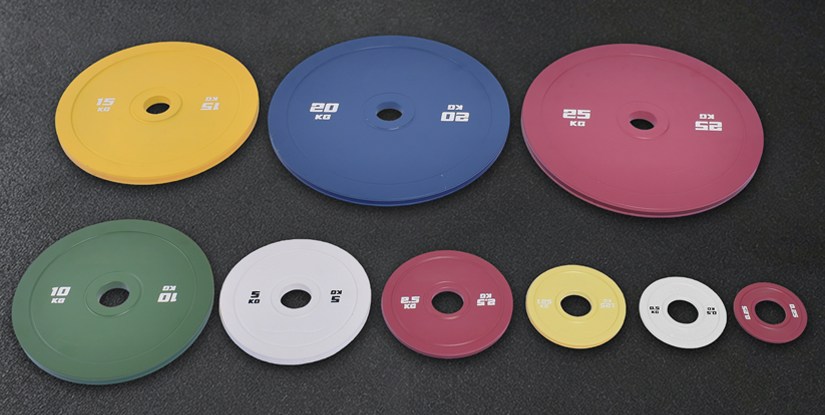
For distributors managing large-scale inventory, the difference between a successful shipment and a high-replacement-cost failure lies in the rigor of the pre-shipment inspection. When ordering bumper plate wholesale, the technical focus must shift from simple aesthetics to structural integrity. A professional supplier should provide documented evidence of weight tolerance stability and concentricity checks. If the internal steel hub is not perfectly centered within the rubber or PU layer, the resulting imbalance can lead to uneven wear on barbell sleeves and decreased equipment lifespan, ultimately hurting your long-term ROI.
Another vital engineering checkpoint involves the coating adhesion and surface finish. In a professional China factory, the manufacturing sequence—from the initial molding to the final calibration—must ensure that the outer layer remains tightly bonded to the core under high-impact stress. For commercial bumper plates, buyers should verify the durability of the weight markings, whether they are silk-screened or laser-etched, to prevent fading during heavy use. By prioritizing these technical specifications during the sourcing phase, you can better manage your landed cost and ensure that your OEM or ODM orders arrive ready for immediate, high-performance commercial deployment.
China Factory QC Standards for Rubber Bumper Plate Wholesale
For professional distributors and gym equipment importers, securing reliable bumper plate wholesale orders depends entirely on the rigor of the manufacturer's inspection protocols. When sourcing high-volume inventory, the primary risk is not just weight deviation, but material failure under high-impact commercial use. A professional China factory must implement a multi-stage verification process to ensure that commercial bumper plates meet international durability standards before they reach your warehouse.
Effective gym equipment sourcing requires a deep understanding of how material consistency affects your long-term landed cost and replacement cycles. In a high-standard factory environment, quality control is not a single event but a continuous sequence—starting from raw material inspection to final pre-shipment calibration. For rubber bumper plate wholesale procurement, the focus must remain on the structural integrity of the steel inner hub and the density of the outer casing to prevent premature cracking or de-lamination.
Critical Inspection Points for Rubber and Urethane Materials
Reliable commercial bumper plates require strict oversight of the rubber/urethane quality to ensure consistent bounce and impact absorption. A professional supplier will monitor the density and the adhesion between the inner steel ring and the outer material. If the manufacturing process lacks precision, the resulting products may suffer from uneven weight distribution or structural weakness, increasing your after-sales maintenance load and reducing your overall ROI.
During the sourcing process, buyers should verify if the China factory performs routine checks on the following components: the steel hub concentricity, the thickness of the rubber/PU layer, and the stability of the weight marking. High-tier OEM manufacturers typically utilize a sequence of casting, molding, and calibration to ensure that every unit in a bulk wholesale shipment maintains a standardized profile. When evaluating your next batch, confirm if the factory provides documentation regarding their weight tolerance and material density testing to mitigate the risk of receiving substandard commercial bumper plates.
| Inspection Point | Rubber Bumper Plate (Standard) | Urethane Bumper Plate (Premium) | Commercial Importance | Factory QC Focus |
|---|---|---|---|---|
| Material Density | Standard recycled or virgin rubber | High-density polyurethane (PU) | Ensures consistent bounce and impact absorption | Uniformity of material across the entire batch |
| Coating Adhesion | Mechanical bond to steel hub | Chemical/High-heat fusion to steel hub | Prevents de-lamination or cracking under heavy use | Strength of the bond between the inner ring and outer layer |
| Weight Calibration | Standard weight tolerance levels | Precision-calibrated weight accuracy | Essential for competition and high-end studio use | Consistency in weight across the full production run |
| Surface Durability | Resistant to standard abrasion | Highly resistant to UV and chemical wear | Reduces long-term maintenance and replacement costs | Surface finish and resistance to color fading |
Selecting the correct tier of rubber bumper plate wholesale products depends on balancing your initial procurement budget with the long-term TCO (Total Cost of Ownership). While standard rubber offers a cost-effective solution for high-volume commercial settings, premium urethane options provide superior durability and a thinner profile, which is critical for space-efficient barbell loading. We recommend that all distributors request specific material samples or a detailed spec sheet to verify how each option aligns with their target market's durability requirements and expected replacement cycles.
Pre-Shipment QC and Export Packaging Protocols
To protect your distributor margins and minimize the landed cost of damaged goods, a professional China factory must execute a rigorous pre-shipment QC sequence. For bumper plate wholesale orders, the inspection does not end with weight calibration; it extends to the physical durability of the export packaging. High-volume gym equipment sourcing requires that every pallet is reinforced to withstand the mechanical stresses of international sea freight. This includes checking the edge smoothness of the plates to prevent tearing of the packaging, as well as verifying the coating adhesion of the rubber or PU layer under standardized impact scenarios.
Reliable commercial bumper plates must also undergo a final shipping safety audit. This involves a weight tolerance spot-check on a randomized sample from the final production lot to ensure compliance with your OEM specifications. Furthermore, the factory should demonstrate robust export packaging standards—using heavy-duty corrugated boxes and reinforced palletizing—to ensure the shipment arrives at your warehouse without structural deformation. Before finalizing your bulk order, we suggest confirming the MOQ and lead time for custom branding, and requesting a detailed report on the factory's final inspection steps to ensure your wholesale inventory meets the highest commercial-grade expectations.
Optimizing Landed Cost Through Export Packaging and MOQ Management
For professional distributors and gym equipment importers, the true cost of a shipment is determined far beyond the unit price. When managing bumper plate wholesale procurement, the relationship between MOQ and shipping volume directly dictates your competitive edge. A China factory that offers optimized export packaging can significantly reduce the landed cost by maximizing container utilization and reducing volumetric weight penalties.
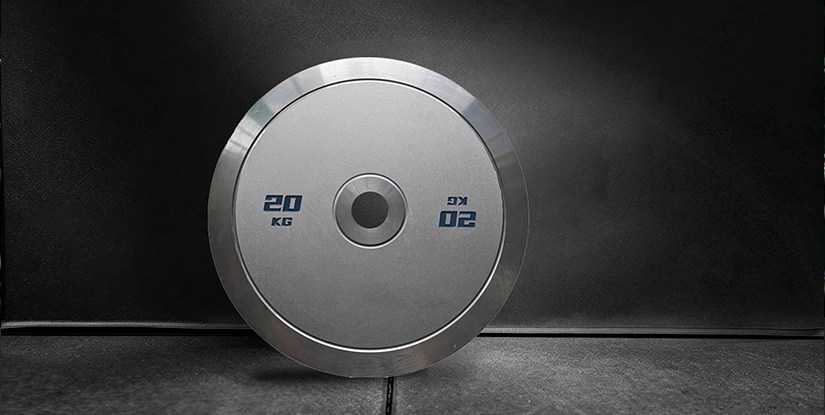
Inefficient palletization or substandard export packaging often leads to damaged goods or wasted container space, which erodes distributor margins. High-volume gym equipment sourcing requires a strategic approach to wholesale logistics. By coordinating with a professional supplier to align rubber bumper plate wholesale orders with standard 20ft or 40ft container dimensions, importers can achieve higher commercial bumper plates density per shipment, ensuring that every cubic meter of freight contributes to a lower per-unit cost.
Packaging and Shipping Efficiency Matrix
Selecting the right packaging configuration is a critical decision in the gym equipment sourcing process. To assist in your procurement planning, the following table illustrates how different packaging methods and volume tiers impact the total landed cost and container density for commercial bumper plates. Most professional buyers choose between standard carton protection for cost-efficiency and reinforced palletization for high-value, long-distance stability.
| Packaging Type | Typical Use Case | Shipping Density | Cost Impact | MOQ Tier |
|---|---|---|---|---|
| Standard Export Carton | High-volume distribution | High (optimized for loose loading) | Lowest per-unit cost | Standard MOQ |
| Reinforced Wooden Pallet | Premium/Fragile shipments | Medium (fixed footprint) | Moderate increase | Low to Mid-volume |
| Custom OEM Crating | High-end brand identity | Low (requires more space) | Higher per-unit cost | High-volume/Large wholesale |
When managing rubber bumper plate wholesale orders, we recommend consulting with your supplier to verify the exact dimensions of the final export cartons. A well-coordinated China factory can provide customized packing solutions that align with your warehouse racking or specific container loading requirements. We suggest requesting a detailed packing list and a 3D loading plan during the OEM or ODM design phase to ensure your shipment maximizes every cubic meter of available freight space.
Pre-Shipment QC and Damage Prevention Protocols
The risks associated with long-distance sea freight are significant for any bumper plate wholesale buyer. Without rigorous pre-shipment QC and specialized sea freight protection, high-density shipments can suffer from moisture ingress, structural compression, or carton deformation. To maintain high distributor margins, it is essential to ensure that your supplier implements a standardized inspection and packing protocol that addresses the specific weight and durability of commercial bumper plates.
A reliable China factory will typically employ a multi-stage approach to damage prevention. This includes the use of heavy-duty, reinforced cartons designed to withstand the stacking pressures of a full container. For larger rubber bumper plate wholesale orders, we recommend utilizing palletized shipping with edge protectors and shrink-wrap stabilization. This method not only secures the load for the vibrations of sea transport but also streamlines the unloading process at your local warehouse, effectively reducing labor costs and minimizing the risk of impact damage during the final stages of your gym equipment sourcing workflow.
Strategic Procurement: Custom Branding and OEM Capabilities
For professional distributors and large-scale gym operators, the ability to move beyond generic stock is a critical lever for increasing distributor margin. When sourcing through bumper plate wholesale channels, leveraging OEM and ODM services allows you to transition from a mere reseller to a brand owner. This shift is essential for establishing a distinct brand identity in a competitive landscape where product differentiation is often narrow.
Partnering with a specialized China factory provides the technical infrastructure required for high-level custom branding. Whether it is through precision laser-etched logos on steel hubs or high-durability silk-screened weight markings, these details elevate the perceived value of your commercial bumper plates. By controlling the aesthetic and technical specifications via private label manufacturing, you can optimize your gym equipment sourcing strategy to target specific market tiers, from budget-friendly fitness centers to premium training facilities.
Customization Tiers and Manufacturing Specifications
To effectively manage your sourcing strategy, it is vital to understand how branding methods impact both the landed cost and the production timeline. Different levels of customization require varying degrees of technical setup at the factory level, which directly influences the minimum MOQ for a production run. For instance, while simple color-coding is standard for most rubber bumper plate wholesale orders, permanent branding via mold-in processes provides a more premium, high-durability finish suitable for elite training environments.
The following table outlines the typical technical trade-offs encountered during bumper plate wholesale procurement to assist in your decision-making process.
| Branding Method | Material Compatibility | Primary Application | MOQ Impact | Factory QC Point |
|---|---|---|---|---|
| Embossed / Mold-in | Rubber, PU, Cast Iron | Premium/Competition Grade | Higher | Edge definition and mold seam integrity |
| Silk Screen | Rubber, Painted Steel | Standard Commercial | Medium | Ink adhesion and weight marking clarity |
| UV Printing | PU, Smooth Rubber | High-End Studio/Boutique | Lower | Color consistency and surface smoothness |
| Laser Etching | Steel Hub, Metal Core | Professional/Technical | Low | Depth of etching and hub concentricity |
When evaluating a supplier, we recommend requesting a sample evaluation for any complex OEM project. A thorough pre-shipment inspection should always focus on the durability of the branding—ensuring that logos and weight markings do not peel or degrade under heavy use. Confirming these technical details early in the process prevents costly returns and ensures your commercial bumper plates meet the professional standards expected by your end-users.
Logistics and Export Readiness for Bulk Orders
Managing the logistical complexities of bulk orders requires a focus on more than just product weight; it requires rigorous attention to export packaging and shipping efficiency. For distributors managing large-scale bumper plate wholesale shipments, the risk of transit damage or container-load shifting can significantly impact the final landed cost. A professional factory must implement standardized, heavy-duty packaging protocols to protect the integrity of the rubber bumper plate wholesale inventory during long-haul maritime transit.
To mitigate procurement risks, a robust pre-shipment QC process must verify three critical areas: packaging integrity, logo adhesion, and loading density. This includes inspecting the strength of heavy-duty cardboard dividers, the stability of wooden crates or pallets, and the durability of the surface coating under friction. High-volume sourcing professionals should request a detailed inspection report that confirms the factory has verified the structural stability of the containers and the secure fastening of all units. By ensuring these export-ready standards are met before the vessel departs, importers can maintain predictable lead times and ensure their commercial bumper plates arrive in a condition that supports immediate retail or commercial deployment.