How Cast Iron Kettlebells Are Made: Export Ready China
The Industrial Process of How Cast Iron Kettlebells Are Made
For professional importers and distributors, understanding how cast iron kettlebells are made is essential for mitigating procurement risks related to structural integrity and weight consistency. When sourcing at scale, buyers must evaluate three critical checkpoints: the purity of the raw materials, the precision of the molding equipment, and the reliability of the China factory production standards. A failure to verify these technical stages often results in higher long-term replacement costs and diminished brand reputation for the distributor.
The production begins with the melting of high-grade iron, where temperature control is vital to ensure the molten iron reaches the correct viscosity for a seamless pour. This stage is the foundation of industrial kettlebell manufacturing, as any impurities in the metal can lead to internal structural weaknesses. High-volume wholesale buyers typically prioritize suppliers who utilize automated melting processes to maintain batch-to-batch consistency, which is crucial for maintaining professional weight standards across a full set.
Once the metal is prepared, the focus shifts to sand casting, a method that requires exceptional mold precision to achieve the ergonomic handle shape and smooth surface finish required for commercial use. A well-executed mold ensures that the kettlebell meets commercial grade durability requirements, preventing cracks or uneven weight distribution during high-intensity training. For a supplier managing large-scale sourcing projects, verifying the quality of the sand molds and the cooling rate is a key step in ensuring the final product can withstand the rigorous demands of a high-traffic gym environment.
After the cooling stage, the raw castings undergo intensive surface finishing to eliminate sharp edges and structural imperfections. This stage is a critical component of cast iron kettlebell production, as it directly impacts both user safety and the longevity of the product coating. A professional industrial kettlebell manufacturing facility will implement a multi-step grinding process to ensure the handle and body are perfectly smooth, preventing the micro-fractures that often occur with lower-tier, unrefined units.
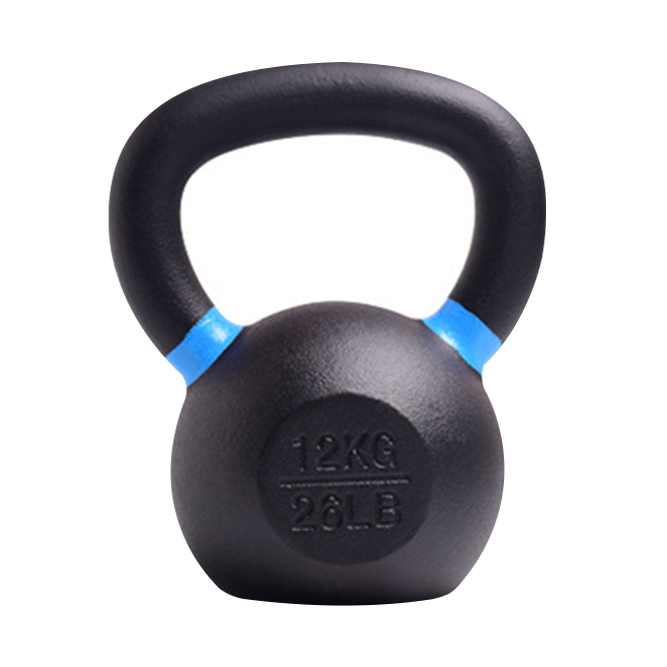
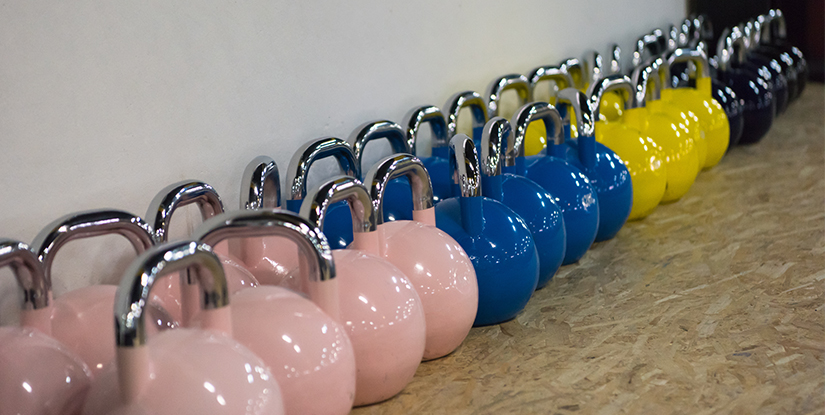
The final surface treatment typically involves a specialized powder coating application. This high-durability layer acts as a protective barrier against oxidation and moisture, which is vital for maintaining product appearance in humid commercial environments. For distributors managing high-volume orders, the consistency of this coating is a primary indicator of quality control (QC). A uniform, high-quality finish reduces the risk of premature rust and ensures that the product meets the professional aesthetics expected by premium gym clients.
To ensure long-term reliability and reduce the total cost of ownership for the end-user, top-tier manufacturers integrate a rigorous pre-shipment inspection protocol. This final check verifies that every unit in the batch adheres to the exact weight specifications and surface smoothness standards required for your brand. For those seeking OEM/ODM customization, this stage also allows for the verification of custom logos or color variations. For professional buyers, establishing these strict technical requirements during the initial sourcing phase is the most effective way to guarantee that every bulk shipment arrives ready for immediate commercial deployment.
Technical Specification Comparison for Procurement Decision-Making
When evaluating different production tiers, professional buyers must look beyond surface aesthetics to the underlying engineering. The following table outlines the critical technical differences between standard production and high-end manufacturing. This comparison is vital for distributors to determine if a supplier is providing products that meet the strict tolerances required for professional-grade fitness facilities. Understanding these nuances helps in calculating the long-term value and reliability of your wholesale inventory.
| Technical Metric | Standard Production Tier | High-End Commercial Grade |
|---|---|---|
| Material Density | Variable iron purity; potential air pockets | High-density, homogeneous iron composition |
| Weight Tolerance | +/- 5% deviation per unit | Strict +/- 1% to 2% precision standards |
| Surface Smoothness | Manual grinding; occasional sharp edges | Automated precision grinding for seamless handles |
| Handle Ergonomics | Basic cast shape; inconsistent grip | Refined, ergonomic casting for professional use |
| Coating Durability | Standard paint or thin coating | Heavy-duty, anti-oxidation powder coating |
| Ideal Sourcing Use | Budget-focused light training | High-traffic commercial gyms and distributors |
Choosing the correct manufacturing standard directly affects your landed cost and long-term customer satisfaction. While lower-tier units may offer lower initial prices, they often fail to meet the durability requirements of professional settings, leading to higher replacement rates and diminished distributor margins. By prioritizing a China factory that specializes in cast iron kettlebell production with high-precision molding and rigorous quality control (QC), you ensure that your sourcing strategy supports a premium brand identity and a lower total cost of ownership for your clients.
Critical Quality Control Standards for Commercial Grade Kettlebell Supplier Selection
For professional importers and distributors, understanding how cast iron kettlebells are made is the first step in mitigating the risk of high replacement costs. In the high-traffic environment of a commercial gym, equipment failure or surface degradation leads to increased maintenance cycles and diminished ROI. To ensure long-term durability, procurement leads must look beyond basic weight accuracy and focus on the structural integrity of the casting process itself.
Reliable industrial kettlebell manufacturing requires a rigorous approach to material purity and cooling rates to prevent internal structural flaws. When you source directly from a China factory, the value lies in the ability to audit their QC standards before the production line even starts. A high-tier commercial grade kettlebell supplier will implement multi-stage inspections—from raw iron melting to final powder coating—to ensure every unit meets the heavy-duty requirements of professional training facilities. This level of oversight is essential for maintaining a consistent commercial gym equipment inventory that withstands years of intensive use without cracking or surface peeling.
Technical Inspection Points for Bulk Procurement
When evaluating a potential partner for large-scale orders, buyers should demand transparency regarding specific inspection points. A professional commercial grade kettlebell supplier must demonstrate control over three critical technical variables: weight tolerance, structural homogeneity, and surface finish. Inconsistent weight distribution is a common failure in low-tier production, which can lead to uneven wear and potential liability in a commercial setting. High-quality cast iron kettlebell production requires precise mold management to ensure that the weight variance remains within a strict, industry-standard margin across the entire batch.
| Inspection Dimension | Technical Requirement for Commercial Use | Procurement Impact |
|---|---|---|
| Weight Tolerance | Strict deviation control per unit | Ensures consistency for professional training sets |
| Casting Integrity | Zero internal air pockets or cracks | Reduces replacement frequency and maintenance load |
| Surface Finish | Uniform coating and smooth handle grip | Prevents oxidation and maintains aesthetic value |
| Material Purity | High-grade iron with consistent density | Maximizes long-term durability and TCO |
For distributors managing high-volume inventory, these technical benchmarks directly influence the landed cost and long-term profitability of the product line. Relying on a commercial grade kettlebell supplier that provides detailed inspection reports for cast iron kettlebell production allows for better risk management during the sourcing process. Whether you are requesting a specific OEM design or ordering standard stock, confirming these quality checkpoints ensures that your bulk order arrives ready for immediate deployment in high-intensity environments. We recommend requesting a sample approval and a full technical spec sheet to verify these standards before finalizing your contract.
Optimizing Total Cost of Ownership Through Export Packaging
A critical oversight in many wholesale procurement strategies is the failure to account for shipping damage and the resulting impact on the total cost of ownership. Even if how cast iron kettlebells are made follows perfect technical specifications, inadequate protection during transit can lead to high replacement rate issues upon arrival at your warehouse. For a professional supplier, the job is not finished when the kettlebell leaves the mold; it is finished when the product arrives in pristine condition at the destination port.
To protect your profit margins, ensure your partner utilizes heavy-duty export packaging designed specifically for high-density iron goods. This includes reinforced corrugated cartons, moisture-resistant liners to prevent rust during sea freight, and standardized palletization to secure the load. By prioritizing robust packaging and strict container loading protocols, distributors can significantly reduce the risk of transit-related defects. This proactive approach to industrial kettlebell manufacturing and logistics minimizes the need for costly returns or credit notes, ensuring that your wholesale shipments maintain high reliability from the initial sourcing stage to final delivery.
Evaluating Manufacturing Methods: Sand Casting vs. Precision Molding
Understanding how cast iron kettlebells are made is essential for professional buyers to manage long-term operational expenses. When sourcing from a China factory, the choice between traditional sand casting and modern precision molding directly dictates the product's lifespan and your replacement frequency. For distributors and gym owners, selecting the wrong manufacturing method can lead to higher maintenance costs and diminished ROI due to premature surface degradation or structural inconsistencies.
From a procurement standpoint, the method used during industrial kettlebell manufacturing determines the unit's durability under heavy commercial use. While sand casting is a cost-effective standard for many wholesale orders, precision molding offers a higher level of dimensional accuracy. Choosing the correct commercial grade kettlebell supplier means balancing the initial landed cost against the long-term stability of the equipment in a high-traffic facility.
| Manufacturing Method | Surface Texture | Structural Consistency | Primary Procurement Benefit |
|---|---|---|---|
| Sand Casting | Rough and granular | Standard industrial tolerance | Lower unit cost for high-volume wholesale |
| Precision Molding | Smooth and uniform | High dimensional accuracy | Reduced replacement frequency in premium settings |
When analyzing cast iron kettlebell production, buyers must consider that precision-molded units often provide a more consistent grip and weight distribution. While the initial sourcing cost might be slightly higher, the reduction in surface wear and tear contributes to a superior total cost of ownership. A reliable supplier will provide detailed specifications for both methods to help you align your purchase with your specific facility requirements or OEM branding standards.
Total Cost of Ownership: Analyzing Upfront Investment vs. Long-Term Value
For procurement managers, evaluating the true cost of equipment requires looking beyond the initial invoice. A common mistake in global sourcing is focusing solely on the lowest price per unit without calculating the long-term impact of surface wear and weight precision. High-quality industrial kettlebell manufacturing ensures that the equipment maintains its structural integrity and aesthetic appeal even after years of high-frequency commercial use, effectively lowering your replacement frequency and long-term opex.
The following comparison helps distributors and gym operators decide between different production tiers based on their specific business models, whether they prioritize high-volume turnover or premium facility longevity. When negotiating with a China factory, consider how these variables affect your total landed cost and your ability to offer high-end products to your end clients.
| Procurement Metric | Standard Sand Casting (High Volume) | Precision Molding (Premium Tier) |
|---|---|---|
| Cost per unit | Lower initial investment | Moderate to high initial investment |
| Surface finish | Textured and rustic | Smooth and consistent |
| Tool longevity | Standard industrial durability | High-precision tool stability |
| Typical MOQ | Higher minimums for volume | Flexible depending on OEM requirements |
| Lead time | Standardized production cycles | Variable based on customization |
| Long-term ROI | Optimized for budget-friendly gym setups | Optimized for high-end boutique studios |
Ultimately, the decision on how cast iron kettlebells are made should be driven by your target market's expectations. If your goal is to supply large-scale commercial gyms where durability is the primary concern, a standard commercial grade kettlebell supplier can provide high-volume, cost-effective solutions. However, if you are developing a premium private label line for luxury studios, investing in more precise cast iron kettlebell production will protect your brand identity and ensure long-term customer satisfaction. We recommend requesting a detailed spec sheet and confirming the MOQ for both tiers to better calculate your projected margins and shipping logistics.
Optimizing Quality Control and Customization for Global Distribution
For professional importers, the technical details of how cast iron kettlebells are made are inseparable from the rigorous quality control standards required for international transit. A breakdown in the production chain—such as inconsistent cooling or improper degassing—can result in micro-fractures that compromise the unit's integrity. When you engage with a professional China factory, you are not just buying a product; you are auditing a process that ensures every batch meets the strict dimensional tolerances required for high-end commercial environments.
Beyond standard production, the ability to handle complex OEM/ODM requests is a critical differentiator for successful distributors. Whether you require custom weight increments, specialized handle diameters, or specific powder coating colors to match your brand identity, a capable supplier will offer integrated solutions. This level of customization allows you to move away from generic commodity trading and toward building a specialized, high-margin product line. We suggest requesting a sample approval process and a factory audit to verify that their cast iron kettlebell production lines can consistently meet your custom specifications and branding requirements.
Optimizing Your Sourcing Strategy with China Factory OEM and ODM Services
For professional distributors and global fitness brands, understanding how cast iron kettlebells are made is only the first step in a sophisticated procurement process. Beyond basic manufacturing, leveraging OEM and ODM capabilities allows you to move from a generic commodity buyer to a specialized brand owner. A high-tier commercial grade kettlebell supplier provides more than just hardware; they offer the technical infrastructure to support your unique market positioning.
The ability to integrate custom branding into the production cycle is essential for long-term differentiation in a crowded wholesale market. Whether you require a specific color profile for the handle, a unique texture for grip stability, or a precision-engraved logo, these services transform a standard weight into a proprietary asset. Utilizing private label solutions through a reliable China factory ensures that your brand identity remains consistent across your entire product catalog, effectively increasing your perceived value and distributor margins.
Strategic ODM partnerships also allow for product innovation that meets specific regional demands or niche fitness trends. Instead of sourcing off-the-shelf items with limited industrial kettlebell manufacturing flexibility, you can work directly with the factory to refine weight tolerances and finish durability. This level of control over cast iron kettlebell production minimizes the risks of inconsistent quality and helps you build a more resilient supply chain for your commercial clients.
Comparison of Sourcing Models: Standard Stock vs. Customized Production
Selecting the right procurement model depends on your specific inventory strategy, target market, and capital allocation. While standard stock orders offer speed and lower initial risk, customized production through a commercial grade kettlebell supplier provides the long-term differentiation required for high-end commercial fitness distribution. Below is a comparison to assist your sourcing decision-making.
| Feature | Standard Stock Order | Customized OEM/ODM Production |
|---|---|---|
| Customization Level | Minimal (Standard colors/weights) | High (Custom logos, textures, and finishes) |
| Branding Options | Generic or existing manufacturer mark | Full Private Label integration |
| MOQ | Lower (Tiered by weight/volume) | Higher (Based on specific custom specs) |
| Lead Time | Short (Ready-to-ship availability) | Extended (Production + QC + Shipping cycles) |
| Cost Structure | Standard wholesale pricing | Variable (Based on complexity and volume) |
| Supply Chain Control | Limited to available inventory | High (Direct influence on manufacturing) |
When evaluating how cast iron kettlebells are made for your specific catalog, consider that industrial kettlebell manufacturing via the OEM route requires more advanced planning but yields higher brand equity. For distributors seeking to scale, the ability to dictate technical specifications during cast iron kettlebell production ensures that every unit meets the exact durability standards of your commercial clients, ultimately protecting your landed cost and long-term reputation.
Ensuring Quality Control and Export Readiness
Navigating the complexities of international procurement requires more than just finding a low price; it requires a partner who prioritizes rigorous QC. A professional China factory must implement multi-stage quality checks—from raw material verification to the final inspection of the finished weight. For bulk importers, the risk of receiving inconsistent batches can lead to high return rates and damaged reputations. Therefore, a reputable supplier will offer transparent protocols, including weight tolerance testing and surface finish audits, to ensure every unit meets commercial-grade specifications.
To protect your landed cost and ensure a smooth arrival at your warehouse, specialized export packaging is non-negotiable. Heavy cast iron products require reinforced, moisture-resistant packing solutions to withstand long-distance sea freight and container loading stresses. We recommend scheduling a formal pre-shipment inspection to verify both the product integrity and the durability of the shipping crates. By confirming that bulk orders are packed according to international export standards, you mitigate the risk of transit damage and ensure your inventory is ready for immediate distribution upon arrival.
When planning your next procurement cycle, we invite you to contact us to request a technical specification sheet, confirm current MOQ levels, or discuss custom OEM requirements. Whether you are looking to refine your current product line or launch a new private label venture, our team is ready to support your sourcing strategy with detailed quotes and factory audit information.
Managing Logistics and Lead Times for Bulk Wholesale Orders
For international distributors and gym equipment importers, understanding how cast iron kettlebells are made is essential for accurate inventory planning. The complexity of industrial kettlebell manufacturing directly influences the production cycle and eventual delivery schedules. Because the process involves high-temperature metal casting, cooling periods, and multi-stage finishing, buyers must account for these technical phases when calculating their total lead time.
Effective cast iron kettlebell production requires significant factory capacity to maintain consistency across large batches. When placing a high-volume wholesale order, seasonal demand in the North American market can impact availability. To avoid stockouts or delayed launches, we recommend that professional buyers initiate sourcing protocols well in advance of peak seasons. Depending on the specific MOQ and whether you require OEM customization, the time from initial deposit to container loading can vary significantly. We suggest requesting a detailed production timeline and a formal quote to align your warehouse receiving schedules with the actual shipping windows.
Optimizing Order Structures and Customization via OEM/ODM
Procurement strategies for commercial-grade equipment must balance customization needs against logistical efficiency. For distributors seeking to build a unique brand identity, choosing between standard stock orders and specialized production is a critical decision. A professional commercial grade kettlebell supplier offers varying tiers of service to accommodate different business scales, from small boutique studio replenishment to large-scale warehouse distribution.
When you engage in OEM or ODM services, you are not just buying a product; you are investing in your own brand's market positioning. While standard weight sets are readily available for rapid wholesale fulfillment, customized requests—such as specific handle textures, unique color coatings, or embossed logos—require a longer production window to ensure high-quality output. Below is a comparison of common procurement models to help you evaluate the best fit for your current inventory strategy.
| Order Type | Typical MOQ | Lead Time Profile | Customization Potential | Best For |
|---|---|---|---|---|
| Standard Stock | Low to Moderate | Short (Ready to Ship) | Limited to standard colors | Boutique studios and rapid replenishment |
| Private Label | Moderate to High | Medium (Production Cycle) | Logo embossing and custom paint | Gym chains and regional distributors |
| Full Customization | High | Long (Design to Delivery) | Complete mold and specification control | Global brands and large-scale importers |
To ensure your technical specifications meet local commercial standards, we recommend a phased approach to how cast iron kettlebells are made. Start by requesting a sample for weight tolerance and finish verification before committing to a full-scale factory production run. Once the sample is approved, you can finalize your shipping documents and coordinate with your logistics provider to manage the landed cost and container loading schedules effectively.

Quality Control and Export Packaging Standards
A significant risk in international procurement is the discrepancy between factory samples and the final bulk shipment. To mitigate this, a reliable commercial grade kettlebell supplier must implement a rigorous QC protocol that spans from the initial molten metal pour to the final packaging stage. For professional buyers, verifying these quality checkpoints is non-negotiable to ensure that the weight tolerances and surface finishes meet the strict standards required for high-traffic commercial environments.
Effective export packaging is just as critical as the casting process itself to protect your investment during long-distance ocean freight. High-density foam, reinforced corrugated boxes, and heavy-duty palletizing are standard requirements to prevent surface damage or weight shifts within a container. By prioritizing these technical details, distributors can better manage their landed cost and reduce the overhead associated with damaged goods or returns. We recommend that all importers confirm the specific export packaging specifications and request a pre-shipment inspection report to ensure every unit in your bulk orders arrives in optimal condition.
Reducing Landed Cost Through Efficient Export Packaging and Container Loading
For international distributors and gym equipment importers, the total landed cost of a shipment often determines the final profitability of a product line. Understanding how cast iron kettlebells are made is only the first step; professional buyers must also evaluate how the China factory manages volumetric weight and container density. High shipping costs per unit can quickly erode distributor margins if the packaging strategy is inefficient.
Optimizing container loading efficiency is a critical technical requirement for bulk orders. Because cast iron is a high-density material, the primary challenge is not volume, but rather the precise arrangement of weight to prevent shifting and maximize every cubic meter of a 20ft or 40ft container. A professional commercial grade kettlebell supplier will utilize specialized palletization or interlocking stacking methods to ensure that the export packaging protects the product while minimizing empty space.
Effective industrial kettlebell manufacturing must integrate logistics planning into the production cycle. By refining the cast iron kettlebell production workflow to include standardized box dimensions, a supplier can significantly reduce the impact of volumetric weight on sea freight costs. This level of logistical precision ensures that your sourcing efforts result in a competitive edge through lower per-unit import expenses.
Comparison of Shipping Methods for Commercial Importers
Selecting the appropriate shipping configuration is essential to balance safety and shipping cost optimization. Most professional buyers must decide between palletized shipments and loose loading based on their warehouse infrastructure and the specific MOQ requirements of their order. While loose loading might maximize the weight capacity of a container, it often increases labor costs and potential damage during unloading at the destination port.
| Shipping Configuration | Primary Advantage | Logistical Requirement | Typical Use Case |
|---|---|---|---|
| Palletized Loading | High speed and safety during unloading | Requires forklift and warehouse space | High-end studio distributors |
| Loose Loading (Floor Loading) | Maximum container weight utilization | High manual labor for unloading | High-volume wholesale importers |
| Custom Crate Packaging | Maximum protection for premium units | Increased volumetric footprint | Specialized gym equipment kits |
When evaluating how cast iron kettlebells are made for the global market, the final stage of the industrial kettlebell manufacturing process must prioritize the structural integrity of the export packaging. For large-scale sea freight shipments, we recommend coordinating with your supplier to confirm the exact dimensions of the master cartons. This allows your logistics team to calculate the most efficient container load plan, ensuring that your wholesale procurement remains highly profitable through reduced freight overhead.
Mitigating Damage Risks via Protective Coating and Heavy-Duty Cartons
A common failure in low-tier cast iron kettlebell production is the neglect of long-distance environmental protection. For distributors, even a minor surface defect caused by moisture or friction during transit can lead to high return rates and diminished distributor margin. To prevent this, a professional commercial grade kettlebell supplier must implement a multi-layered defense strategy. This begins with a high-quality protective coating, such as a powder coat or specialized anti-rust lacquer, applied immediately after the cooling stage to seal the iron surface against oxidation.
Beyond surface treatment, the physical durability of the shipment relies on the strength of the heavy-duty cartons used for individual or set-based packing. High-density cast iron products exert immense pressure on packaging walls during sea freight. Relying on standard single-wall boxes is a significant procurement risk; instead, we utilize reinforced, double-walled corrugated fiberboard designed specifically for high-weight, low-volume items. This ensures that even when stacked under heavy loads in a shipping container, the structural integrity of each unit remains intact. By prioritizing these rigorous standards, your sourcing strategy effectively minimizes the total cost of ownership by reducing the need for replacement units and ensuring the product arrives in showroom-ready condition.