Kettlebell China Manufacturer: OEM ODM Manufacturing
Strategic Sourcing with a Kettlebell China Manufacturer
For large-scale facility operators, such as international hotel chains, high-traffic fitness clubs, and boutique studio franchises, the procurement of durable training equipment is a critical logistical decision. High-volume deployment requires more than just individual unit quality; it demands a reliable kettlebell China manufacturer capable of maintaining strict consistency across thousands of units. Whether you are outfitting a single luxury resort or managing a global rollout for a commercial gym network, sourcing directly from a specialized factory ensures that your inventory meets the rigorous demands of heavy-duty commercial use while maintaining a predictable landed cost.
In high-throughput environments like hotel gyms or multi-location fitness centers, the failure of a single component can lead to increased maintenance overhead and diminished user experience. Relying on a professional wholesale kettlebell supplier allows procurement leads to mitigate these risks through standardized production. By establishing a direct relationship with a commercial kettlebell factory, distributors and facility managers can secure customized solutions that align with their specific branding requirements and durability standards, ensuring long-term operational efficiency and higher ROI for the facility.
Material Selection and Commercial Deployment Comparison
Selecting the appropriate material profile is a fundamental step in the procurement process, as it directly impacts the total cost of ownership (TCO) and maintenance frequency. For high-traffic environments, the choice between traditional cast iron and advanced coated options depends on the specific deployment scenario, such as whether the equipment is used in a high-impact functional training zone or a premium hotel fitness center. A professional kettlebell China manufacturer provides various material routes to balance durability with budget constraints.
In many commercial settings, procurement leads must decide between the rugged simplicity of bare or powder-coated iron and the specialized protection offered by polyurethane (PU) or rubber encapsulation. While cast iron is the industry standard for heavy-duty strength training, coated variants are often preferred in hospitality or boutique studio settings to reduce noise and protect flooring. Understanding these technical trade-offs is essential when managing bulk orders and long-term replacement planning.
| Material | Process | Key Component | Commercial Duty | MOQ Impact | Factory QC Point |
|---|---|---|---|---|---|
| Cast Iron | Sand Casting & Powder Coating | Handle Knurling | High-Intensity Training | Standard | Base Flatness |
| PU Coated | Injection Molding / Dip Coating | Encapsulation Layer | Premium Studio / Hotel | Higher | Coating Adhesion |
| Rubber Coated | Rubber Dip / Molding | Protective Outer Shell | Functional / HIIT Zones | Medium | Handle-to-Body Junction |
| Steel | Machining / Precision Casting | Precision Handle | Competition / Specialized | High | Weight Tolerance Spot-check |
When finalizing your selection, consider the long-term maintenance load. While a wholesale kettlebell supplier can offer cost-effective cast iron options for high-volume strength rooms, the custom branded kettlebells produced via PU coating may offer a more premium aesthetic and better floor protection for high-end clients. We recommend requesting a sample evaluation or a detailed spec sheet to confirm that the coating adhesion and handle texture meet your specific brand identity and durability requirements before proceeding with a full bulk order.
Material Selection and Coating Processes for Commercial Durability
Selecting the right material profile is a critical decision for distributors and gym operators managing long-term replacement cycles. A professional kettlebell China manufacturer provides various options to balance initial landed cost against long-term commercial durability. Whether you are sourcing for a high-traffic strength facility or a premium boutique studio, the choice between raw cast iron and advanced coated finishes dictates the maintenance load and the lifespan of your inventory.
For high-volume wholesale orders, understanding the relationship between the base metal and the surface treatment is essential to avoid premature oxidation or coating failure. A reliable commercial kettlebell factory will typically offer standardized casting methods to ensure that the weight distribution remains consistent across a full set, which is vital for maintaining professional training standards.
| Material Base | Primary Process | Surface Finish | Commercial Duty Tier | Procurement Advantage |
|---|---|---|---|---|
| Cast Iron | Sand Casting | Powder Coating | Standard Commercial | High durability and cost-effective for bulk wholesale |
| Cast Iron | Sand Casting | PU Coating | Premium Studio | Superior floor protection and aesthetic appeal |
| Solid Steel | Machining/CNC | Chrome Finish | Elite/Competition | Precision weight and high-end brand identity |
When sourcing custom branded kettlebells, the coating adhesion is a key quality indicator. In many professional settings, a multi-stage process—starting from the initial sand casting to the final powder coating or PU encapsulation—is utilized to prevent the chipping often seen in lower-grade units. A qualified supplier will ensure that the handle texture and the base flatness meet industry-standard requirements before the units enter the export packaging stage. For buyers managing high-volume sourcing, verifying these specific manufacturing steps helps mitigate the risk of receiving inconsistent batches that could impact your distributor margins.
Evaluating Surface Finishes for Total Cost of Ownership
The decision between a standard powder coating and specialized rubber or PU finishes significantly impacts the total cost of ownership (TCO) for commercial facilities. While a basic finish may offer a lower initial landed cost, the long-term maintenance load and floor protection requirements must be factored into your procurement strategy. A professional kettlebell China manufacturer will provide technical specifications for each coating to help you determine the best fit for your specific deployment environment.
For distributors managing high-traffic gym chains, the durability of the outer layer is as vital as the base casting. A high-quality wholesale kettlebell supplier ensures that the coating process—whether it is a dry powder application or a liquid dip—is optimized for adhesion to the cast iron body. This prevents the common failure mode of peeling or chipping during heavy use, which can lead to increased replacement frequency and lower ROI for the end-user.
| Finish Type | Application Process | Primary Benefit | Ideal Usage Scenario | Procurement Focus |
|---|---|---|---|---|
| Powder Coating | Electrostatic Spray | High abrasion resistance | Standard commercial strength gyms | Balance of durability and cost |
| PU Coating | Polyurethane Dip | Premium tactile feel | Boutique studios and hotels | Aesthetic appeal and branding |
| Rubber Coating | Encapsulation/Molding | Maximum floor protection | High-impact functional training zones | Noise reduction and longevity |
When managing large-scale custom branded kettlebells projects, we recommend requesting samples to verify the thickness and adhesion of the coating. A reliable commercial kettlebell factory will be able to demonstrate how their specific coating line handles the knurling and handle-to-body junction, ensuring that the branding remains intact even under rigorous training conditions. Verifying these technical details during the sample approval stage is a critical step in successful global sourcing.
Manufacturing Workflow and Quality Control Standards
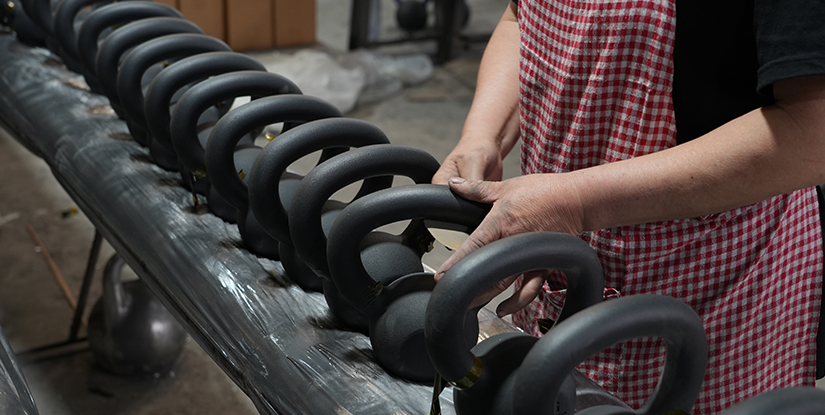
A reliable manufacturing sequence is the foundation of a low return rate for international distributors. A professional kettlebell China manufacturer follows a rigorous production flow that begins with high-quality sand casting to establish a consistent bell shape and weight distribution. Following the initial casting, the units undergo CNC machining to refine the handle and ensure the precision of the grip area. This mechanical refinement is essential for meeting the concentricity requirements expected in professional strength training environments.
After the structural shaping is complete, the units move to the surface treatment stage. Whether the specification calls for powder coating or a specialized dip, the coating adhesion must be verified to withstand high-frequency commercial use. A top-tier commercial kettlebell factory implements a multi-stage quality control protocol that includes weight calibration, base flatness checks, and a thorough inspection of the knurling texture. This ensures that every unit in a bulk shipment meets the same professional standard.
The final stage of the process is the pre-shipment QC and export packaging. For high-volume wholesale kettlebell supplier orders, the packaging must be robust enough to prevent movement and impact damage during long-distance ocean freight. This includes inspecting the integrity of the coating, the stability of the base, and the strength of the export packaging to ensure the product arrives at your warehouse in optimal condition, thereby protecting your landed cost and distributor margins.
Optimizing Facility Throughput with Custom Branded Kettlebells
Selecting the right inventory from a professional kettlebell China manufacturer directly impacts your facility's long-term operational efficiency. For distributors and gym operators, the choice between raw cast iron and advanced coated finishes is not just about aesthetics; it is a strategic decision regarding maintenance cycles and floor protection. High-quality custom branded kettlebells allow you to build a cohesive brand identity while ensuring that your equipment can withstand high-traffic commercial environments without constant replacement.
When sourcing at scale, procurement professionals must balance the initial landed cost against the total cost of ownership. A wholesale kettlebell supplier that offers various coating options—such as standard powder coating or premium PU encapsulation—enables you to tailor your inventory to specific client needs, whether for high-intensity functional training zones or luxury boutique studios. Investing in superior surface finishes reduces the frequency of maintenance and protects expensive flooring, ultimately improving your long-term ROI.
Material and Coating Selection for Commercial Durability
The distinction between budget-tier and premium-tier equipment often lies in the secondary manufacturing processes. While basic sand casting provides a cost-effective solution for high-volume wholesale orders, advanced coating lines ensure the product remains viable in professional settings for years. A reliable commercial kettlebell factory will typically offer a range of finishes to meet different commercial duty requirements.
| Material Base | Surface Process | Key Component Feature | Commercial Duty Tier | MOQ Impact | Factory QC Point |
|---|---|---|---|---|---|
| Cast Iron | Powder Coating | Consistent Knurling Depth | Standard Commercial | Lower | Coating Adhesion |
| Cast Iron | PU/Rubber Coating | Impact-Resistant Layer | Premium/Boutique | Higher | Encapsulation Uniformity |
| Steel | Chrome Finish | Precision Handle Grip | Competition/Elite | Moderate | Base Flatness |
From a sourcing perspective, choosing custom branded kettlebells with a specialized coating can mitigate common failure modes, such as rust or coating chipping. For instance, a commercial-grade casting process combined with a high-quality powder coating line ensures that the handle-to-body junction remains durable under heavy use. When evaluating your next batch, consider how these material choices affect your space optimization and the long-term maintenance load of your facility.
Navigating the technical nuances of surface finishes is essential for optimizing your landed cost and long-term equipment lifespan. A professional kettlebell China manufacturer understands that the choice between a standard powder coating and a premium PU/rubber coating is a decision between volume-driven efficiency and high-end facility protection. For example, while a standard powder coating offers a reliable and cost-effective solution for high-volume wholesale distribution, a high-quality rubber or PU encapsulation provides superior impact resistance and floor protection, which is critical for boutique studios or premium hotel gyms.
When you engage in sourcing for large-scale deployments, these material specifications directly influence your total cost of ownership. A specialized commercial kettlebell factory will typically implement rigorous pre-shipment inspections to ensure the integrity of these layers. For instance, a standard QC check might focus on coating adhesion to prevent chipping, whereas a premium production line will include a weight tolerance spot-check and a verification of the encapsulation uniformity to ensure the handle remains ergonomic and durable under heavy use. Selecting the appropriate tier through an OEM or ODM partnership allows you to align your equipment durability with your specific facility budget and brand identity.
Logistics and Pre-Shipment QC Standards
For distributors managing high-volume bulk orders, the complexity of the procurement process extends far beyond the initial factory quote. A professional kettlebell China manufacturer must demonstrate capability not only in casting but also in the logistical precision required for international export. This includes optimizing container loading density and ensuring that the export packaging is robust enough to withstand long-distance transit without compromising the integrity of the product or the finish.
A critical component of a successful sourcing strategy is the implementation of a rigorous pre-shipment QC protocol. During the final inspection phase, a reputable factory will conduct specific technical checks that directly impact your landed cost and long-term replacement planning. Rather than just a visual scan, professional inspections focus on high-risk areas such as coating adhesion to ensure the powder or PU layer does not chip during handling, and a strict weight tolerance spot-check to verify that each unit meets the specified commercial weight standard. For those pursuing OEM or ODM solutions, these technical benchmarks are the primary defense against high return rates and diminished distributor margins.
Manufacturing Standards and Factory QC Protocols
Maintaining consistent quality across bulk orders is the primary concern for importers sourcing from a kettlebell China manufacturer. Relying on a wholesale kettlebell supplier that lacks rigorous inspection protocols can lead to high replacement costs and damaged distributor margins due to weight inconsistencies or coating failures. To mitigate these risks, a professional commercial kettlebell factory must implement multi-stage verification throughout the production cycle.
A reliable pre-shipment inspection focuses on three critical pillars: weight accuracy, surface integrity, and structural balance. For high-volume custom branded kettlebells, the factory must ensure that the weight tolerance remains within industry-standard limits and that the surface finish consistency is uniform across the entire batch. Without these controls, even a high-quality OEM order can suffer from uneven coating adhesion or uneven handle-to-body junctions, which directly impacts the long-term durability required for commercial gym environments.
Standardized Inspection Checklist for Bulk Procurement
To ensure every unit meets the rigorous demands of global distribution, our QC protocols follow a structured sequence from the initial casting stage through to final export packaging. For professional buyers, understanding these specific checkpoints is essential for evaluating the technical capability of a kettlebell China manufacturer. We utilize a qualitative assessment system to ensure that all custom branded kettlebells delivered to your warehouse maintain a premium commercial-grade standard.
| Inspection Point | Technical Focus | Commercial Duty Tier | Primary QC Verification |
|---|---|---|---|
| Casting & Body | Base flatness and concentricity | Commercial / Premium | Visual check for casting voids or uneven surfaces |
| Handle & Grip | Knurling depth and handle-to-body junction | Commercial / Premium | Tactile inspection for ergonomic consistency |
| Coating Layer | Adhesion and thickness uniformity | Standard / Premium | Surface integrity check (powder coating or PU/rubber) |
| Weight Calibration | Weight tolerance and mass distribution | Standard / Commercial | Batch-level weight spot-checks |
This systematic approach allows us to act as a dependable wholesale kettlebell supplier, reducing the likelihood of defective returns or client complaints. By focusing on these critical components—such as the stability of the base and the durability of the coating—we ensure that your sourcing efforts result in high-performance equipment ready for immediate gym deployment. We recommend that all distributors request a sample approval or a detailed inspection report before finalizing large-scale OEM or ODM production runs.
Optimizing Landed Cost Through Export-Grade Packaging and Logistics
Beyond individual unit quality, the final stage of the kettlebell China manufacturer workflow involves specialized export packaging designed to protect your investment during long-distance maritime transit. For distributors and large-scale gym developers, the goal is to maximize container utilization while minimizing the risk of impact damage. A professional commercial kettlebell factory understands that dented casting surfaces or chipped powder coating can lead to costly insurance claims and diminished brand reputation upon arrival at your warehouse.
To ensure logistics safety and bulk order confidence, we implement standardized packing protocols that prioritize both structural protection and space efficiency. Whether you are sourcing standard cast iron units or high-end custom branded kettlebells, the packaging must withstand the rigors of global shipping. This includes using heavy-duty corrugated cartons, reinforced corner protectors, and optimized palletizing techniques to prevent shifting within the container. By managing these details at the source, we help you maintain stable landed costs and ensure that your wholesale shipments arrive in retail-ready condition, ready for immediate distribution or gym deployment.
Before finalizing your next high-volume OEM or ODM project, we invite you to discuss your specific packaging requirements, confirm the MOQ for custom boxing, or request a detailed pre-shipment inspection report to ensure your quality standards are met.
OEM and ODM Capabilities for Global Distributors
As a specialized kettlebell China manufacturer, we provide scalable solutions for distributors and gym chains looking to expand their product lines through professional OEM and ODM services. Whether you are launching a boutique fitness line or stocking high-volume commercial facilities, our factory supports diverse requirements for material construction and surface aesthetics to ensure your inventory meets local market trends and durability standards.
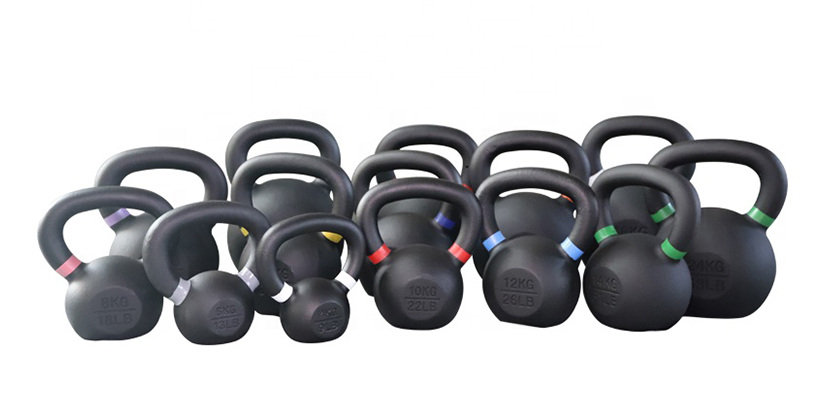
Our custom branded kettlebells programs allow you to move beyond generic stock items. We offer comprehensive private label solutions that include precision logo application—via sandblasting, silk screening, or metal plates—and specialized color matching. From standard cast iron units with a rugged powder coating for traditional strength training to high-end PU coating options designed for floor protection and premium studio aesthetics, we tailor the finish to your brand identity. For large-scale importers, we manage the entire sourcing workflow, including weight calibration and specialized export packaging, to ensure every unit arrives ready for retail or commercial deployment. Depending on your specific design complexity and branding requirements, we work closely with you to establish a realistic MOQ and optimized lead times for your bulk orders.
Technical Manufacturing Paths and Surface Finish Selection
Selecting the right manufacturing route is critical for optimizing your landed cost and ensuring product longevity in high-traffic environments. Distributors must evaluate the trade-off between production speed and customization depth when working with a wholesale kettlebell supplier. For example, standard sand casting offers a cost-effective solution for high-volume orders, whereas more complex molding processes may be required for specialized studio equipment.
The following table outlines the technical distinctions between common manufacturing and coating paths to assist in your procurement decision-making process.
| Material & Process | Surface Finish | Key Component Detail | Commercial Duty | MOQ Impact | Factory QC Point |
|---|---|---|---|---|---|
| Sand Casting | Powder Coating | Standard Knurling | Standard Commercial | Lower | Coating Adhesion |
| Sand Casting | Rubber Coating | Base Flatness | Premium Studio | Moderate | Encapsulation Uniformity |
| Die Casting | PU Coating | Precision Handle Grip | High-End Boutique | Higher | Weight Calibration |
| Single-Piece Cast | Enamel/Paint | Base Surface Smoothness | Budget/Entry-Level | Minimal | Surface Imperfections |
When sourcing through a commercial kettlebell factory, we recommend aligning your material choice with your target end-user environment. A powder-coated finish is typically preferred for traditional strength training due to its durability, while a rubber or PU coating provides essential floor protection and a premium feel for boutique studios. Understanding these technical tiers allows you to manage your inventory more effectively and maintain consistent distributor margins across different market segments.
Please contact us to request a detailed specification sheet, confirm the MOQ for your specific finish requirements, or initiate a sample evaluation for your upcoming bulk order.
Quality Control and Export-Ready Logistics
For professional buyers, the risk of receiving inconsistent batches is a significant concern when managing long-distance procurement. A reliable kettlebell China manufacturer must prioritize rigorous technical inspections to mitigate these risks. Our quality control protocols involve a multi-stage process, starting with a strict weight calibration to ensure every unit falls within industry-standard tolerances. We also perform a concentricity check to verify the balance and structural integrity of the handle and bell, ensuring a smooth, professional user experience in commercial settings.
Beyond the physical product, shipping efficiency and protection are vital for maintaining a low landed cost. We utilize specialized export packaging designed to withstand the rigors of sea freight and international handling. This includes heavy-duty corrugated boxes and reinforced structural supports to prevent damage during transit. For high-volume bulk orders, we optimize container loading configurations to maximize space efficiency, directly benefiting your shipping margins. By managing these technical details—from weight precision to final palletization—we ensure your wholesale kettlebell supplier partnership delivers high-performance equipment that arrives ready for immediate commercial deployment.
Logistics and Export Packaging for Bulk Shipments
Optimizing the landed cost of heavy iron implements requires more than just efficient shipping routes; it demands a specialized kettlebell China manufacturer approach to logistics. For distributors and gym equipment importers, the primary risks during long-haul sea freight are structural damage to the casting and oxidation of the surface finish. A professional wholesale kettlebell supplier must implement rigorous export packaging protocols to ensure that high-density loads arrive at your warehouse in pristine, retail-ready condition.
Standard cardboard solutions are insufficient for the high impact and moisture levels found in international shipping containers. To mitigate these risks, a leading commercial kettlebell factory utilizes heavy-duty, reinforced corrugated cartons and customized palletization strategies. We focus on two critical pillars: protection against rust and impact, and maximizing container loading density to reduce your per-unit shipping expense.
Optimizing Container Loading and Weight Distribution
When managing bulk shipments, the physical density of cast iron presents a unique challenge for logistics efficiency. Improperly stacked loads can lead to crushed bottom layers or uneven weight distribution, which complicates the unloading process at the destination port. Our China factory implements a structured loading plan that prioritizes structural integrity and volume utilization.
A standard professional protocol involves several layers of protection:
- Base Layer Stability: Utilizing heavy-duty wooden or reinforced plastic pallets to create a level foundation, preventing the shifting of heavy iron weights during transit.
- Internal Buffering: Implementing moisture-absorbent silica gel packets and specialized film wrapping to provide protection against rust and impact, ensuring the coating or bare iron finish remains intact.
- Strategic Stacking: Calculating the exact height and weight limits to ensure container loading maximizes cubic capacity without exceeding legal weight limits per container type.
- Outer Reinforcement: Using high-strength corner protectors and heavy-duty strapping to secure the custom branded kettlebells within the pallet structure, minimizing movement during sea swells.
By focusing on these technical details, a kettlebell China manufacturer helps distributors reduce the total cost of ownership by minimizing transit-related damages and optimizing the number of units per 20ft or 40ft container. Before finalizing your sourcing plan, we recommend confirming the specific packaging dimensions and pallet configurations to align with your local warehouse receiving capabilities and MOQ requirements.
Packaging Method Comparison for Procurement Decision-Making
Selecting the appropriate packaging method is a critical factor in calculating your final landed cost and managing warehouse receiving workflows. Depending on your distribution model—whether you are a small studio operator or a large-scale distributor—the choice between bulk carton shipping and palletized freight will impact both your shipping margins and your internal logistics efficiency. A professional wholesale kettlebell supplier provides tiered packaging options to suit different commercial requirements.
| Packaging Type | Primary Application | Protection Level | Shipping Stability | Logistics Impact |
|---|---|---|---|---|
| Bulk Carton (Standard) | Small-scale retail/Studio orders | Moderate: Individual box protection | Medium: Requires careful manual stacking | Higher per-unit volume; better for small shipments |
| Reinforced Palletized (Premium) | Large-scale wholesale distribution | High: Multi-layer buffering and shrink wrap | Very High: Optimized for forklift/container stability | Maximizes container loading density; lower labor cost |
| Custom Branded Crates | High-end custom branded kettlebells | Extreme: Rigid structure for heavy iron loads | Maximum: Prevents any crushing or shifting | Highest protection; ideal for long-haul ocean freight |
For high-volume importers, we typically recommend the palletized approach offered by our commercial kettlebell factory. This method ensures that the heavy, high-density loads are stabilized for sea transit, significantly reducing the risk of surface coating abrasion or handle damage. When you finalize your sourcing agreement, please consult with our factory team to confirm the specific dimensions of your pallets. This ensures your MOQ and volume requirements align perfectly with your destination port's handling equipment and your local warehouse space constraints.
Pre-Shipment QC and Inspection Protocols
Before any high-volume order leaves the China factory, it must pass a multi-stage pre-shipment inspection to mitigate the risk of costly returns or client dissatisfaction. For a professional kettlebell China manufacturer, quality control is not just about the final product, but about ensuring every unit meets the rigorous standards required for commercial-grade durability. We focus on the specific failure modes common in heavy iron transit, such as coating failure or weight inaccuracies.
Our inspection process covers three critical technical dimensions to ensure your wholesale orders are compliant with your specifications:
- Weight Tolerance and Calibration: Each batch undergoes a weight tolerance check to ensure the cast iron density aligns with the declared weight, preventing discrepancies that could impact your brand reputation.
- Coating Adhesion and Surface Integrity: We inspect the coating layer for any signs of peeling or bubbling. This ensures the powder coating or rubber finish remains durable under heavy usage and survives the high-moisture environment of sea freight.
- Structural and Handle Inspection: Technicians perform a visual and physical check of the handle-to-body junction and knurling consistency to ensure there are no casting defects that could compromise safety during training.
Implementing these strict QC steps allows a commercial kettlebell factory to provide the reliability that distributors and gym chains demand. By addressing these variables at the source, we reduce the likelihood of transit-related damage, helping you maintain a predictable landed cost and stable inventory levels. We invite you to request a detailed inspection report template or discuss your specific QC requirements during the sample approval stage to ensure your OEM or ODM project meets your exact commercial standards.