Quality Control for Adjustable Dumbbell and Kettlebell Sets
Vetting Manufacturers for High-Precision Weight Systems
Distributors supplying high-traffic strength training facilities face a unique risk when sourcing an adjustable dumbbell and kettlebell set. While boutique studios might tolerate minor tolerances, a commercial gym environment demands extreme mechanical reliability to prevent frequent replacement cycles. The distinction between consumer-grade hobbyist gear and professional equipment lies in the ability of the factory to maintain tight manufacturing standards across high-volume production runs.
A rigorous commercial weight set inspection must prioritize the precision engineering of the internal selection mechanisms. High-end manufacturers utilize advanced CNC machining and specialized alloys to ensure that weight plates engage and disengage without friction or structural fatigue. When vetting a partner, verify their capacity for adjustable weight mechanism testing; a capable factory will demonstrate consistent component alignment and smooth transition cycles, ensuring the equipment withstands the repetitive stress of heavy daily use in a professional setting.
To mitigate the risk of mechanical failure in high-use environments, buyers should move beyond surface-level aesthetics and evaluate the factory's core manufacturing capabilities. A low-cost producer may offer competitive MOQs, but often at the expense of precision tolerances and long-term structural integrity. For professional distributors, the distinction between a high-performance production line and a low-precision alternative is best identified through a technical comparison of material grades and mechanism durability.
| Technical Metric | High-Precision Production Line | Standard/Low-Cost Alternative |
|---|---|---|
| Material Grade | Industrial-grade reinforced steel & heavy-duty polymers | Standard carbon steel or thin-walled plastics |
| Precision Tolerances | Tight CNC-machined tolerances for seamless plate shifts | Loose tolerances leading to rattling or uneven weight distribution |
| Mechanism Testing | Rigorous cycles of high-frequency load adjustments | Basic single-cycle functional checks |
| Commercial Suitability | High-traffic gym/club deployment (Long lifespan) | Home-use or limited boutique studio applications |
When performing fitness equipment quality assurance, focus on the consistency of the internal locking systems. A high-quality adjustable dumbbell and kettlebell set should exhibit zero lateral play or mechanical resistance during rapid weight changes. Relying on manufacturers who provide detailed data on their material strength and tolerance testing will ultimately lower your total cost of ownership and reduce warranty-related logistical headaches.
Identifying Red Flags in Structural Durability
During the sample testing phase, procurement managers must look past the exterior finish to evaluate the actual load-bearing stability of the unit. A common failure point in lower-tier manufacturing is mechanism fatigue, where the internal selection track loses its shape after repeated weight transitions. If the adjustment components feel "spongy" or exhibit significant lateral play under load, the unit will likely fail to meet the lifespan requirements of a commercial facility.
Pay close attention to the wear resistance of the contact points between moving parts. High-quality sets utilize hardened coatings or reinforced alloys to prevent the degradation that occurs from friction during daily weight changes. When negotiating your sourcing strategy, do not let low MOQ considerations distract from these technical requirements; a cheaper entry point often results in higher long-term maintenance costs and diminished ROI due to premature mechanical failure in high-traffic environments.
Critical Inspection Protocols for Adjustable Weight Mechanisms
For distributors and gym operators, the mechanical reliability of an adjustable dumbbell and kettlebell set determines the long-term total cost of ownership. Unlike fixed weights, adjustable mechanisms are subject to constant friction and impact, making rigorous commercial weight set inspection essential to prevent operational downtime.
Stress Testing for High-Frequency Usage
In high-traffic commercial environments, the transition between weight increments occurs hundreds of times daily. To ensure durability, manufacturers must implement rigorous cycle testing, simulating years of rapid adjustments to verify that the locking pins and sliding tracks do not fatigue or seize. A failure in the adjustable weight mechanism testing phase can lead to catastrophic mechanical failure during a set, posing significant liability risks. We recommend that procurement managers verify if a supplier utilizes automated stress-testing protocols to ensure the components can withstand the high-frequency usage typical of boutique studios and large-scale fitness franchises.
Mechanism Comparison and Durability Profiles
Selecting the right adjustment system involves a trade-off between speed of use and long-term mechanical resilience. For large-scale facility deployment, the choice of mechanism directly impacts your maintenance schedule and the longevity of your inventory. The following comparison outlines how different configurations perform under rigorous commercial demand.
| Mechanism Type | Durability Rating | Wear Resistance | Maintenance Frequency | Ideal Commercial Use Case |
|---|---|---|---|---|
| Pin-Lock System | High | Excellent (Metal-on-Metal) | Low (Annual Inspection) | Heavy-duty strength training zones |
| Dial-Based System | Moderate | Good (Precision Components) | Medium (Periodic Cleaning) | Boutique studios and HIIT classes |
| Plate-Sliding System | Moderate/Low | Variable (Plastic/Composite) | High (Frequent Calibration) | Home-gym retail or light commercial |
When sourcing an adjustable dumbbell and kettlebell set, evaluate the materials used in the moving parts. While dial-based systems offer rapid transitions, they often require more precise fitness equipment quality assurance to prevent jamming from dust or sweat. Pin-lock systems remain the gold standard for high-volume distributors seeking to minimize service calls and replacement costs in rugged training environments.
Identifying Red Flags in Material Integrity and Component Tolerances
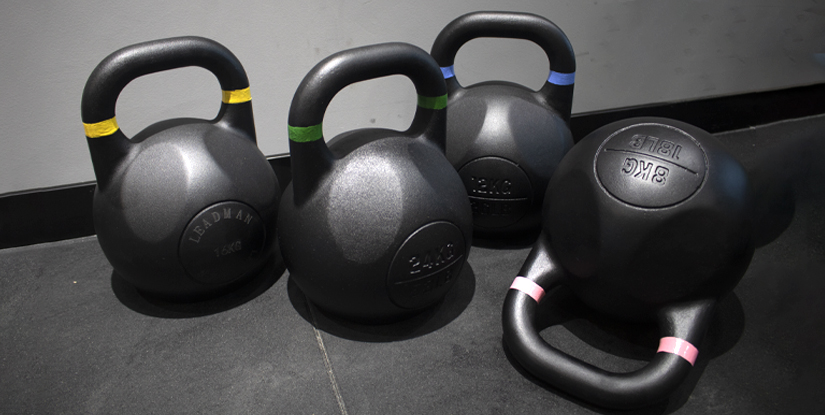
During MOQ inspection or bulk receiving, distributors must look beyond aesthetic perfection to identify structural vulnerabilities. A critical red flag is tolerance deviation within the adjustment rails or gear teeth; even a millimeter of misalignment can lead to uneven wear and premature failure. During a commercial weight set inspection, check for microscopic fractures or surface irregularities in high-stress zones, as these are precursors to material fatigue.
Furthermore, verify load-bearing stability by checking the play or "wiggle" in the handle once the weight is set. Excessive movement indicates poor fitness equipment quality assurance during the manufacturing phase, which can compromise user confidence and safety. For wholesale procurement, we advise testing a sample from the specific production batch to ensure that the thickness of the steel plates and the precision of the locking interfaces meet the high standards required for heavy-duty commercial deployment.
Standardizing Commercial Weight Set Inspection Benchmarks
Maintaining mechanical reliability in high-frequency usage scenarios requires a rigorous approach to routine oversight. For distributors and facility managers, a standardized commercial weight set inspection protocol is the only way to mitigate the risk of unexpected component failure and ensure long-term user safety.
Regularly auditing your adjustable dumbbell and kettlebell set inventory allows you to identify wear patterns in the selection mechanisms or weight plates before they become liability issues. Neglecting these checks in high-traffic commercial gyms often leads to increased replacement costs and diminished equipment lifespan.
| Inspection Focus | Standard Commercial Expectation | Risk of Neglect |
|---|---|---|
| Adjustment Mechanism | Smooth, tactile engagement of locking pins/dials | Mechanical jams or accidental weight release |
| Surface Integrity | Consistent coating thickness; no cracks or peeling | Rust formation and reduced grip stability |
| Structural Joints | Zero lateral play or wobbling in the handle/base | Stress fractures under heavy load usage |
Effective maintenance relies on distinguishing between different mechanical architectures. For example, pin-based systems require different oversight than dial-driven configurations to ensure long-term durability. High-volume facilities must implement specific adjustable weight mechanism testing protocols tailored to the unique movement of each component to prevent downtime.
Mechanism-Specific Testing Benchmarks
When evaluating factory QC capabilities, look for manufacturers that provide data on selector pin durability and dial rotation smoothness. A high-quality selector pin should engage with a distinct, positive click, while a dial mechanism must resist grit accumulation to maintain a fluid rotation under load. Furthermore, weight plate stability must be verified to ensure that moving components do not shift or rattle during high-intensity transitions.
| Mechanism Type | Primary Inspection Metric | Critical Failure Point |
|---|---|---|
| Selector Pin / Drop-in | Pin engagement depth & spring tension | Pin deformation or misalignment |
| Dial / Rotation System | Consistent torque & rotation smoothness | Internal gear stripping or jamming |
| Slide / Rail System | Linear tracking & plate stability | Lateral wobble or rail binding |
For distributors managing large-scale MOQ orders, understanding these nuances is vital for setting realistic warranty terms. Relying on a supplier that standardizes these specific mechanical benchmarks reduces the frequency of field-service calls and improves the total cost of ownership for the end-user.
Optimizing Total Cost of Ownership Through Lifecycle Management
Strategic procurement extends beyond the initial purchase; it involves calculating the long-term total cost of ownership (TCO). For high-traffic facilities, the true cost of an adjustable dumbbell and kettlebell set includes not just the invoice price, but the cumulative expense of labor, downtime, and component replacement over several years of commercial deployment.
To protect your investment, prioritize sourcing from manufacturers that offer high replacement parts availability. In many commercial settings, a minor failure in a single selector pin or a worn dial component can render an entire expensive unit unusable if the parts are not readily available. A robust fitness equipment quality assurance framework should include a defined maintenance cycle, typically ranging from quarterly visual audits to annual deep-cleaning of mechanical tracks.
When negotiating with suppliers, confirm whether the internal mechanical components are modular. Being able to replace individual weight plates or adjustment gears rather than the entire assembly significantly lowers long-term operational costs. This distinction is critical for distributors looking to offer high-value, long-lasting solutions to gym owners who prioritize equipment uptime and predictable maintenance schedules.
Mitigating Warranty Claims Through Component Verification
Rigorous inspection of the mechanical components within an adjustable dumbbell and kettlebell set is a direct safeguard for your bottom line. For distributors, the cost of a single defective selector pin or a stripped adjustment track extends far beyond the replacement part; it includes shipping logistics, labor, and the erosion of client trust.
The Financial Impact of Quality Assurance
Implementing a strict commercial weight set inspection protocol allows buyers to transition from reactive troubleshooting to proactive asset management. High-quality adjustable weight mechanism testing significantly reduces long-term maintenance costs by ensuring that high-wear parts meet structural tolerances before they reach the gym floor. For wholesale partners, this diligence directly impacts distributor profitability by driving down return rates and minimizing the frequency of costly warranty claims. Investing in upfront verification ensures a lower Total Cost of Ownership (TCO) and protects the reputation of your fitness brand in competitive North American markets.
To justify the procurement of premium-tier equipment, buyers must weigh the initial unit price against the long-term operational expenses. A superficial check may lower immediate capital expenditure, but it often leads to higher replacement frequency and increased labor costs over the product lifecycle.
| Evaluation Metric | Superficial Visual Inspection | Rigorous Mechanism Testing |
|---|---|---|
| Inspection Depth | Exterior aesthetic and surface finish only | Internal load-bearing integrity and track smoothness |
| Adjustable Weight Mechanism Testing | Minimal; relies on basic function test | Stress-testing selector pins and engagement friction |
| Long-term Maintenance | High; frequent adjustments lead to wear | Low; optimized tolerances extend component life |
| Replacement Frequency | High; frequent parts failure in high-traffic gyms | Low; durable components support heavy usage |
| Total Cost of Ownership | Higher due to unexpected downtime and returns | Lower via sustained reliability and durability |
Choosing a supplier that prioritizes comprehensive fitness equipment quality assurance ensures that your inventory remains a reliable asset rather than a recurring liability. For high-volume distributors, the ability to demonstrate this level of technical vetting serves as a powerful competitive advantage when pitching to premium fitness facilities.
Maximizing ROI via Strategic Sourcing Protocols
Protecting your margins requires moving beyond basic price-per-unit negotiations to a more sophisticated procurement strategy. To ensure long-term supply chain reliability, B2B buyers should demand transparency regarding factory capability and specific testing documentation before finalizing large-scale orders. Do not settle for vague assurances; instead, request standardized reports that verify the durability of the internal selection mechanisms and the load-bearing strength of the housing.
When negotiating MOQ levels, tie your volume commitments to strict component verification milestones. For instance, request that the manufacturer provides batch-specific testing results for high-stress parts, such as the weight-plate engagement pins. By making these technical requirements a non-negotiable part of your purchase order, you ensure that every adjustable dumbbell and kettlebell set arriving in your warehouse is ready for immediate, safe commercial deployment. This proactive approach safeguards your brand reputation and prevents the high overhead of managing faulty inventory in the field.
Optimizing Export Packaging for Heavy-Duty Modular Sets
For distributors and gym equipment wholesalers, the total cost of ownership is heavily influenced by how an adjustable dumbbell and kettlebell set survives the international transit process. While high-quality components are essential, substandard packaging can lead to catastrophic failure of the internal weight-selection mechanisms during sea or air freight.
The Link Between Packaging Integrity and Logistics ROI
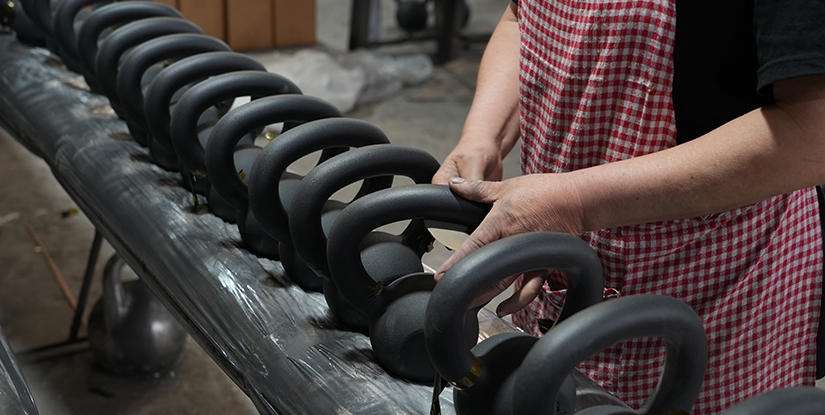
A rigorous commercial weight set inspection must extend beyond the factory floor to the final packing stage. Heavy modular units often face significant kinetic energy and vibrations during multi-modal transport. Without sufficient protective layering, such as reinforced corrugated outer cartons or custom-molded high-density foam, the delicate internal pins and selector plates can suffer misalignment. This results in high return rates and diminished profit margins for the buyer.
Prioritizing shipping damage prevention through structural reinforcement is a strategic move for cost-efficiency. Investing in higher-grade export packaging reduces the frequency of "Dead on Arrival" (DOA) claims and minimizes the need for costly replacement shipments. For high-volume B2B orders, the cost of a slightly more robust carton is negligible compared to the expense of shipping a replacement adjustable dumbbell and kettlebell set across oceans due to mechanical failure.
Packaging Configuration Comparison
Procurement managers must weigh the immediate unit cost against the potential for transit-related damage. Choosing the correct configuration depends on your shipment volume, shipping method, and the sensitivity of the internal mechanisms. Use the table below to evaluate the trade-offs between standard export options and premium reinforced solutions.
| Packaging Type | Protection Level | Cost Impact | Suitability for Long-Distance Sea Freight |
|---|---|---|---|
| Standard Export | Basic (Single-wall Corrugated) | Low (Baseline) | Limited; higher risk of crushing or moisture damage |
| Reinforced Export | Intermediate (Double-wall Corrugated + Foam Inserts) | Moderate Increase | Good for regional shipping or shorter sea routes |
| Premium Heavy-Duty | High (Multi-layer Corrugated + Custom Molded EVA/EPE) | Significant Increase | Optimal for trans-Pacific/trans-Atlantic maritime freight |
While the Premium Heavy-Duty option requires a higher initial investment per unit, it is often the most cost-effective choice for large-scale distributor shipments. By mitigating the risk of mechanical misalignment caused by heavy vibration, you safeguard your profit margins and ensure the fitness equipment quality assurance standards are maintained from the factory to the end-user's facility.
Strategic Volume Management and Landed Cost Reduction
Effective procurement extends beyond unit price to include the mastery of volumetric weight and container optimization. Because modular fitness gear often possesses high density, a failure to plan for efficient bulk ordering can lead to excessive "empty space" costs in a 40HQ container. Distributors should work closely with manufacturers to ensure that the adjustable weight mechanism testing protocols are integrated with packing density studies.
To achieve significant landed cost reduction, buyers must balance the MOQ requirements with the physical dimensions of the product. Optimized palletization and nesting strategies for an adjustable dumbbell and kettlebell set can maximize every cubic meter of cargo space. By synchronizing high-volume orders with streamlined container optimization, wholesalers can lower the per-unit shipping expense, ensuring that the high-quality adjustable weight mechanism reaches the destination without the burden of inflated logistics overhead.
Calculating Landed Costs and Inventory Turnover for Distributors
For distributors, the true cost of an adjustable dumbbell and kettlebell set extends far beyond the initial factory invoice. While a lower unit price may seem attractive during the sourcing phase, neglecting rigorous commercial weight set inspection can drastically inflate the total landed cost through unforeseen operational expenses.
The Impact of Mechanical Reliability on ROI
Mechanical failures in adjustment mechanisms often lead to high return rates and costly warranty claims. When a mechanism fails due to poor adjustable weight mechanism testing, the distributor absorbs the hidden costs of defects, including reverse logistics, replacement shipping, and diminished brand reputation. Prioritizing mechanical reliability ensures that your inventory maintains a high turnover rate and reduces the long-term burden of technical support and product replacements in high-traffic commercial environments.
Distributors must evaluate the trade-off between upfront procurement savings and long-term operational stability. Choosing a lower-tier supplier without stringent fitness equipment quality assurance protocols often results in a high defect rate, which disrupts inventory turnover and necessitates frequent restocking cycles. The following comparison illustrates how investment in testing protocols directly affects the TCO of your stock.
| Quality Tier | Primary Testing Focus | Maintenance Frequency | Projected Defect Rate | Long-term TCO Impact |
|---|---|---|---|---|
| Budget/Mass Market | Basic visual inspection | High (Annual/Bi-annual) | 3% – 5% | High (Increased returns/replacements) |
| Standard Commercial | Standardized adjustable weight mechanism testing | Moderate (Annual) | 1% – 2% | Stable (Predictable maintenance) |
| Premium/High-Traffic | Rigorous commercial weight set inspection | Low (Every 2+ years) | < 0.5% | Low (Optimized for long-term durability) |
A strategic procurement approach favors tiers that minimize the maintenance frequency. While premium sets require a higher initial capital outlay, the reduction in reverse logistics and the preservation of inventory turnover typically yield a much healthier profit margin over a 36-month lifecycle.
Optimizing MOQ and Logistics Planning
Effective inventory management requires a delicate balance between MOQ requirements and shipping volume efficiency. Because an adjustable dumbbell and kettlebell set often involves complex mechanical components, the packaging is typically bulkier than traditional fixed weights. Distributors should coordinate closely with factories to optimize container loading density, ensuring that the high durability of the product is matched by protective, space-efficient packaging.
To maintain healthy cash flow during commercial deployment, avoid the trap of over-ordering low-margin SKUs just to meet a supplier's minimum. Instead, focus on high-turnover configurations that maximize logistics efficiency. By aligning your MOQ with proven durability standards and rigorous fitness equipment quality assurance, you reduce the risk of carrying dead stock or facing unexpected replenishment costs due to quality-related delays.