Why Quality Olympic International Weight Plates Matter
High-Traffic Demands in Modern Training Facilities
For large-scale commercial gym chains or high-volume strength conditioning centers, every square foot of floor space translates directly to revenue potential. When managing a facility that faces constant high-traffic demands, the physical footprint of your strength training zone becomes a critical logistical concern. It is not just about the number of lifters, but how much room the equipment occupies during peak hours. Relying on substandard or oversized gear can quickly lead to cluttered training floors and restricted movement.
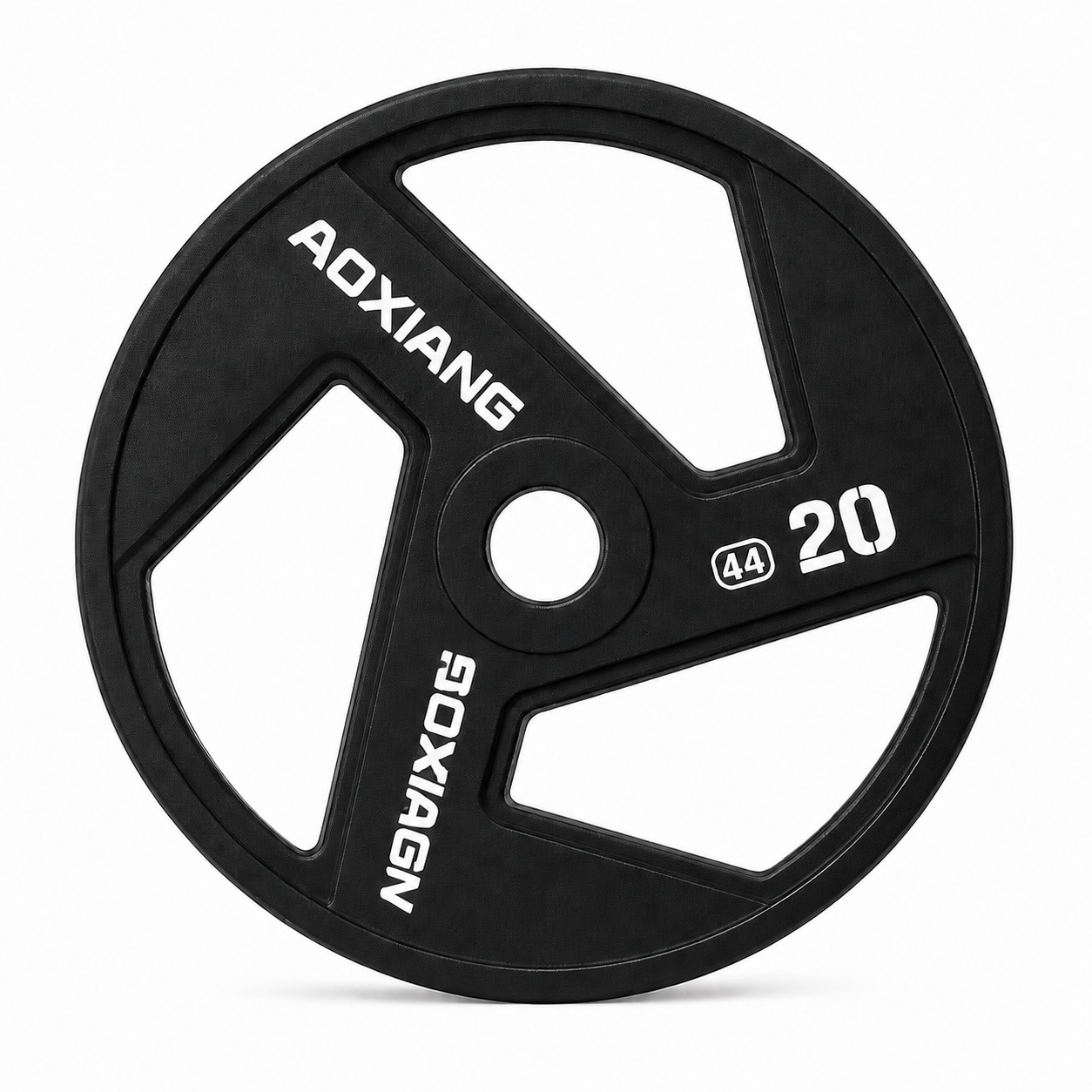
This is where the strategic selection of olympic international weight plates becomes a matter of spatial efficiency rather than just weight incrementing. High-quality, standardized weight plates are engineered with precision tolerances to ensure they fit snugly on the barbell, preventing the uneven bulkiness often seen in lower-tier products. By investing in professional gym equipment that adheres to strict dimensional standards, facility owners can maximize their training density, ensuring that heavy lifting zones remain organized, accessible, and optimized for high-performance throughput.
Beyond immediate movement, the long-term integrity of your facility layout depends heavily on the physical dimensions and build quality of your load. Low-quality imitations often suffer from inconsistent thickness or uneven diameters, which can disrupt the organized flow of a weight room. When plates are not perfectly uniform, they often require more storage rack space or awkward stacking solutions, leading to unnecessary equipment wear and tear and a cluttered aesthetic that diminishes the premium feel of a high-end club.
Prioritizing superior barbell plate durability ensures that your strength zones remain functional and streamlined over years of heavy use. High-grade standardized weight plates are designed to withstand the rigors of high-impact dropping and constant loading without warping or losing their structural shape. For distributors and facility managers, this means fewer replacement cycles and more predictable maintenance schedules. By selecting equipment that maintains its precise profile, you protect your floor space from the chaos of substandard gear, allowing for a more efficient, professional, and scalable training environment.
To better visualize how your procurement choices influence the operational flow of your facility, we have outlined how different categories of loading equipment impact your training floor. Choosing high-tier olympic international weight plates is a strategic decision that affects both the visual density of your gym and your long-term maintenance overhead.
| Plate Type | Space Footprint | Durability/Maintenance | Ideal Use Case |
|---|---|---|---|
| Standard Rubberized Plates | Moderate/Bulky | High/Low Maintenance | General Commercial Gyms |
| Precision Calibrated Plates | Slim/Compact | Very High/Minimal Upkeep | Elite Strength & Performance Centers |
| Low-Grade Economy Plates | Inconsistent/Irregular | Low/Frequent Replacement | Budget-Focused Small Studios |
As demonstrated, investing in professional gym equipment with high dimensional precision allows for more weight to be loaded onto a single barbell without increasing its diameter excessively. This compact profile is essential for maintaining a clean, organized aesthetic in high-density training zones. When sourcing standardized weight plates, the goal is to reduce the "clutter factor" and ensure that your barbell plate durability supports a seamless, high-throughput environment for your members.
The Impact of Precision on Floor Layout and Safety
In high-traffic commercial facilities, the long-term cost of equipment isn't just the initial purchase—it is the maintenance of the surrounding environment. When utilizing substandard olympic international weight plates, even slight deviations in thickness or density can lead to catastrophic imbalances. If a barbell is loaded with unevenly weighted sides, the resulting kinetic oscillation creates unpredictable vibrations that travel directly into your floor layout. Over time, these micro-impacts can compromise the structural integrity of specialized gym flooring and subfloors.
Investing in standardized weight plates ensures that weight distribution remains perfectly symmetrical during heavy lifts. This precision is vital for optimizing impact absorption across your lifting platforms. High-quality barbell plate durability means the center of gravity remains stable, reducing the lateral shockwaves that often cause premature wear on rubber mats or concrete. For distributors and gym owners, sourcing precision-engineered plates is a strategic move to protect the facility's infrastructure and ensure a safer, more predictable training environment for every athlete.
Choosing the right material involves balancing the frequency of heavy drops against the long-term upkeep of your facility. While high-end rubberized options offer superior shock absorption, they require different care than traditional cast iron. To help you decide which professional gym equipment fits your operational model, we have categorized common materials based on their physical footprint and maintenance requirements.
| Plate Material | Floor Impact Level | Maintenance Frequency | Ideal Setting |
|---|---|---|---|
| Rubber Coated | Low to Moderate | Low (Occasional Wipe-down) | CrossFit Boxes & Performance Centers |
| Bumper (High Density) | Moderate to High | Medium (Surface Inspection) | Olympic Lifting Platforms |
| Cast Iron | High | High (Rust/Chipping Check) | Traditional Strength Gyms |
When sourcing olympic international weight plates, consider that the material choice dictates your facility's lifecycle costs. While bumper plates offer the best protection for your floor layout, ensuring you procure standardized weight plates with consistent density is essential to prevent uneven wear and unpredictable bounce during high-intensity training sessions.
Beyond material selection, effective maintenance in high-traffic training environments requires a proactive approach to quality control. For facility managers, the goal is to preserve long-term durability while strictly adhering to global safety standards. We recommend implementing a routine inspection schedule where staff check for surface degradation, such as cracks in bumper plates or oxidation on cast iron surfaces. Neglecting these small signs can lead to structural failure during heavy lifts, posing a risk to both the equipment and the user.
A systematic cleaning regimen also plays a vital role. For rubberized professional gym equipment, avoiding harsh chemical solvents is crucial to prevent the material from becoming brittle or losing its shock-absorption properties. In many high-volume gyms, the accumulation of sweat and chalk can degrade the grip and surface integrity of olympic international weight plates over time. By establishing a standardized care protocol, gym owners can extend the functional lifespan of their inventory, ensuring that their investment remains a reliable asset rather than a recurring replacement cost.
Standardized Weight Plates and Structural Integrity
In high-traffic commercial environments, the longevity of your investment depends on more than just the material; it depends on precision. When sourcing olympic international weight plates, the most critical factor for long-term reliability is the consistency of uniform thickness and diameter. Non-standardized manufacturing leads to uneven weight distribution, which creates centrifugal imbalances during heavy lifts and puts undue stress on the barbell sleeve. This structural instability is a primary cause of premature wear in professional gym equipment.
For facility owners and distributors, prioritizing barbell plate durability means looking for standardized weight plates that can withstand repetitive high-impact drops without warping or cracking. A lack of precision in the molding process often results in edge degradation, which eventually compromises the safety of the training environment. To help you evaluate your procurement options, we have outlined how different manufacturing standards impact long-term structural integrity below.
| Plate Type | Impact Resistance | Structural Consistency | Ideal Use Case |
|---|---|---|---|
| Premium Cast Iron | High | Excellent (Uniformity) | Heavy lifting & High-traffic gyms |
| Standard Bumper Plates | Very High | Good (Flexible) | CrossFit & Dynamic training |
| Budget Grade Plates | Moderate | Variable (Thickness issues) | Home gyms or low-usage studios |
Selecting high-grade olympic international weight plates ensures that your facility maintains a professional standard while reducing the frequency of replacement cycles and maintenance costs.
When evaluating the budget vs quality equation, the long-term operational costs often tell a different story than the initial purchase price. Choosing lower-tier options may seem cost-effective upfront, but the hidden expenses in maintenance frequency and replacement cycles can quickly erode your margins. For facilities hosting high-impact training, the structural integrity of your professional gym equipment determines whether your gear lasts for years or requires constant intervention.
The following comparison highlights how the choice of olympic international weight plates directly correlates to the lifespan and reliability of your training floor:
| Feature Dimension | High-Standard Plates | Low-Quality Alternatives |
|---|---|---|
| Lifespan | Long-term (Years of heavy use) | Short-term (Prone to cracking/warping) |
| Maintenance Frequency | Minimal; low upkeep required | High; requires frequent inspection |
| High-Impact Training | Engineered for drops and heavy loads | Risk of structural failure under stress |
| Economic Value | High ROI through durability | Low initial cost but high replacement rate |
Ultimately, investing in standardized weight plates is a strategic decision to ensure barbell plate durability remains constant, even in the most demanding commercial settings.
Beyond the immediate cost, the true value of high-quality olympic international weight plates lies in their ability to protect your other assets. When plates lack precision, the resulting uneven weight distribution causes erratic vibrations and lateral stress. Over time, this constant micro-oscillation leads to significant preventing barbell wear issues, often damaging the bearings and sleeves of expensive barbell sets. In high-traffic environments, where equipment is subjected to thousands of loading cycles, this mechanical friction can turn a premium barbell into a liability.
For procurement professionals, viewing these components as a long-term investment rather than a one-off expense is vital. High-standard professional gym equipment maintains its structural integrity by ensuring that every drop and every lift is met with a predictable, stable response. By prioritizing standardized weight plates that adhere to strict tolerances, you effectively safeguard the mechanical longevity of your entire lifting station, ensuring that your capital expenditure delivers maximum utility for years to come.
Optimizing Inventory for High-Volume Gyms
For facility managers and gym owners, the logistical challenge isn't just about initial procurement; it is about maintaining a seamless training rhythm. In high-traffic environments, a shortage of specific weights can lead to bottlenecks, frustrating members and slowing down the overall training flow. This is why sourcing a robust stock of olympic international weight plates is a strategic necessity rather than a luxury. Relying on mismatched or low-quality inventory often results in uneven barbell loading, which compromises the training experience.
To prevent operational delays, distributors and large-scale gym operators prioritize standardized weight plates that ensure weight uniformity across all sets. When you invest in high-grade professional gym equipment, you are essentially future-proofing your facility against the demands of high-volume turnover. Maintaining a diverse and consistent inventory allows your facility to accommodate various training intensities without the constant need for emergency reordering, ensuring that your members can transition between exercises without searching for the right equipment.
Effective inventory distribution depends heavily on your facility's specific training profile. A boutique strength studio requires a different weight ratio than a massive commercial fitness center. To assist in your procurement planning, we have outlined how different environments impact barbell plate durability and space optimization. Choosing the right mix of fractional and heavy plates ensures you are not over-invested in slow-moving SKUs while maintaining high availability for peak hours.
| Gym Environment | Recommended Weight Ratio | Primary Maintenance Needs | Space Optimization Strategy |
|---|---|---|---|
| High-Traffic Commercial | Heavy/Mid-range Dominant | Regular surface inspection | Vertical peg storage |
| Specialized Strength Lab | Fractional/Precision Heavy | Tolerance verification | Compact, tiered racking |
| Boutique/Personal Training | Diverse/Mixed Sets | Minimal/Cosmetic care |
When calculating your initial order, consider that high-impact training environments demand higher barbell plate durability to withstand constant drop cycles. By aligning your olympic international weight plates stock with these profiles, you minimize long-term maintenance needs and maximize the utility of your floor space.
Ultimately, the procurement decision should be viewed through the lens of long-term ROI. While budget-tier options may offer lower upfront costs, they frequently lead to premature wear, causing cracks or dimensional inconsistencies that necessitate frequent replacement. By prioritizing olympic international weight plates built for high-traffic durability, facility owners effectively extend the total equipment lifespan of their strength zones. This reduces the frequency of costly reorders and prevents the operational downtime associated with broken or uneven sets.
Investing in premium professional gym equipment is a direct investment in your brand reputation. A consistent, high-quality inventory ensures a seamless member experience, where athletes can rely on the precision of every lift without the distraction of faulty gear. For large-scale distributors and gym operators, choosing high-standard standardized weight plates means fewer headaches regarding quality control and a more predictable maintenance schedule, allowing you to focus on growth rather than constant inventory troubleshooting.
Long-Term Value Through Material Quality
For facility managers, the true cost of procurement isn't found in the initial invoice, but in the lifecycle of the assets. Investing in subpar olympic international weight plates might offer immediate savings, but it often leads to a cycle of frequent replacements and rising maintenance costs. In high-traffic environments like commercial strength clubs or university training centers, the physical stress on equipment is relentless. Choosing professional gym equipment built with high-density materials ensures that your facility maintains a premium standard without constant reinvestment.
When calculating your long-term cost-per-use, the durability of your weight sets becomes the most critical variable. High-quality standardized weight plates are engineered to resist warping, cracking, and surface degradation under heavy impact. By prioritizing material integrity during the sourcing stage, owners can mitigate the risk of premature wear, ensuring that the equipment remains functional and aesthetically consistent for years, rather than months.
To visualize the actual impact on your bottom line, consider the divergence between standard consumer-grade casting and high-spec production. While low-grade options may appear cost-effective during the initial purchase, they frequently suffer from uneven weight distribution and surface erosion, which shortens the overall replacement cycles of your entire barbell set. In contrast, investing in high-caliber olympic international weight plates significantly lowers the maintenance frequency required to keep a facility looking and functioning at a premium level.
The following comparison highlights how barbell plate durability directly influences operational overhead and asset longevity:
| Feature/Metric | Low-Grade/Generic Plates | High-Standard Standardized Weight Plates |
|---|---|---|
| Material Integrity | Prone to cracking/chipping | High-density, impact-resistant |
| Maintenance Frequency | High (frequent cleaning/inspection) | Low (minimal upkeep required) |
| Typical Replacement Cycle | Short-term (1–2 years in high-use) | Long-term (multi-year durability) |
| Long-Term ROI | Lower initial cost; high replacement expense | Higher initial value; optimized lifecycle cost |
Ultimately, sourcing professional gym equipment with strict tolerances protects your capital. By choosing equipment that maintains its structural integrity through thousands of drops, you avoid the hidden costs of constant re-ordering and the logistical headaches of frequent equipment turnover.
Ultimately, the distinction between an investment and a mere expense lies in the total equipment lifecycle. While the price tag of low-spec items may look attractive on a spreadsheet, the reality of commercial operation often reveals a much higher total cost of ownership through frequent downtime and replacement logistics. By selecting high-caliber olympic international weight plates, procurement officers shift their focus from short-term savings to long-term value.
Securing standardized weight plates that meet rigorous manufacturing tolerances ensures that your facility avoids the "hidden tax" of degraded barbell plate durability. Instead of managing a constant stream of replacement orders and shipping delays, you can rely on a stable, high-performing inventory. This strategic approach to sourcing professional gym equipment stabilizes your operational budget and ensures that your capital is working toward growth rather than constant maintenance.
Selecting Reliable Partners for Global Sourcing
When scaling a fitness facility, the temptation to prioritize the lowest possible unit price is a common pitfall for many procurement managers. However, focusing solely on the initial invoice ignores the hidden costs of low-grade manufacturing. Choosing inferior olympic international weight plates might save capital during the first quarter, but it often leads to rapid degradation in high-traffic environments.
True long-term ROI is found in the balance of durability vs upfront cost. Substandard products frequently suffer from dimensional inaccuracies, which can damage expensive barbells and disrupt training flow. By investing in standardized weight plates that meet strict tolerance levels, you ensure that your professional gym equipment remains a functional asset rather than a recurring replacement expense. High-quality casting and precision machining reduce the frequency of maintenance and replacement cycles, ultimately lowering your total cost of ownership. For distributors and facility owners, sourcing from manufacturers who prioritize rigorous quality control is the most effective way to protect your margins and ensure consistent performance under heavy use.
To make an informed decision, we recommend evaluating your procurement strategy through three distinct budget tiers. This framework helps you align your capital expenditure with the actual demands of your facility.
| Tier Level | Primary Use Case | Maintenance Profile | Expected Lifespan |
|---|---|---|---|
| Entry-Level | Home gyms or low-use studios | Moderate upkeep required | Short-term/Variable |
| Mid-Range | Commercial fitness centers | Standard cleaning/inspection | Consistent/Moderate |
| Premium/Elite | High-traffic environments (CrossFit/Competition) | Low maintenance frequency | Long-term/High-endurance |
For those operating heavy-duty training zones, the barbell plate durability of premium-grade olympic international weight plates is non-negotiable. While the initial investment is higher, these products are engineered to withstand the rigors of dropped sets and constant friction. When sourcing, always verify the manufacturer's quality assurance protocols. A supplier that provides detailed specifications and maintains strict manufacturing tolerances will ultimately save you from the high costs of frequent equipment turnover and replacement logistics.
Beyond simple price comparisons, smart procurement relies on assessing a factory's ability to maintain manufacturing consistency across large-scale orders. When engaging in global sourcing, the risk isn't just a single faulty unit, but rather a lack of uniformity across an entire shipment. This is why vetting a partner's quality control systems is more critical than negotiating a few cents off the per-unit price. A supplier that demonstrates deep expertise in material integrity—ensuring that high-density rubber or precision-cast iron remains stable through every production run—is a partner that supports cost-effective scaling.
We suggest looking for manufacturers who treat their production lines with the same precision found in professional competition. Reliable olympic international weight plates should exhibit identical thickness and diameter profiles across all weight denominations. This level of detail prevents the uneven weight distribution that can lead to premature wear on your barbell sleeves. By prioritizing suppliers who emphasize rigorous testing and standardized output, you transition from a reactive purchasing model to a proactive, strategic investment that secures the long-term value of your facility's inventory.
Vendor due diligence and specification guardrails
In high-traffic commercial environments, the discrepancy between perceived weight and actual mass can compromise training integrity and equipment longevity. When sourcing olympic international weight plates, procurement professionals must look beyond the surface aesthetics to verify the underlying precision manufacturing standards. Relying on low-grade imitations often leads to uneven weight distribution, which can cause catastrophic imbalances during heavy lifts or accelerate the wear on barbell sleeves.
To mitigate these risks, it is essential to demand standardized weight plates that adhere to strict weight tolerance protocols. High-quality barbell plate durability is not merely about surviving a drop; it is about maintaining consistent density and dimensional accuracy over thousands of cycles. We recommend that distributors and gym owners prioritize manufacturers who provide transparent technical data regarding their casting or molding processes. By enforcing these strict specification guardrails during the vetting stage, you ensure that your facility remains a reliable space for professional athletes while minimizing long-term replacement costs caused by substandard, non-compliant equipment.
To effectively vet your suppliers, move beyond asking for a price list and start requesting specific technical benchmarks. A truly reliable manufacturer of professional gym equipment will be able to provide detailed data on material density and structural composition. For instance, when evaluating high-density rubber or cast iron options, the edge thickness must remain consistent across the entire circumference to prevent warping or uneven loading on the barbell. This precision is a hallmark of high-tier quality control benchmarks that separate premium inventory from budget-grade alternatives.
Furthermore, prioritize testing for impact resistance. In a high-intensity training environment, plates are subjected to constant kinetic shock. You should verify that the material can absorb heavy drops without cracking or losing its dimensional integrity. We suggest asking potential vendors for evidence of rigorous stress testing and consistency in their production runs. By focusing on these physical attributes rather than just the initial unit cost, you protect your facility from the hidden expenses of premature equipment failure and ensure your olympic international weight plates stand the test of time.
Investing in premium gear is a long-term investment in your facility's reputation. To avoid the pitfalls of rapid depreciation, you must scrutinize the manufacturing standards of your chosen supplier. A common oversight in the procurement process is failing to verify consistent thickness across a full production batch. When olympic international weight plates vary even slightly in their dimensional profile, they create uneven pressure points on the barbell, leading to accelerated wear on both the plates and the bar itself.
In high-traffic environments, where equipment is subjected to relentless use, even minor deviations in density or shape can lead to structural fatigue. This is why durability must be treated as a non-negotiable specification rather than a luxury. We advise buyers to look for evidence of automated, precision-driven production rather than manual, inconsistent casting. By ensuring that every piece of professional gym equipment you source meets a uniform standard of excellence, you safeguard your facility against the high costs of frequent replacements and the logistical headaches of mid-season inventory shortages.