Weightlifting Cast Iron Plates | Standardizing Cast Iron
Evaluating Long-Term Value and Lifecycle Costs of Iron Plates
For multi-site gym operators or large-scale distributors, the procurement decision for weightlifting cast iron plates extends far beyond the initial unit price. While low-cost, unbranded options may offer immediate savings, they often fail to meet the rigorous demands of high-traffic commercial environments, leading to unforeseen expenditures in labor and replacement cycles.
Understanding Total Cost of Ownership (TCO)
A sophisticated procurement strategy prioritizes the initial investment vs. long-term value by accounting for the full lifecycle of the equipment. High-quality weightlifting cast iron plates are engineered for extreme durability, resisting the structural degradation and dimensional shifts that plague inferior foundry work. In a commercial setting, achieving commercial weight plate standardization is vital; if plates from different batches or suppliers vary in thickness or diameter, it complicates barbell loading and creates operational friction.
When evaluating bulk iron plate specifications, buyers must consider the replacement frequency. Premium cast iron maintains its integrity under constant impact, whereas budget-grade plates may suffer from premature cracking or uneven wear. By investing in standardized, high-density iron, facility managers reduce the long-term cost of frequent re-ordering and the logistical overhead associated with maintaining consistent equipment across multiple locations.
Sourcing Models: Direct Factory vs. Local Distributor
The decision between direct factory procurement and utilizing a local distributor depends heavily on your order volume and required delivery speed. While direct sourcing offers the highest margin potential, it requires more intensive logistical management. Local distributors provide convenience and lower immediate shipping risks but often include a markup that impacts your long-term TCO.
| Feature | Direct Factory Sourcing | Local Distributor Sourcing |
|---|---|---|
| Typical MOQ | High (Pallet/Container level) | Low to Moderate (Case/Unit level) |
| Shipping Costs | Lower per unit; high freight complexity | Higher per unit; simplified domestic logistics |
| Quality Control | Direct oversight of bulk iron plate specifications | Dependent on distributor's vetting process |
| Lead Times | Longer (International transit & customs) | Shorter (Domestic/Regional shipping) |
For organizations aiming for strict gym equipment procurement consistency across dozens of branches, direct factory sourcing is generally more effective. It allows for tighter control over the casting process and ensures that every shipment meets identical dimensional tolerances. However, for boutique studios or single-location startups, the local distributor model offers a more agile way to manage inventory without the burden of large-scale warehousing.
Operational Efficiency Through Standardization
Maintaining brand uniformity across a national or international network requires more than just aesthetic alignment; it demands technical precision. When a single set of bulk iron plate specifications is utilized across all branches, facility managers can streamline their maintenance cycles. Standardized plates ensure that barbell loading remains intuitive and predictable, preventing the operational friction caused by mismatched weights or varying plate thicknesses.
This level of gym equipment procurement consistency directly impacts long-term profitability. By eliminating the need to troubleshoot non-standard equipment or manage disparate inventory lists, operators achieve higher operational efficiency. Instead of dealing with frequent, small-scale replacements due to poor quality control, procurement teams can move toward predictable, scheduled replenishment, reducing both labor costs and administrative complexity in the long run.
Operational Risks of Non-Standardized Inventory
Deploying non-standardized weightlifting cast iron plates across multiple gym locations creates significant friction for facility managers. When weight plate specifications vary between branches, it compromises commercial gym equipment consistency, making it difficult for staff to implement unified training programs or standardized inventory audits. Discrepancies in plate thickness or center hole tolerances can lead to uneven loading on barbells, increasing the risk of mechanical wear and inconsistent user experiences.
Standardizing Maintenance and Lifecycle Management
To maintain operational uniformity, procurement teams must establish strict maintenance cycles that apply to all sites regardless of geography. Relying on heterogeneous plate sets complicates the inspection process, as different casting qualities react differently to humidity and storage environments. By sourcing uniform batches with consistent metallurgical properties, distributors can streamline cleaning protocols and rust prevention schedules, ensuring that every facility operates under the same high-performance benchmarks.
Technical Comparison of Surface Finishes and TCO
Selecting the appropriate surface treatment for your weightlifting cast iron plates is a critical decision for long-term Total Cost of Ownership (TCO). While raw iron offers the lowest initial procurement cost, it often requires more intensive facility management to combat oxidation. Conversely, advanced coatings can reduce long-term maintenance frequency but increase the upfront unit price and MOQ requirements.
| Finish Type | Maintenance Frequency | Durability & Resistance | Cost-Effectiveness (Long-Term) |
|---|---|---|---|
| Raw Cast Iron | High (Regular oiling required) | Low (Prone to oxidation) | High (Low initial cost; high labor) |
| Painted Finish | Moderate (Occasional touch-ups) | Medium (Chipping risk) | Medium (Balanced ROI) |
| Powder Coating | Low (Minimal intervention) | High (Impact resistant) | High (Low labor; high upfront) |
For distributors managing high-traffic commercial environments, powder coating typically offers the most predictable lifecycle. Although the initial factory cost is higher, the reduction in specialized cleaning labor and the extended interval between replacement cycles provide superior value for multi-site rollouts where operational uniformity is a priority.
Standardized Inspection and Replacement Protocols
Effective lifecycle management requires a synchronized approach to quality control (QC) during routine facility walkthroughs. Instead of ad-hoc checks, managers should implement a scheduled audit that verifies bulk iron plate specifications against a master template. This ensures that diameter, thickness, and center-hole integrity remain within a narrow tolerance across all branches.
A structured inventory management system should include a "replacement trigger" based on visible oxidation or structural fatigue. For distributors, managing the logistics of replacement parts becomes significantly more efficient when every site uses the same SKU and casting profile. By maintaining a standardized stock of replacement plates, procurement teams can avoid the pitfalls of sourcing mismatched batches, ensuring that new inventory integrates seamlessly with existing equipment without disrupting the user experience or brand standards.
Technical Benchmarks for Commercial Weight Plate Standardization
High-volume commercial gym environments demand equipment that survives constant physical stress. For procurement managers, the primary concern shifts from mere weight accuracy to the long-term structural integrity of the inventory. Substandard casting processes can lead to premature failure, increasing replacement frequency and disrupting facility maintenance schedules.
Prioritizing Structural Density and Impact Resistance
To ensure operational uniformity across multiple sites, weightlifting cast iron plates must meet strict manufacturing tolerances. High-density casting is essential to prevent internal air pockets or structural weaknesses that cause cracking or chipping during heavy drops. In high-traffic strength zones, impact resistance is a non-negotiable metric; plates must withstand the kinetic energy of high-velocity barbell drops without losing their form or integrity. When sourcing at scale, verifying the metallurgical consistency ensures that every unit performs predictably under rigorous use.
| Durability Factor | Standard Grade Iron | Commercial-Grade Cast Iron |
|---|---|---|
| Structural Density | Variable/Lower | High/Uniform |
| Impact Resistance | Moderate (Risk of chipping) | High (Engineered for drops) |
| Manufacturing Tolerances | Loose | Strict/Consistent |
| Lifecycle Expectancy | Short-to-Medium | Long-term/High-volume |
Casting Methodologies and Long-Term ROI
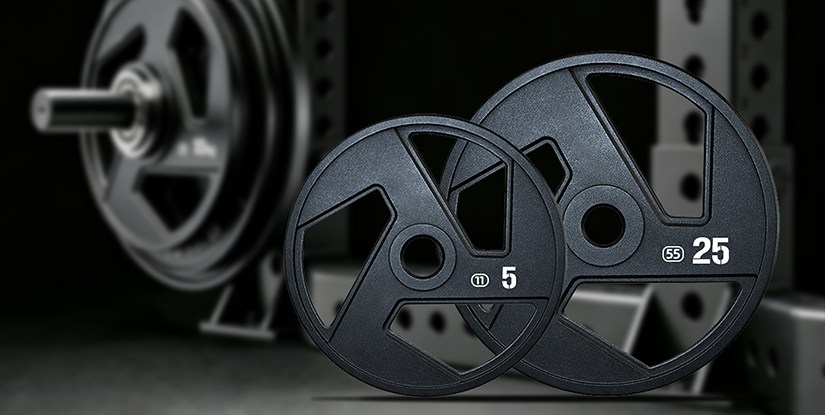
Selecting the correct manufacturing method is a critical decision for distributors and facility owners managing large-scale rollouts. The choice between sand casting and precision casting directly influences the aesthetic uniformity of the set and the long-term maintenance costs associated with surface degradation. While sand casting is a cost-effective solution for basic inventory, precision-engineered methods offer superior consistency for premium commercial weight plate standardization.
| Specification Metric | Sand Casting Method | Precision Casting Method |
|---|---|---|
| Surface Finish | Textured/Granular | Smooth/Refined |
| Edge Precision | Variable | Highly Uniform |
| Bulk Cost-Efficiency | High (Lower MOQ impact) | Moderate (Higher unit cost) |
| Maintenance Requirement | Periodic Repainting | Minimal/Low |
| Brand Consistency | Standard/Basic | Premium/High-End |
For multi-site expansions, procurement teams should weigh the initial savings of sand casting against the long-term durability of precision-cast options. Precision casting minimizes the risk of uneven wear and ensures that weightlifting cast iron plates maintain a professional appearance across diverse gym environments, protecting the brand's visual standard over several years of high-frequency usage.
Dimensional Stability and Center Hole Precision
Beyond surface finish, the functional longevity of a barbell setup relies heavily on dimensional stability. For procurement specialists managing multi-site rollouts, ensuring that every plate shares identical thickness and center hole tolerances is vital for seamless barbell loading. If center hole specifications deviate even slightly, it can lead to uneven weight distribution or friction issues during high-speed movements, eventually causing premature wear on barbell sleeves.
Strict adherence to bulk iron plate specifications prevents the "stacking mismatch" often seen with low-quality batches, where plates of varying thickness create an unstable, unbalanced bar. By prioritizing high-precision center hole engineering, distributors can guarantee consistent fitment across different barbell brands. This focus on technical uniformity is a key driver of long-term ROI, as it reduces equipment downtime and ensures consistent gym equipment procurement consistency across global locations.
Optimizing Bulk Iron Plate Specifications for Global Logistics
Managing the Total Cost of Ownership (TCO) for multi-site fitness rollouts requires more than just comparing unit prices. For distributors and large-scale gym operators, achieving commercial weight plate standardization is a strategic lever to control long-term expenditures. When weightlifting cast iron plates vary in thickness or diameter across different batches, it creates hidden costs in inventory management and equipment compatibility.
Strict procurement consistency ensures that every shipment meets exact dimensions, which directly reduces logistics overhead. Standardized dimensions allow for optimized palletization and container loading density, preventing the wasted shipping volume often seen with non-uniform cast iron products. By prioritizing high-level bulk iron plate specifications during the sourcing phase, buyers achieve greater cost-efficiency through predictable shipping cycles and reduced replacement frequency caused by dimensional mismatches.
Discrepancies in manufacturing tolerances can lead to significant financial leakage during international transit. Non-standardized plates often result in uneven stackability, which decreases container density and increases the volumetric weight impact. For procurement managers, understanding how dimensional variance affects shipping density is critical for maintaining budget predictability across global distribution networks.
| Specification Metric | Standardized Cast Iron Plates | Non-Standardized/Low-Tier Plates |
|---|---|---|
| Dimensional Tolerance | Strict +/- 1-2% uniformity | High variance in diameter/thickness |
| Stacking Efficiency | High; optimized for palletization | Low; prone to tilting/shifting |
| Volumetric Weight Impact | Minimal; predictable container load | High; wasted cubic volume per SKU |
| Inventory Management | Streamlined; universal compatibility | Complex; high SKU fragmentation |
| Shipping Cost Ratio | Optimized weight-to-volume ratio | Higher cost per unit due to volume waste |
Selecting high-quality weightlifting cast iron plates with verified bulk iron plate specifications mitigates the risk of "dead space" in shipping containers. While lower-tier options may offer a lower initial invoice price, the long-term cost of inefficient shipping density and logistical unpredictability often outweighs the initial savings.
To maximize ROI, procurement specialists must balance Minimum Order Quantity (MOQ) requirements with freight optimization strategies. Engaging in factory-direct sourcing allows buyers to negotiate larger volume tiers that justify the overhead of international ocean freight. However, the true cost-saving measure lies in how these specifications influence palletization efficiency. A high-volume order of non-standardized plates may meet an MOQ but fail to utilize the full cubic capacity of a shipping container, effectively increasing the landed cost per unit.
Effective gym equipment procurement consistency requires a dual focus on weight accuracy and dimensional uniformity. When sourcing at scale, ensure your supplier provides rigorous documentation regarding plate thickness and diameter. This level of detail ensures that your shipments are not just heavy, but also highly stackable. By aligning your order volume with standardized dimensions, you optimize the weight-to-volume ratio, ensuring that every cubic meter of container space is utilized to its maximum potential, thereby reducing the overall logistical burden on your supply chain.
Quality Control Protocols for High-Volume Cast Iron Procurement
For distributors and large-scale gym operators, the long-term viability of a facility depends on the structural integrity of every component. When sourcing weightlifting cast iron plates in bulk, procurement teams must look beyond surface aesthetics to ensure the material can withstand the mechanical stresses of high-frequency commercial use.
Preventing Structural Failure Through Density Consistency
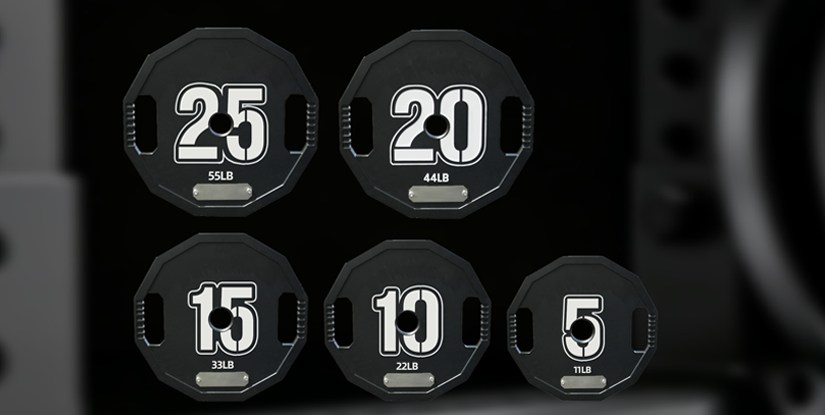
A critical failure point in low-grade foundry work is the presence of internal air pockets or inconsistent metallurgical compositions. Rigorous quality control must verify density consistency across the entire production run to prevent unexpected fractures. In a professional setting, even a minor deviation in material density can lead to catastrophic cracking under heavy impact. Establishing strict commercial weight plate standardization protocols ensures that every unit meets a uniform threshold of strength, reducing the risk of structural failure during high-load training sessions.
Effective crack prevention during the cooling and casting phases is essential for maintaining long-term durability. High-volume buyers should prioritize manufacturers who implement non-destructive testing or strict visual inspection standards to identify surface flaws that could evolve into deep structural breaches over time. This level of scrutiny is vital for maintaining gym equipment procurement consistency across multiple global locations.
Technical Verification of Specification Accuracy
To maintain operational uniformity across global distribution networks, procurement managers must validate that manufacturing tolerances do not compromise the balance of a barbell. Discrepancies in mass can lead to uneven weight distribution, which increases the risk of mechanical wear on premium barbell sleeves and disrupts training precision. Reliable suppliers utilize standardized testing to bridge the gap between raw casting and final commercial-grade specifications.
The following table outlines the critical inspection parameters required to ensure high-volume orders meet the rigorous standards of professional strength facilities:
| Inspection Parameter | Target Metric/Tolerance | Procurement Rationale |
|---|---|---|
| Weight Deviation | ±1% to 1.5% | Ensures barbell balance and precision |
| Density Testing | Uniform Metallurgical Composition | Prevents structural fractures under impact |
| Surface Coating Durability | High-Adhesion/Anti-Oxidant | Reduces maintenance and oxidation over time |
| Dimensional Accuracy | Diameter/Thickness Consistency | Ensures seamless fit on standard bar sleeves |
By demanding these specific metrics during the vetting process, buyers can ensure that bulk iron plate specifications remain consistent across every shipment, regardless of the manufacturing origin or batch number.
Verifying Factory Capability and Logistics Reliability
Scaling a facility rollout requires more than just selecting a product; it requires a supplier capable of handling complex logistics without compromising product integrity. When negotiating MOQ requirements for large-scale deployments, procurement managers must evaluate the manufacturer's facility layout and specialized packing workflows. A well-organized production line is a direct indicator of a factory's ability to maintain bulk iron plate specifications during rapid scale-ups.
Logistics-related durability is often the most overlooked aspect of the Total Cost of Ownership (TCO). High-volume orders are susceptible to transit damage if the shipping durability protocols are insufficient. Verify that the supplier uses reinforced, stackable packaging designed to withstand heavy impact resistance during sea freight and long-haul trucking. Failure to secure these components correctly leads to surface chipping or dimensional shifts, increasing the hidden costs of replacements and damaged inventory upon arrival at the destination facility.
Strategic Sourcing for Consistent Gym Equipment Procurement
Optimizing the budget for a multi-site rollout requires looking beyond the initial invoice. While low-cost alternatives may seem attractive during the first phase of commercial gym procurement, the long-term financial impact is often dictated by the precision of your bulk iron plate specifications and the durability of the casting process.
Analyzing Total Cost of Ownership (TCO)
For distributors and large-scale facility operators, the true cost of weightlifting cast iron plates is measured over a five-to-ten-year lifecycle rather than a single purchase order. High-quality, standardized plates reduce the frequency of replacement cycles caused by structural cracks or uneven weight distribution. When sourcing at scale, buyers must weigh the unit price vs. longevity trade-off; opting for inferior casting can lead to higher operational expenses through frequent replacements and inconsistent user experiences across different gym locations.
| Procurement Metric | Budget-Tier Cast Iron | Premium Standardized Iron |
|---|---|---|
| Initial Unit Cost | Lower | Moderate |
| Tolerance Consistency | Variable/High Margin | Strict/Low Margin |
| Replacement Frequency | Higher (due to brittle failure) | Minimal (high structural integrity) |
| Long-term TCO | Higher (due to turnover) | Lower (optimized lifecycle) |
Evaluating Sourcing Models for Scale
Deciding between direct factory procurement and local distribution involves balancing immediate logistical ease against long-term margin protection. Procurement managers must evaluate how each model impacts the ability to maintain uniform weight plate specifications across diverse geographic regions.
| Metric | Direct Factory Sourcing | Local Distributor Model |
|---|---|---|
| Minimum Order Quantity (MOQ) | High (typically pallet or container loads) | Low to Moderate (order by SKU) |
| Shipping & Logistics Costs | Lower per unit; complex customs/freight | Higher per unit; simplified domestic freight |
| QC Reliability | High control over casting/specifications | Dependent on distributor's vetting |
| Price Stability | Stable long-term; subject to raw material flux | Subject to local market fluctuations |
While local distributors offer speed and lower entry barriers for single-site setups, direct factory sourcing remains the standard for multi-location rollouts. This approach ensures that every shipment adheres to the same strict dimensional tolerances, preventing the brand inconsistency often found when mixing stock from various regional suppliers.
Mitigating Hidden Costs in Bulk Logistics
Unforeseen expenses often arise from a lack of technical oversight during the shipping phase. To maintain gym equipment procurement consistency, buyers must look beyond the FOB price and account for logistics overhead, such as specialized palletizing or customs-related weight discrepancies. A common pitfall in bulk orders is a failure to define strict weight tolerance levels within the contract, which can lead to significant shortfalls in total shipment mass.
To protect your margins, integrate rigorous inspection protocols into your procurement workflow. Verifying that bulk iron plate specifications are met—not just in visual appearance, but in exact dimensional and mass accuracy—prevents the costly rework of accepting substandard inventory. By establishing these standards before the first container leaves the factory, you ensure that every facility in your network receives a uniform product, effectively neutralizing the risks of shipping-induced variability.