For professional gym owners, international distributors, and fitness brand developers, the challenge of scaling a facility or a product line often hinges on a single critical decision: identifying a reliable commercial fitness equipment supplier. Unlike residential-grade sourcing, commercial procurement demands a rigorous focus on mechanical endurance, high-traffic compatibility, and strict adherence to international safety standards. Whether you are outfitting a boutique strength studio or managing a global distribution network, the complexity of managing diverse product categories—from heavy-duty strength machines to precision-engineered cardio units—requires more than just a simple transaction. This guide is designed to address the specific pain points encountered during large-scale sourcing. We move beyond the surface-level descriptions of individual products to explore the structural logic of the supply chain. Our objective is to provide actionable intelligence for professionals who must balance capital expenditure (CAPEX) with long-term operational reliability. We will examine how to differentiate between various manufacturing models, evaluate technical specifications, and leverage direct factory channels to optimize your procurement strategy. In the following sections, we will analyze the core dimensions of the commercial fitness sector, including: By understanding these professional-grade variables, procurement officers and facility planners can transition from reactive purchasing to strategic sourcing, ensuring that every piece of equipment—be it a multi-gym system or a customized resistance band—contributes to the long-term profitability and safety of their business. When planning a large-scale facility rollout or building a distribution catalog, procurement professionals must distinguish between different sourcing tiers. The choice is rarely about finding the "cheapest" option, but rather about matching the technical requirements of the end-use environment with the appropriate manufacturing capability. A common mistake in B2B procurement is treating a high-volume trading company the same as a dedicated manufacturer with integrated production lines. The following table provides a structural comparison between three common sourcing tiers. This framework helps buyers evaluate where their specific needs—whether they require high-end brand prestige or high-margin direct factory procurement—align with the available supply chain models. Note that "Factory Direct" models often require higher minimum order quantities (MOQ) but offer significantly better control over technical specifications and customization. Understanding these nuances is essential when evaluating a commercial fitness equipment supplier. For instance, if your goal is to launch a proprietary line of resistance bands or specialized rowing machines, a "Brand Tier" source will likely be too rigid and expensive, whereas a "Direct Factory Tier" provides the necessary technical agility to execute your specific product vision. For more detailed technical benchmarks, you may refer to our guide on Commercial Fitness Equipment Standards. A common pitfall in commercial procurement is equating "high durability" with vague marketing terms. For a professional gym owner or a distributor, durability is a measurable metric tied to material thickness, welding integrity, and component duty cycles. When vetting a commercial fitness equipment supplier, the focus must shift from aesthetic appeal to the underlying mechanical engineering that ensures a machine can withstand 10+ hours of daily operation in a high-traffic environment. In the strength training segment, the primary indicator of quality is the steel gauge used in the frame construction. While residential machines might utilize 14-gauge steel, true commercial-grade equipment typically requires 11-gauge or even 7-gauge steel for heavy-duty racks and multi-gym systems. This difference is not just about weight; it is about the structural resistance to deformation over years of lateral and vertical stress. Furthermore, the precision of the tolerances in moving parts—such as the pivot points in a cable machine or the resistance of a rowing machine's flywheel—determdicts the longevity of the bearings and the smoothness of the user experience. Many buyers are often lured by significantly lower prices that appear to offer "brand-level" quality. However, a deep dive into the cost structure usually reveals why these gaps exist. Lower-cost suppliers often compromise on three critical areas: raw material grade (using recycled steel instead of virgin high-tensile steel), surface treatment (using basic powder coating instead of multi-stage electroplating), and component sourcing (using non-branded bearings or motors). For a professional, the "cheaper" option often results in higher long-term maintenance costs and premature equipment failure, which can damage a gym's reputation and operational uptime. A significant risk in global sourcing is the use of non-standardized parts. If a manufacturer uses proprietary or low-quality fasteners and electronic controllers for cardio equipment, finding replacements during a breakdown becomes a logistical nightmare. Professional procurement frameworks should prioritize suppliers who utilize standardized, high-quality components that are easily serviceable. This ensures that even if the original production run is long past, the facility can maintain its equipment without waiting months for niche parts to arrive from a single factory. Verifying the compliance of these components against international safety and electrical standards is a non-negotiable step in the vetting process. In the global fitness market, there is a significant distinction between "low-cost" and "high-value" sourcing. For distributors and facility planners, the objective is often to secure equipment that matches the performance metrics of top-tier retail brands while optimizing the capital expenditure. This is achieved by focusing on verifiable technical indicators rather than brand-driven premiums. By sourcing through a specialized commercial fitness equipment supplier, procurement officers can identify solutions that align with high-end specifications through a transparent, metric-based comparison. When evaluating "brand-equivalent" solutions, professionals should move beyond surface-level aesthetics and focus on the core engineering components. A high-value alternative can match the performance of premium-tier equipment by strictly adhering to specific industrial benchmarks. Key areas where factory-direct solutions can achieve parity include: For brands and distributors looking to develop proprietary product lines, the transition from a concept to a mass-produced commercial product requires a manufacturing partner with sophisticated production capabilities. Our approach to OEM (Original Equipment Manufacturer) and ODM (Original Design Manufacturer) services is built upon the same rigorous standards used to fulfill orders for international fitness brands. This ensures that every customized solution meets global quality and safety expectations. The professional production workflow is designed to mitigate risk and ensure total specification alignment. It begins with a detailed technical consultation to define the product's geometry, weight capacity, and material requirements. This is followed by a formal prototyping phase, where a physical sample is produced and subjected to rigorous testing. Only after the client has provided a formal sign-off on the sample—verifying everything from the ergonomic feel to the branding placement—does the process move into full-scale production. Throughout this cycle, strict confidentiality and intellectual property protections are maintained, ensuring that your unique product designs and technical innovations remain secure within the manufacturing process. To illustrate how a professional commercial fitness equipment supplier operates beyond simple order fulfillment, we can look at two distinct scenarios where technical problem-solving and customized logistics were critical to the project's success. These cases demonstrate how addressing specific constraints—rather than just providing a catalog—creates long-term value for B2B partners. A mid-sized fitness chain in Southeast Asia was planning a rapid expansion of five new locations. Their primary constraint was a rigid grand opening schedule, coupled with a requirement for a unified aesthetic across all branches. They needed a complete set of strength machines and cardio equipment, but their previous supplier had failed to meet delivery milestones, risking the entire launch. Instead of offering a standard off-the-shelf catalog, we developed a coordinated procurement plan. We prioritized a specific production sequence: high-demand strength machines were moved to the front of the assembly line, while specialized cardio units were scheduled to follow. To address their aesthetic requirement, we implemented a customized color-coding system for the frames and shrouds that matched their brand identity. Furthermore, to mitigate the risk of shipping delays, we utilized reinforced, export-grade packaging designed for high-durability transit. The result was the on-time delivery of fully assembled and tested equipment to all five locations, allowing the chain to launch without operational delays or equipment-related setbacks. An international fitness distributor sought to launch a private-label line of high-durability resistance bands and weightlifting gear. Their challenge was not just volume, but the need for highly specific material certifications to meet the quality expectations of their premium customer base. They required a level of customization that standard wholesale suppliers could not provide, particularly regarding the elasticity retention of the bands and the texture of the weightlifting belts. We provided a full ODM (Original Design Manufacturer) solution that began with a rigorous material testing phase. We sourced high-grade natural latex and integrated specific thickness-control protocols to ensure every batch met the client's tolerance specifications. For the weightlifting gear, we implemented a customized stamping process for the branding and a multi-stage QC (Quality Control) check for stitching strength. By treating the project as a technical partnership rather than a commodity order, we helped the distributor launch a product line that passed all third-party quality audits and successfully established their brand presence in the premium segment. This collaborative approach ensured that their intellectual property regarding product design remained secure throughout the entire manufacturing lifecycle. Transitioning from a successful technical consultation to a completed shipment requires a structured operational framework. For professional buyers, the "hidden" costs of procurement often lie in poorly managed lead times, inadequate packaging, or unexpected customs documentation issues. A professional commercial fitness equipment supplier manages these variables through standardized B2B protocols that prioritize transparency and predictability. Successful large-scale sourcing is built on a series of clearly defined milestones. While exact timelines depend on the complexity of the equipment—such as a standard multi-gym versus a highly customized cardio console—the following stages are standard in our professional workflow: To ensure that every unit leaving the factory meets the high-tolerance standards required for commercial use, we implement a multi-stage inspection system. This is not merely a final check, but a continuous process integrated into the production line. Key checkpoints include: Commercial fitness equipment is often heavy, bulky, and sensitive to environmental factors. Standard domestic packaging is insufficient for international B2B transit. We offer specialized logistics solutions tailored to the specific product type: For heavy strength equipment like power racks or weightlifting benches, we utilize reinforced, multi-layer corrugated boxes and heavy-duty wooden crates to prevent structural deformation and surface scratches. For high-precision cardio equipment or electronic consoles, we implement anti-static shielding and impact-resistant foam buffering. Clients can choose between various shipping configurations, including Full Container Load (FCL) for large-scale facility rollouts or Less than Container Load (LCL) for smaller, high-frequency distributor restocks. This level of logistical control ensures that equipment arrives at the destination in a "ready-to-assemble" state, minimizing on-site setup time and damage-related claims. Successful long-term partnerships with a commercial fitness equipment supplier are built on proactive verification rather than reactive troubleshooting. To ensure your next sourcing cycle achieves the desired balance of technical performance and cost-efficiency, utilize the following actionable checkpoints during your decision-making process.Navigating Complex Procurement in the Global Fitness Industry
Comparative Framework for Commercial Equipment Sourcing Models
Procurement Dimension Premium Brand Tier (Retail/Showroom) Specialized Distributor Tier (Middle Market) Direct Factory Tier (OEM/B2B Sourcing) Primary Focus Brand prestige and lifestyle marketing Established product lines and service Technical compliance and cost-efficiency Customization (OEM/ODM) Extremely limited; standard configurations only Moderate; limited to color or minor parts High; full customization of frame, upholstery, and logo Technical Control Controlled by brand-level engineering standards Dependent on the distributor's vetted catalog Direct control over material grade and tolerances Price Structure High markup due to marketing and R&D costs Moderate markup for service and logistics Optimized through direct production-to-client flow Typical Target User High-end boutique studios and luxury clubs Regional gym chains and fitness retailers Global distributors, gym owners, and large-scale projects Lead Time Management Often involves long wait times for backorders Predictable based on existing distributor stock Structured based on production cycles and PO terms Critical Benchmarks for Verifying Manufacturer Capability
The Logic of Material Selection and Tolerance
Understanding the Cost-Quality Paradox
Compliance and the Risk of Non-Standardized Components
Aligning Value through High-Performance Alternatives and OEM Expertise
Achieving Parity with High-End Solutions
Advanced OEM/ODM and Production Standards
Strategic Implementation: Real-World Sourcing Scenarios
Case Study 1: Navigating Tight Timelines for a Regional Gym Expansion
Case Study 2: Developing a Proprietary Line for an E-commerce Distributor
Operationalizing B2B Procurement and Global Logistics
Standardized Order and Prototyping Cycles
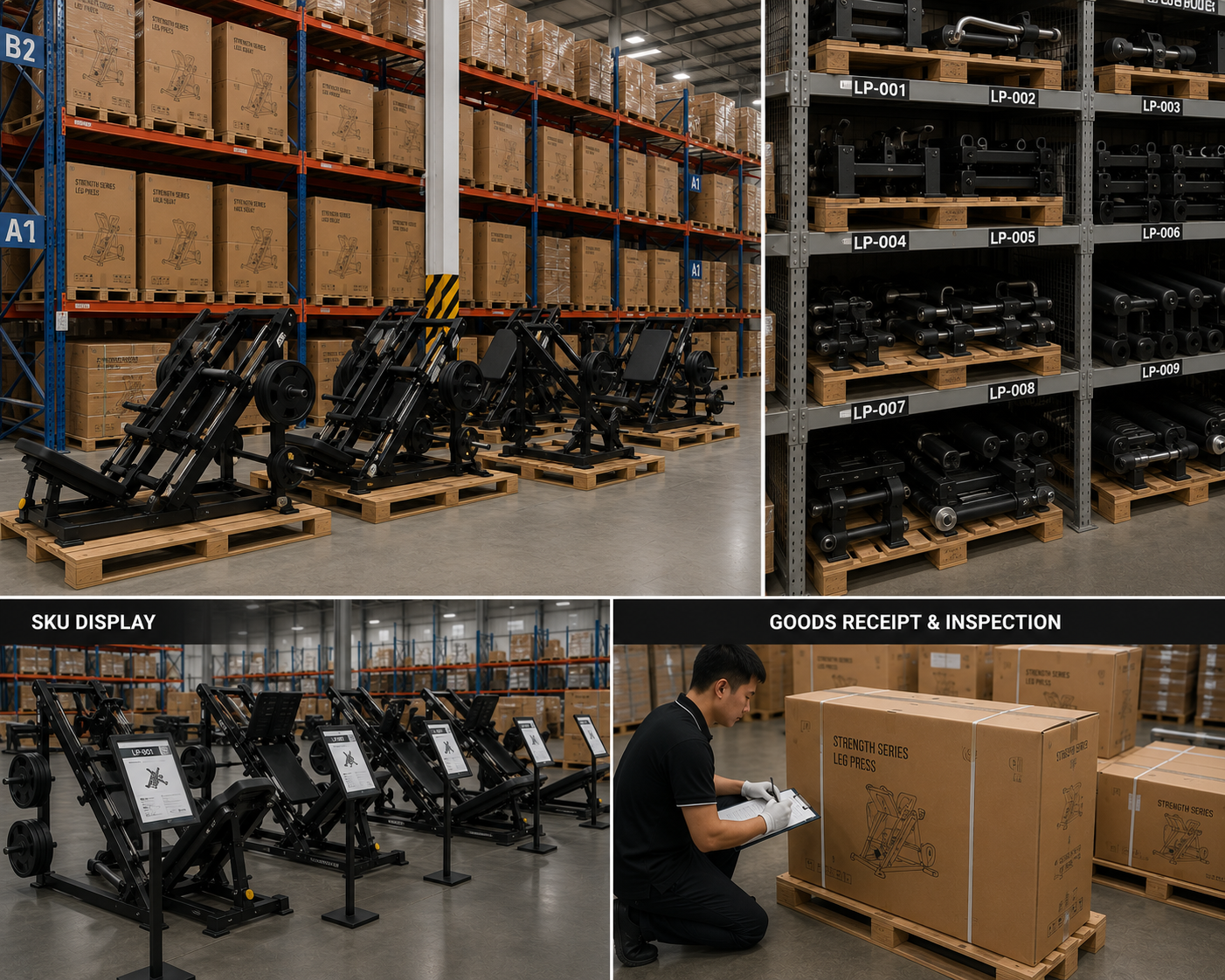
Quality Control and Inspection Protocols
Packaging and International Logistics Optimization
Strategic Checklist for Professional Procurement
Pre-Order Verification Milities
Operational Readiness and Logistics Planning