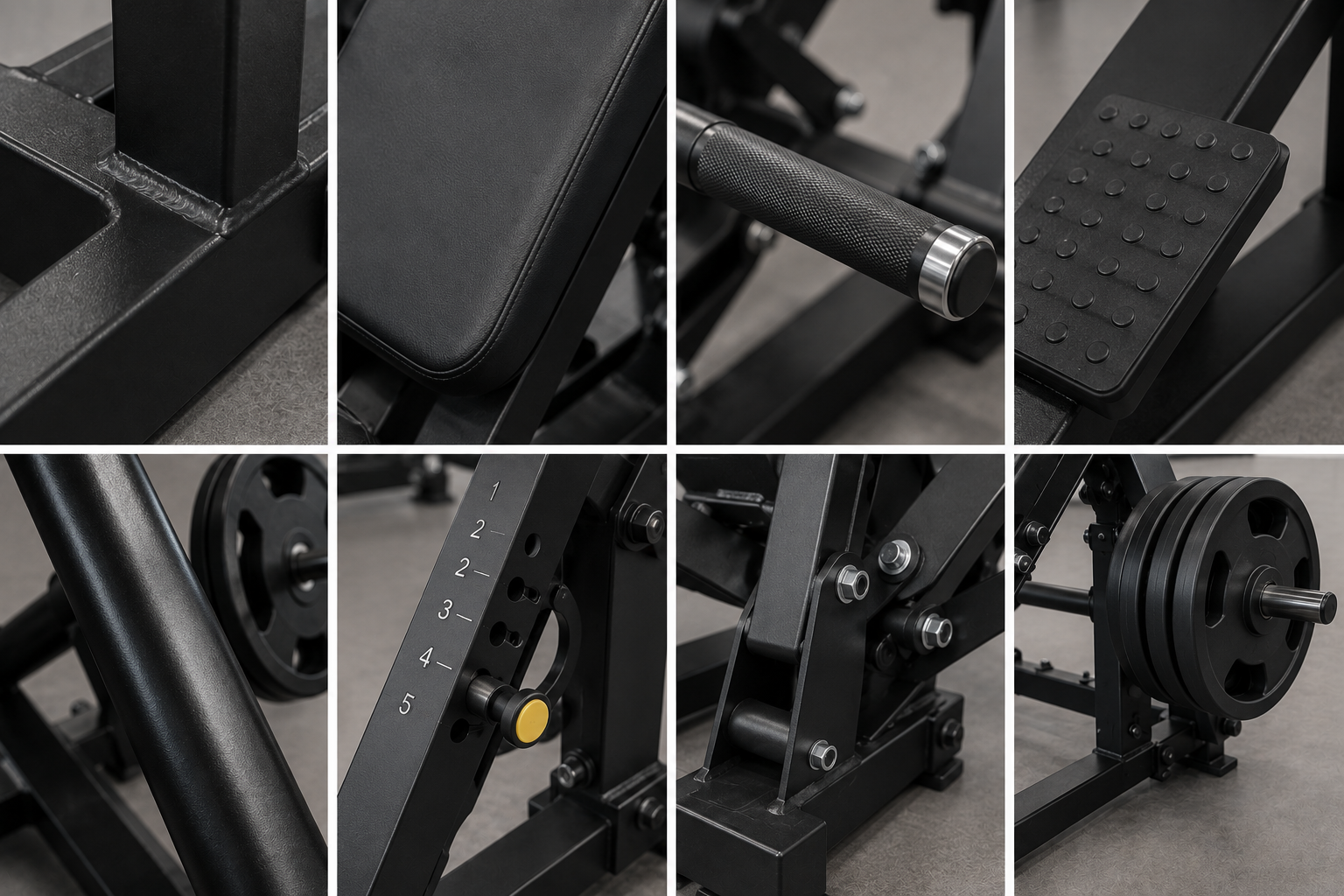
This guide addresses the complexities inherent in B2B sourcing, focusing on the technical and logistical requirements of modern fitness facilities. We move beyond simple product listings to examine the core competencies required from a professional production partner. A robust procurement strategy must account for several critical dimensions: By understanding these variables, procurement professionals can transition from reactive purchasing to strategic sourcing. This approach allows for more predictable scaling, especially when managing complex orders that involve multiple product categories like cardio systems, multi-gym setups, and specialized accessories. A deep dive into the capabilities of a professional commercial strength and cardio procurement partner will clarify how to optimize both product performance and capital expenditure. When evaluating procurement channels, professional buyers often struggle to distinguish between value and actual cost-efficiency. A common misconception is that high-tier retail brands are inherently superior in engineering; however, in the modern manufacturing landscape, the gap has narrowed significantly. The primary difference lies in the cost structure—specifically, the markup applied for brand equity versus the actual investment in material and precision. To facilitate more informed decision-making, the following table provides a technical comparison across different sourcing tiers. This framework helps gym owners and distributors evaluate whether a specific partner provides the necessary structural integrity and customization depth required for their target market. This comparison highlights that while the "Mainstream Retail Tier" offers high brand recognition, the "Specialized Factory Direct Tier" provides a more robust solution for those requiring high-tolerance strength equipment with specific customization needs. For instance, when a distributor requires a specific resistance profile for a line of bands or a unique color scheme for a multi-gym system, a direct manufacturer can integrate these requirements into the production line, whereas a broker-based model often lacks the technical agility to accommodate such nuances. Selecting a professional partner goes beyond comparing price lists; it requires a granular understanding of the technical benchmarks that separate professional-grade equipment from consumer-level alternatives. A common pitfall for procurement officers is focusing solely on the final unit price without accounting for the "total cost of ownership," which includes maintenance frequency, part replacement cycles, and potential downtime caused by structural failures. In the manufacturing of heavy-duty strength machines, the distinction between "good" and "excellent" is found in the micron-level tolerances of moving parts. For example, the precision of a weight stack's guide rod or the smoothness of a pulley system is not just a luxury; it is a fundamental requirement for preventing uneven wear. A high-quality strength equipment manufacturer will utilize high-gauge steel (typically 11-gauge or thicker for commercial frames) and industrial-grade bearings to ensure that the resistance remains consistent over years of high-frequency use. If a manufacturer cannot provide specific technical data regarding steel thickness or bearing grades, it is a significant red flag indicating a lower-tier production capability. A sophisticated B2B procurement strategy must scrutinize the manufacturer's internal QC checkpoints. A reliable factory does not just inspect the finished product; they implement a multi-stage verification process that covers raw material testing, welding integrity, and surface coating durability. For instance, the powder coating on a commercial gym machine must undergo salt spray testing to ensure it can withstand humidity and frequent cleaning agents without chipping or corroding. When auditing a potential partner, ask for their protocols on weld-joint strength and the thickness of their anti-corrosion layers. This level of detail distinguishes a true manufacturer from a simple assembly house. One of the most frequent errors in international sourcing is prioritizing the lowest MOQ (Minimum Order Quantity) or the fastest lead time over technical compliance. While rapid delivery is attractive, a "fast" production cycle that skips rigorous testing often results in high return rates and brand damage for the distributor. Furthermore, many buyers overlook the importance of certification-ready production. Even if you do not require immediate certification, choosing a manufacturer that follows ISO or international safety standards ensures that your product line can easily scale into new geographic markets with stricter regulatory requirements. A strategic decision-making framework should weigh technical documentation and certification history as heavily as the initial quote. In the professional fitness industry, the pursuit of high-tier equipment often leads buyers to premium retail brands. However, a sophisticated procurement strategy recognizes that "brand premium" does not always equate to "engineering superiority." Many global distributors now look toward specialized manufacturers to secure equipment that aligns with the performance benchmarks of top-tier brands while significantly optimizing their capital expenditure through direct-to-factory sourcing. When sourcing high-performance alternatives, the focus must shift from brand names to verifiable technical indicators. A professional strength equipment manufacturer can deliver solutions that match the functional experience of high-end retail models by strictly adhering to specific material and assembly standards. For example, when comparing a "mainstream retail" strength machine to a "factory-direct high-performance" model, procurement officers should verify the following parity metrics: By focusing on these measurable engineering attributes, businesses can acquire equipment that delivers a comparable user experience and longevity to premium brands, but at a much more sustainable price point for large-scale facility rollouts. Beyond providing high-quality standard lines, leading manufacturers offer deep integration through OEM (Original Equipment Manufacturing) and ODM (Original Design Manufacturing) services. This is particularly vital for brands looking to launch proprietary product lines with unique aesthetic or functional identities. Our production philosophy is built upon the standards required by international high-end fitness brands, ensuring that every customized order meets global quality expectations. The OEM process is governed by a rigorous, multi-stage workflow designed to protect both the client's intellectual property and the final product's integrity: This structured approach allows brands to scale their product offerings with confidence, knowing that their specialized manufacturing partner possesses the technical maturity to handle complex, high-tolerance requirements for the global market. The true value of a professional manufacturing partner is most visible when navigating complex, non-standardized requirements. Rather than simply fulfilling a purchase order, a capable factory acts as a technical consultant, solving the friction points between design intent and logistical reality. The following anonymous case studies illustrate how tailored solutions address specific industry constraints. A mid-sized fitness distributor in Southeast Asia sought to launch a branded line of high-intensity strength equipment within a compressed six-month window. The primary constraints were a strict budget for initial tooling and a requirement for a specific "industrial-minimalist" aesthetic to differentiate from local low-cost competitors. The client needed a full suite, including multi-gym systems and specialized weightlifting gear, but lacked the internal engineering resources to manage high-volume production. Our approach involved a two-step solution. First, we identified existing high-tolerance frame architectures from our standard lines that could be easily modified with custom colorways and logo placements, significantly reducing the prototyping time and tooling costs. Second, we implemented a phased shipping schedule. Instead of waiting for the entire production run to finish, we prioritized the high-demand strength machines to ensure their initial showroom launch remained on schedule. By utilizing a standardized component architecture for the pulleys and weight stacks, we maintained high mechanical consistency while meeting the client's budget. The result was a successful brand launch that achieved full market availability within the promised timeframe, with all units passing the client's independent quality inspection upon arrival. A boutique fitness studio chain expanding into the European market required a customized line of resistance bands and mobility accessories. Unlike standard retail-grade bands, these products needed to meet specific tension-to-stretch ratios and maintain color integrity despite frequent exposure to skin oils and high-intensity cleaning protocols. The client’s main concern was the durability of the material and the consistency of the resistance levels across different batches. To address this, we moved beyond standard off-the-shelf options. We worked with the client to define a precise material density specification and a unique color palette that aligned with their premium studio branding. The production process included a specialized UV-stabilization step during the extrusion phase to prevent premature degradation. Furthermore, we established a strict batch-testing protocol where a sample from every 500kg of raw material was subjected to a mechanical tension test to ensure the resistance profile remained within a +/- 3% tolerance. This rigorous approach allowed the client to provide a consistent, high-end experience across all their global locations, reinforcing their brand promise of premium quality through reliable, customized accessory gear. Transitioning from a theoretical procurement plan to a physical delivery requires a clear understanding of the operational workflows used by professional manufacturers. Successful B2B engagement is built on predictable milestones, from the initial sample approval to the final arrival at a destination warehouse. A structured approach to these logistical and technical phases minimizes the risk of unexpected costs or delivery delays. For customized projects, such as specialized strength machines or branded resistance gear, the sampling stage is the most critical phase of the partnership. This is not merely a visual check but a technical verification of the engineering specifications. The standard workflow typically involves: Understanding Minimum Order Quantities (MOQ) is essential for managing cash flow and inventory levels. While standard product lines often have lower MOQs, customized OEM orders generally require higher volumes to offset the costs of specialized tooling, custom colorway setups, or unique branding applications. A professional manufacturer provides a tiered MOQ structure that allows distributors to start with smaller, specialized batches for market testing before scaling up to high-volume, cost-optimized production runs. This scalability is a key advantage when launching new product categories or entering new geographic regions. To ensure that the final delivery matches the approved prototype, multiple inspection layers are integrated into the production cycle. Buyers can choose to conduct or commission third-party inspections at key junctures. Standard inspection points include: Shipping heavy-duty commercial gym machines requires specialized handling and robust packaging to prevent transit damage. Professional manufacturers offer various packaging solutions, ranging from reinforced corrugated boxes for accessories to heavy-duty, multi-layered wooden crates for large-scale strength equipment. For international B2B shipments, logistics planning must account for container volume optimization (CBM) to reduce freight costs. Whether shipping via Full Container Load (FCL) for large-scale facility rollouts or Less than Container Load (LCL) for smaller distributor restocks, aligning the production schedule with vessel availability is vital for maintaining a predictable supply chain. Establishing a sustainable supply chain for commercial strength and cardio equipment requires moving beyond transactional purchasing toward a partnership model based on technical transparency. To ensure your facility or distribution network remains competitive and reliable, utilize the following criteria during your next sourcing cycle. By integrating these technical and operational benchmarks into your procurement framework, you secure more than just machinery; you secure the operational stability required to scale a professional fitness brand or a high-traffic commercial facility. Selecting a partner that prioritly emphasizes precision, compliance, and transparent communication remains the most effective way to mitigate long-term maintenance risks and optimize your capital expenditure.Comparative Framework for Sourcing Strength and Cardio Equipment
Technical & Sourcing Dimension Mainstream Retail Tier Specialized Factory Direct Tier Small-Scale Trading/Broker Tier Core Material Specification High-gauge steel with premium coatings Industrial-grade steel with high-tolerance finishes Variable steel thickness and finish quality OEM & Branding Depth Strict brand-controlled customization Full colorway and logo customization (OEM/ODM) Limited to standard stock color options Production Control Managed by brand-specific QC protocols Direct factory oversight and batch testing Third-party or inconsistent quality checks Custom Resistance Gear High-cost branded accessories Precision-engineered custom resistance bands Basic, unbranded accessory supplies Procurement Efficiency High markup; standard lead times Optimized B2B pricing; scalable lead times Low initial cost; unpredictable fulfillment Primary Use Case Boutique studios and high-end retail Commercial gym chains and global distributors Local fitness studios or small retail shops Technical Benchmarks for Evaluating Strength Equipment Manufacturers
The Logic of Material and Tolerance Standards
Decoding the Quality Control (QC) Framework
Common Procurement Misconceptions and Risks
Strategic Value: High-Performance Alternatives and OEM Manufacturing Excellence
Aligning Specifications for Premium Alternatives
Professional OEM and ODM Manufacturing Capabilities
Case Studies in Specialized Procurement and Solution Delivery
Scenario A: Rapid Market Entry for a Regional Fitness Distributor
Scenario B: Custom Resistance Gear for a Global Boutique Studio Chain
Operationalizing the Partnership: MOQ, Prototyping, and Global Logistics
The Prototyping and Sampling Workflow
Managing MOQ and Production Scaling
Quality Assurance and Inspection Protocols
Packaging and Global Logistics Optimization
Strategic Checklist for Long-Term Equipment Procurement