Optimizing Logistics for Steel Olympic Weight Plates
High-Traffic Facility Deployment and Floor Layout Planning
For distributors managing large-scale distribution centers or multi-location gym chains, the sheer density of heavy inventory presents a constant operational hurdle. Unlike lighter rubber bumper plates, steel olympic weight plates possess a concentrated mass that demands rigorous spatial planning. A common oversight in warehouse management is failing to account for the extreme weight-to-volume ratio, which can lead to localized floor fatigue if not properly distributed.
Efficiently managing high-volume stock requires a strategic approach to high-density storage. When designing your facility layout, you must prioritize floor load capacity to ensure the structural integrity of your warehouse or retail showroom. We generally recommend a structured approach that balances vertical vs horizontal stacking; while vertical racking maximizes cubic footage, horizontal palletizing often provides better stability for bulk shipments. Furthermore, maintaining wide, unobstructed movement corridors is non-negotiable. These paths must accommodate heavy-duty forklifts or pallet jacks to ensure that moving large quantities of steel equipment remains a safe, streamlined process rather than a logistical bottleneck.
Effective wholesale gym equipment logistics begins with a clear understanding of how weight impacts your facility's footprint. To prevent structural damage and optimize staff movement, facility managers should implement a tiered storage strategy based on plate density. Relying solely on floor pallets can create hazardous, uneven surfaces, whereas heavy-duty racking offers better vertical efficiency but requires strict adherence to weight-bearing limits.
The following framework assists in determining the most efficient placement for your incoming shipments:
| Storage Method | Primary Benefit | Best Use Case |
|---|---|---|
| Heavy-Duty Racking | Maximizes vertical cubic footage | Long-term inventory with high SKU turnover |
| Floor Pallets | Simplifies rapid loading/unloading | Short-term transit or high-volume bulk arrivals |
| Reinforced Zones | Prevents localized floor fatigue | Permanent high-density weight plate displays |
When planning these zones, prioritize accessibility for staff by ensuring that the heaviest steel plates are stored at waist height or on reinforced lower tiers. This reduces manual lifting strain and speeds up the fulfillment process. Always verify that your floor reinforcement specifications align with the total weight of your maximum stock capacity to avoid long-term structural settling.
The logistical complexity does not end at the warehouse loading dock; it extends into the critical transition from industrial weight plate shipping to on-site deployment. For large-scale distributors, the moment bulk steel weight plates arrive at a facility, the focus must shift from transit stability to immediate site safety. A common failure point in high-volume procurement is neglecting the physical footprint required for the unboxing and sorting process. Without a designated receiving area clearance, the arrival of heavy pallets can quickly lead to congested workflows and increased accident risks.
To maintain high inventory turnover without compromising operational safety, managers must establish strict safety zones within the facility. These zones serve two purposes: they provide a buffer for heavy machinery during unloading and act as a controlled area for quality inspection. When receiving large orders of steel equipment, ensure that your floor layout accounts for the "staging footprint"—the extra square footage needed to move, count, and verify the weight tolerances of each plate before they are moved to permanent storage or retail floors. Proper staging prevents the bottlenecks that often plague high-traffic distribution centers during peak seasonal restocking.
Managing Bulk Steel Weight Plate Inventory and Stocking Cycles
Efficient inventory management for heavy iron goods requires a different strategic approach than lighter fitness accessories. When sourcing steel olympic weight plates, procurement managers must account for the significant physical footprint and weight-to-volume ratios that impact both shipping costs and domestic storage. Relying on reactive ordering often leads to stockouts during peak facility expansion seasons, while over-ordering can lead to excessive warehouse overhead.
Effective lead time management involves more than just tracking production schedules; it requires a deep understanding of seasonal demand fluctuations within the commercial fitness sector. For distributors, balancing the immediate availability of bulk steel weight plates against the constraints of warehouse space optimization is a constant tension between liquidity and fulfillment speed.
| Stocking Strategy | Primary Benefit | Logistical Risk | Best For |
|---|---|---|---|
| Just-in-Time (JIT) | Minimized storage costs | High vulnerability to shipping delays | Boutique studios |
| Safety Stock Buffer | Consistent product availability | High capital tie-up in heavy goods | Large-scale distributors |
| Seasonal Pre-ordering | Optimized freight rates | Extended warehouse occupancy | Annual facility refreshes |
To mitigate these risks, we recommend a hybrid model: maintaining a baseline of high-velocity denominations (such as 45lb/20kg plates) while utilizing strategic lead times for specialized or high-volume bulk shipments.
When calculating the total cost of ownership, the decision between JIT and stockpiling hinges on the relationship between shipping cost vs. inventory holding cost. Because steel is high-density and low-value per unit of volume, the freight cost per kilogram drops significantly when maximizing container utilization. For large-scale distributors, shipping half-empty containers to save on warehouse space is a common mistake that erodes margins.
Strategic wholesale gym equipment logistics requires a precise analysis of MOQ considerations against your local delivery capacity. If your facility can handle heavy-duty palletized arrivals, opting for full container loads (FCL) for industrial weight plate shipping is generally more cost-effective than frequent LCL (Less than Container Load) shipments. We suggest calculating your "break-even volume"—the point where the savings from a single large-scale shipment outweigh the monthly cost of storing that extra weight in your warehouse. This data-driven approach ensures you are not just buying steel, but optimizing your entire supply chain liquidity.
Selecting the right procurement cadence is a decisive factor in long-term margin protection. For many distributors, the choice between frequent, small-batch shipments and large-scale, infrequent deliveries is often a trade-off between immediate cash flow and total landed cost. To assist in this evaluation, the following table outlines the operational impact of various stocking models.
| Stocking Strategy | Scale of Order | Frequency | Logistics Impact | Recommended Approach |
|---|---|---|---|---|
| Reactive Sourcing | Low (LCL/Parcel) | As needed | High per-unit shipping cost | Small boutique or niche studios |
| Balanced Replenishment | Medium (LCL/Partial FCL) | Quarterly | Moderate freight volatility | Regional fitness equipment retailers |
| Bulk Strategic Stocking | High (Full FCL) | Bi-annual/Annual | Minimized freight per kg | National distributors & large-scale wholesalers |
Maximizing container utilization is the most effective way to lower the landed cost of steel olympic weight plates. Because these products are high-density, the logistical goal is to reach the maximum weight capacity of the container before hitting the volume limit. Procurement managers should work closely with their suppliers to ensure that pallet configurations and stacking heights are optimized to prevent "shipping air," which can significantly increase the cost per unit during industrial weight plate shipping.
Material Integrity and Long-Term Durability Standards
For high-volume commercial facilities, the true cost of an asset is measured by its lifecycle, not just the initial invoice. When sourcing steel olympic weight plates, procurement professionals must look beyond basic specifications to evaluate the long-term Total Cost of Ownership (TCO). In environments characterized by high-frequency usage scenarios—such as professional strength conditioning centers or heavy-duty commercial gyms—the structural integrity of the plates determines how often a distributor must manage replacements or returns.
Low-grade steel often fails under the stress of constant impact, leading to micro-fractures or dimensional shifts that compromise precision. Furthermore, a critical factor in long-term value is resistance to oxidation. High-quality manufacturing processes must incorporate advanced coating or plating techniques to prevent rust, especially in humid training environments. Ensuring that your bulk orders meet these durability benchmarks reduces maintenance overhead and protects your reputation for providing reliable, heavy-duty equipment to end-users.
To mitigate the risk of substandard batches, buyers should implement a rigorous technical verification process. Rather than relying on visual inspections alone, procurement teams must demand specific QC documentation that validates the metallurgical and geometric consistency of the order. A reliable manufacturer will provide data regarding the surface coating thickness, ensuring the protective layer is sufficient to withstand high-impact environments without peeling or premature oxidation.
Precision is equally vital for professional barbell compatibility. When ordering bulk steel weight plates, verify that the supplier adheres to strict dimensional tolerance standards; even minor deviations in the center hole diameter can lead to uneven loading or barbell instability. Finally, ensure your logistics partner understands industrial weight plate shipping standards. This includes specialized packaging that prevents metal-on-metal friction during transit, which can compromise the finish and integrity of the plates before they even reach your warehouse or distribution center.
Surface treatment selection is a strategic decision that directly impacts both the aesthetic longevity and the maintenance cycle of your inventory. For distributors and large-scale gym operators, choosing the right finish is a trade-off between initial unit cost and long-term durability. A mismatch between the environment and the plating type can lead to rapid oxidation or finish failure, increasing the frequency of replacement cycles.
The following comparison outlines how common surface treatments perform across different commercial tiers to assist in your procurement planning:
| Treatment Type | Durability Level | Maintenance Requirements | Cost-Efficiency for Wholesale |
|---|---|---|---|
| Powder Coating | Moderate (High impact resistance) | Low; easy to spot-clean | High (Best for mid-range commercial) |
| Chrome Plating | High (Corrosion resistant) | Minimal; highly resistant to sweat | Lower (Premium tier/Specialty gyms) |
| Black Oxide | Basic (Susceptible to moisture) | Moderate; requires oiling/protection | Excellent (Budget-friendly/Standard) |
When managing wholesale gym equipment logistics, consider that heavier coatings like thick powder layers may slightly affect dimensional tolerances. We recommend verifying the exact micron thickness in your technical specifications to ensure seamless barbell integration and long-term reliability in high-traffic facilities.
Mitigating Transit Damage via Industrial Weight Plate Shipping Protocols
When managing large-scale procurement, the primary concern for distributors is often not just the unit cost, but the condition in which the inventory arrives at the warehouse. For heavy-duty items like steel olympic weight plates, the logistical journey involves significant vibration, stacking pressure, and exposure to varying humidity levels. Without rigorous industrial weight plate shipping standards, even high-quality steel is susceptible to surface oxidation or structural deformation during long-haul ocean transit.
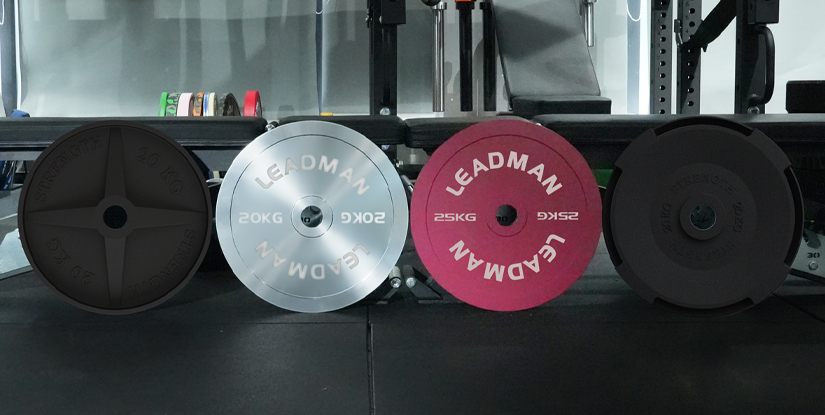
To protect the integrity of bulk steel weight plates, professional suppliers must implement multi-layered defense strategies. This includes the application of specialized protective coatings—such as clear lacquer or anti-rust oils—to prevent moisture-induced corrosion. Furthermore, utilizing high-density moisture barriers and reinforced palletizing techniques is essential to ensure that the weight and density of the shipment do not lead to physical damage. For B2B buyers, verifying these packaging specifications during the QC stage is a critical step in reducing total cost of ownership and minimizing post-arrival claims.
Evaluating a vendor's capability requires a granular understanding of their palletization standards. In many commercial scenarios, a distinction must be made between standard shipping and premium, high-durability configurations. Standard shipping often utilizes basic wooden pallets with minimal strapping, which may suffice for domestic short-haul, but often fails to protect heavy steel loads during transoceanic transit. In contrast, premium wholesale gym equipment logistics protocols prioritize structural stability through heavy-duty crate reinforcement and reinforced corner protectors.
A superior supplier will provide specific QC documentation that includes photographic evidence of the palletized load, ensuring the steel olympic weight plates are centered to prevent shifting. We recommend procurement officers look for shipments that utilize heat-treated, ISPM 15-compliant pallets and double-walled corrugated outer layers. This level of detail in the shipping manifest serves as a benchmark for reliability; it ensures that the density of the steel does not compromise the structural integrity of the packaging, thereby reducing the risk of transit-related damage and inventory loss.
Before the final seal is applied to any container, a rigorous quality control protocol must be executed to bridge the gap between factory production and international compliance. For distributors, the most critical phase of quality control involves the verification of weight tolerance and surface finish consistency. A deviation in mass, even within a single percentage point, can disrupt the balance of professional barbell sets and lead to significant disputes upon arrival. Therefore, a verified batch report must confirm that every plate meets the specified weight accuracy thresholds.
Beyond mass, the surface finish inspection is a non-negotiable step in high-standard industrial weight plate shipping. Inspectors must check for uniform coating thickness, the absence of burrs on the inner diameter, and the integrity of any anti-rust treatments. Once these physical attributes are validated, the shipment must be accompanied by comprehensive shipping manifests and technical data sheets. This documentation serves as the final layer of defense, ensuring that the steel olympic weight plates arriving at your facility strictly adhere to the contractually agreed-upon specifications and international quality benchmarks.
Optimizing Total Cost of Ownership through Quality Control Documentation
For large-scale distributors and gym operators, the true cost of a shipment is rarely defined by the initial invoice price. Instead, the long-term Total Cost of Ownership (TCO) is heavily influenced by the reliability of the technical data provided during the procurement phase. When sourcing steel olympic weight plates in high volumes, the absence of rigorous quality control documentation often leads to hidden expenses that surface long after the container has been unloaded.
Discrepancies in dimensional accuracy or unexpected deviations in weight tolerance can trigger a domino effect of logistical failures. If a batch arrives with inconsistent thickness or diameter, it may not seat correctly on standard barbells, leading to immediate client dissatisfaction. Beyond the immediate cost of returns and secondary shipping fees, these inconsistencies force premature replacement cycles, damaging a distributor's reputation. By demanding detailed inspection reports that verify precise tolerances before departure, buyers transition from reactive troubleshooting to proactive asset management, ensuring that every unit meets the structural standards required for professional commercial use.
To mitigate these risks, procurement specialists should implement a standardized verification checklist. Relying on visual confirmation alone is insufficient for wholesale gym equipment logistics; instead, demand specific technical metrics that validate the structural integrity of the steel. A rigorous inspection protocol ensures that the physical product aligns perfectly with the technical specifications ordered, reducing the likelihood of costly disputes or rejected shipments.
The following table outlines the essential inspection parameters that professional buyers should require from manufacturers to ensure batch consistency and long-term durability.
| Inspection Parameter | Target Specification/Standard | Buyer Procurement Focus |
|---|---|---|
| Material Thickness | Uniformity within ±0.5mm | Prevents warping and structural weakness |
| Weight Deviation | Strict tolerance (e.g., ±1% to 2%) | Ensures professional-grade precision |
| Coating Uniformity | No bubbling, peeling, or unevenness | Reduces oxidation and surface wear |
| Inner Diameter | Standardized for 50mm bar compatibility | Guarantees seamless fit and usage |
Integrating these benchmarks into your industrial weight plate shipping requirements allows for a more predictable supply chain. By validating these variables at the factory level, you protect your margins against the volatility of high-volume replacements and quality-related logistics delays.
Beyond technical tolerances, the physical protection of the cargo during transit is a critical variable in the TCO equation. High-density steel is subject to extreme kinetic forces during sea freight, making standard packaging insufficient for international transit. Without rigorous export packaging standards, the risk of surface oxidation, dented edges, or even structural deformation increases significantly. These issues often stem from inadequate palletization or a lack of specialized bracing within the shipping container, leading to a shipment that arrives technically compliant but aesthetically compromised.
To ensure damage prevention, procurement managers must verify that the factory utilizes heavy-duty, reinforced packaging designed for bulk steel weight plates. This includes the use of moisture-resistant barriers to prevent rust during long sea voyages and high-strength corner protectors to maintain the integrity of the stack. Effective sea freight durability relies on more than just a sturdy box; it requires a coordinated strategy of palletized stability and secure load-securing protocols. By prioritizing these structural packaging requirements during the sourcing phase, distributors can avoid the high costs of insurance claims, damaged goods returns, and the logistical headaches of replacing compromised inventory.
Sourcing Strategies for Wholesale Gym Equipment Logistics and Lead Times
For distributors managing high-volume inventory, the challenge of sourcing steel olympic weight plates extends far beyond mere unit price. The real complexity lies in the delicate equilibrium between factory lead times and inventory stability. Relying on just-in-time ordering often leaves North American warehouses vulnerable to the volatility of global shipping lanes and production cycles.
Optimizing your ROI requires a deep understanding of how bulk steel weight plates move through the supply chain. One common oversight is failing to account for factory lead time variables, such as raw material availability or scheduled maintenance windows, which can unexpectedly stall a shipment. Furthermore, procurement teams must weigh the MOQ impact on shipping costs; while larger orders may lower the per-unit landed cost, they simultaneously increase your capital tie-up and warehousing overhead.
To maintain a competitive edge, professional buyers must also anticipate seasonal demand fluctuations. For instance, preparing for the surge in commercial gym build-outs requires a proactive procurement calendar that accounts for both manufacturing durations and the logistical congestion typical of peak shipping seasons. Strategic foresight in these areas ensures that your stock levels remain consistent, preventing lost sales due to preventable stockouts.
Protecting your margins requires a shift from viewing shipping as a commodity to treating it as a critical quality control pillar. A single instance of transit damage—such as surface oxidation or structural deformation due to improper stacking—can immediately erode the profitability of a large-scale order. To mitigate these risks, procurement specialists should mandate strict export-grade packaging standards, such as heavy-duty reinforced pallets and moisture-resistant shrink wrapping, to protect the integrity of the steel during long-haul maritime transit.
Beyond physical protection, ensuring seamless customs clearance and inventory receipt depends on rigorous QC documentation requirements. Reliable suppliers should provide comprehensive inspection reports and weight verification certificates to prevent discrepancies at the port of entry. Effective wholesale gym equipment logistics also hinges on industrial weight plate shipping optimization, where maximizing container density reduces the landed cost per unit without compromising safety.
Container Load Optimization Framework
Use the following guidelines to evaluate how your supplier manages volume and protection during the loading process:
| Logistics Factor | Standard Requirement | ROI Impact |
|---|---|---|
| Packaging Type | Reinforced wooden crates or heavy-duty palletization | Reduces replacement costs from transit damage |
| Moisture Control | VCI film or industrial-grade anti-rust coatings | Prevents surface oxidation during sea transit |
| Container Loading | Strategic weight distribution and bracing | Optimizes shipping density and prevents shifting |
| Documentation | Full QC reports and weight/dimension verification | Accelerates customs clearance and avoids port fees |
Maximizing Long-Term Supply Stability
Ultimately, high-level procurement for commercial fitness distributors is a game of risk management rather than simple price negotiation. To achieve a truly cost-effective procurement model, buyers must move away from reactive ordering and toward a strategy of risk mitigation through structured replenishment. This involves maintaining a calculated inventory buffer that accounts for both production delays and potential maritime disruptions, ensuring your distribution network remains uninterrupted during peak demand periods.
To optimize the Total Cost of Ownership (TCO), consider the long-term implications of your sourcing cycles. Rather than chasing the lowest immediate quote, focus on long-term supply stability by partnering with manufacturers who demonstrate consistent factory capacity and transparent lead-time forecasting. By integrating these variables into your annual procurement calendar, you can leverage smarter timing to secure better rates and more predictable shipping windows. This proactive approach transforms logistics from a volatile expense into a controlled, strategic advantage that protects your bottom line.