China Manufacturer

fitness equipment manufacturer - China Factory,Supplier,Manufacturer

For global distributors, gym franchise owners, and fitness brand developers, the challenge of scaling a facility or a product line lies in the tension between high-performance requirements and budget constraints. Sourcing from a reliable fitness equipment manufacturer is not merely about finding a vendor; it is about securing a production partner capable of delivering structural integrity, mechanical precision, and long-term operational reliability. Whether you are outfitting a high-traffic commercial fitness center or developing a private label line of strength gear, the quality of your supply chain directly dictates your brand reputation and maintenance overhead.

This guide addresses the critical decision-making frameworks required to move beyond simple transactional purchasing. We explore the nuances of technical specifications that differentiate high-use commercial machines from consumer-grade alternatives, the complexities of OEM customization, and how to identify true manufacturing depth. By understanding the underlying logic of production—from steel gauge tolerances to component duty cycles—procurement professionals can mitigate risks associated with lead times, compliance, and product failure.

In the following sections, we will examine the core pillars of professional sourcing, including:

  • The technical distinctions between various manufacturing models (Factory vs. Supplier vs. Wholesaler).
  • Key benchmarks for evaluating the durability and precision of commercial-grade strength and cardio gear.
  • Strategic approaches to OEM/ODM integration for brand expansion.
  • Practical frameworks for comparing high-end retail solutions with direct-from-factory alternatives.

Our objective is to provide the technical depth necessary to transition from a buyer of products to a manager of high-performance supply chains, ensuring your investment in commercial gym machines and specialized fitness gear yields long-term operational value.
Evaluating Sourcing Models: Direct Factory vs. Traditional Supply Chains

The procurement landscape for fitness facilities is often divided into three distinct tiers: premium retail brands, specialized distributors, and direct-from-factory manufacturers. For a gym owner or a B2B distributor, the choice between these models depends on whether the priority is immediate brand recognition or long-term cost-efficiency and customization depth. While premium retail brands offer established names, a specialized fitness equipment manufacturer provides the ability to control technical specifications and cost structures at the source.

To make an informed decision, procurement professionals must look beyond the sticker price and evaluate the underlying technical capabilities. A high-performance facility requires more than just functional machines; it requires equipment with high-tolerance steel, precision-engineered bearing systems, and durable upholstery that can withstand constant friction. The following table provides a comparison of different sourcing tiers across key operational dimensions, using neutral industry classifications to assist in your strategic planning.

Ideal Use Case
Procurement DimensionPremium Retail TierSpecialized Distributor TierDirect Factory Tier (OEM/B2B)
Primary Value PropositionEstablished brand prestige and high-visibility marketing.Ease of access and standardized product catalogs.High-tolerance engineering and optimized cost-to-performance.
Customization CapabilityVery limited; restricted to standard color palettes.Moderate; limited to SKU-level variations.High; full control over dimensions, materials, and branding.
Technical ControlRelies on brand-provided specifications.Relies on distributor-provided documentation.Direct control over steel gauge, welding, and component specs.
Typical Lead TimesHighly dependent on regional stock availability.Moderate; subject to distributor inventory cycles.Defined by production schedule and customized assembly.
Cost StructureHigh premium due to brand licensing and marketing.Standardized markup for logistics and service.Optimized through direct production and reduced intermediaries.
High-end boutique studios focusing on brand name.Small-to-medium gyms requiring rapid, standard setups.Global brands, large-scale chains, and custom distributors.

When moving toward a direct factory model, the focus shifts from "buying a product" to "managing a specification." For instance, when sourcing strength training equipment, a buyer should not just ask for a weight bench, but should specify the gauge of the steel tubing, the density of the foam padding, and the precision of the adjustment pins. This level of detail is what ensures the "factory-direct" solution remains a high-performance alternative rather than a low-quality compromise.

Technical Benchmarks for Verifying Manufacturing Depth

A common pitfall in global procurement is equating "commercial grade" with mere durability. In reality, true commercial-grade equipment is defined by its tolerance to repetitive mechanical stress and its ability to maintain precise alignment over years of high-frequency use. When vetting a fitness equipment manufacturer, procurement officers must move beyond surface-level aesthetics and interrogate the engineering logic behind the product line.

Structural Integrity and Material Tolerance

The foundation of any heavy-duty strength station is the steel gauge. A significant differentiator between a high-performance factory and a low-cost broker is the ability to provide verifiable material certifications. For example, when sourcing heavy-duty racks or multi-gym systems, the thickness of the steel tubing (often measured in mm) and the precision of the weld joints determine the equipment's lifespan. High-tolerance manufacturing ensures that even under maximum load, the structural frame does not suffer from micro-fractures or permanent deformation. A professional factory will provide technical drawings that specify not just the dimensions, but the grade of steel and the welding specifications used for high-stress junctions.

Mechanical Precision and Component Duty Cycles

For cardio-focused procurement, such as rowing machines or cycles, the focus shifts from static strength to dynamic endurance. The primary failure points in these machines are the motor duty cycles and the resistance mechanisms. A professional manufacturer does not just test for "functionality," but for "endurance." This includes testing the heat dissipation of motors during continuous operation and the smoothness of the resistance transition under varying speeds. If a supplier cannot provide data regarding the expected duty cycle or the durability of the electronic components, the risk of premature mechanical failure in a high-traffic gym environment increases significantly.

The Hidden Logic of Lead Times and Compliance

Lead time variability is often a symptom of poor production planning or a lack of direct control over the sub-component supply chain. Reliable manufacturers maintain a deep inventory of critical parts—such as bearings, cables, and electronic controllers—to insulate their clients from market fluctuations. Furthermore, compliance is not just about having a certificate; it is about the integration of these standards into the daily QC (Quality Control) process. Whether it is the chemical composition of the powder coating to prevent corrosion or the density of the resistance bands, a deep-tier manufacturer treats compliance as a baseline for production, not a final inspection step.

By implementing these technical benchmarks, distributors can avoid the "low-cost trap," where initial savings are quickly eroded by high maintenance costs, frequent part replacements, and diminished brand trust. Instead, focusing on measurable engineering standards allows for a more predictable and scalable procurement strategy.

Strategic Alignment: High-Performance Alternatives and OEM Manufacturing Excellence

In the modern fitness landscape, the distinction between premium retail brands and direct-from-factory solutions is no longer defined by a gap in basic functionality, but by the transparency of technical specifications. Many distributors seek "brand-tier" performance without the heavy markup associated with global marketing overhead. Achieving this requires identifying a manufacturer that can align specific, verifiable metrics—such as steel gauge, bearing smoothness, and upholstery density—with the high standards expected in premium commercial environments.

Achieving High-Performance Benchmarks via Direct Sourcing

When sourcing equipment that serves as a high-quality alternative to premium retail options, the focus must remain on measurable technical parity. A "brand-tier" solution is not a generic imitation, but a precision-engineered product that meets or exceeds the following critical benchmarks:

  • Structural Rigidity: Utilizing high-tensile steel with consistent wall thickness (e.g., 3mm or higher for heavy-duty racks) to ensure zero frame deflection under load.
  • Mechanical Smoothness: Implementing high-grade industrial bearings and precision-machined pulleys to ensure fluid motion in resistance-based machines.
  • Surface Durability: Applying multi-stage electrostatic powder coating processes that offer superior resistance to scratches and oxidation compared to standard finishes.
  • Ergonomic Precision: Using high-density, multi-layer foam and medical-grade synthetic leather that maintains shape and resists tearing under high-frequency commercial use.

Professional OEM/ODM Production Standards

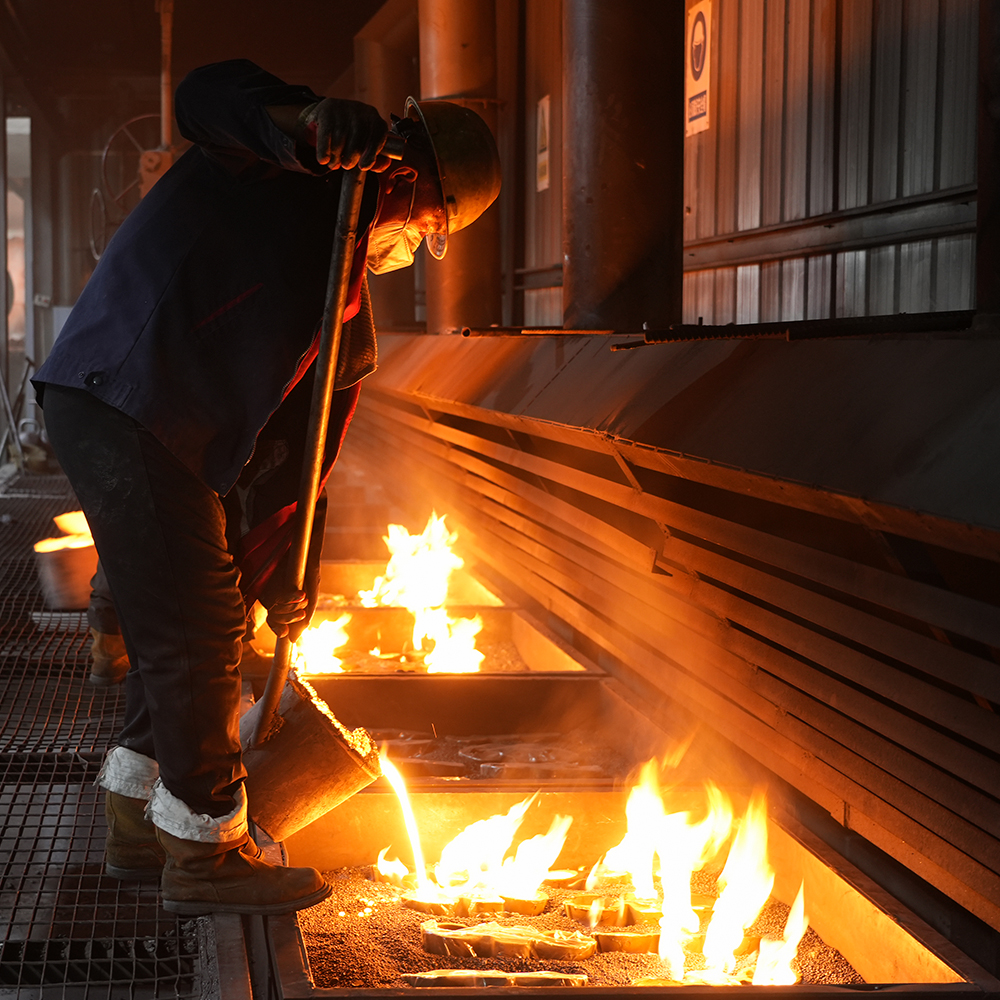
For brands looking to expand through private labeling, the transition from a design concept to a mass-produced product requires a manufacturer with rigorous, standardized production lines. A professional commercial gym equipment supplier operates under strict protocols to ensure that every customized order maintains brand integrity. This process typically follows a structured lifecycle: from the initial technical drawing review and material selection to the creation of a high-fidelity prototype. Once the pre-production sample is approved, the production shifts to a controlled environment where QC (Quality Control) checkpoints are integrated into every stage—welding, assembly, and electrical testing.

Maintaining a professional OEM partnership also involves strict adherence to compliance and confidentiality. Top-tier manufacturers implement robust internal management systems to protect client intellectual property and ensure that all customized components—whether it is a specific resistance profile for a rowing machine or a unique logo placement—meet international safety and durability standards. This systematic approach allows global brands to scale their product lines with the confidence that their manufacturing partner possesses the technical depth to deliver consistent, high-tolerance results at a global scale.

Applied Expertise: Solving Complex Procurement Challenges Through Custom Solutions

Theoretical specifications are one thing, but the true value of a professional fitness equipment manufacturer is revealed when navigating real-world constraints. Complex procurement often involves more than just selecting a model; it requires solving for logistical, technical, and branding-specific challenges that a standard catalog cannot address. The following anonymous case studies illustrate how a deep-tier manufacturing partner approaches these multifaceted problems.

Scenario A: High-Volume Inventory Expansion for a Regional Distributor

A mid-sized fitness distributor in Southeast Asia aimed to launch a private-label line of high-intensity resistance gear to compete in the local boutique studio market. Their primary constraints were a strict budget per unit and the requirement for a unique, high-end aesthetic to differentiate themselves from low-cost generic imports. They needed a partner who could provide a custom resistance bands manufacturer capable of precision-tuning tension levels while maintaining a premium look.

The manufacturer's response involved a multi-stage prototyping process. Instead of offering a standard product, the factory team worked on adjusting the latex density to meet the client's specific resistance profile and suggested a high-grade matte finish for the handles to enhance the tactile experience. Furthermore, to address the distributor's branding needs, the factory implemented a specialized silk-screen printing process for the logos and developed customized, branded packaging that was optimized for retail display. The result was a cohesive, high-perceived-value product line that met the client's budget while passing all durability tests for high-frequency studio use, allowing the distributor to scale their inventory rapidly.

Scenario B: Rapid Facility Outfitting for a Multi-Location Gym Chain

A growing commercial gym chain faced a critical deadline: they needed to outfit five new locations across different time zones within a compressed six-month window. The primary challenge was not just the volume of commercial gym machines required, but the need for absolute consistency across all sites. The client required specialized strength equipment with a specific color scheme to match their corporate identity, and they were concerned about the logistical complexity of shipping large-scale machinery to multiple remote destinations.

The manufacturing partner addressed this by treating the project as a synchronized production and logistics operation. First, a dedicated project team was assigned to oversee the color-matching process, ensuring that the electrostatic powder coating on the racks and benches met the client's exact brand guidelines. Second, the factory implemented a rigorous pre-shipment inspection protocol, where every machine was tested for mechanical alignment and weight-bearing stability before being crated. Finally, to solve the logistical constraint, the manufacturer coordinated specialized export packaging designed to minimize transit damage and optimized the container loading plan to reduce shipping costs per unit. The project was completed on schedule, with all five locations receiving consistent, high-tolerance equipment that met the chain's rigorous operational standards.

These scenarios demonstrate that effective procurement is a partnership of technical problem-solving. Whether the obstacle is a branding requirement, a technical specification, or a logistical deadline, a manufacturer with deep production expertise provides the strategic flexibility necessary to turn constraints into competitive advantages.

Operationalizing the Partnership: MOQ, Sampling, and Global Logistics

Transitioning from a technical evaluation to a formal procurement cycle requires a clear understanding of the operational workflows used by a professional fitness equipment manufacturer. Unlike retail-oriented vendors, B2B manufacturing partners operate through structured stages—from initial prototyping to bulk production and international dispatch—each governed by specific protocols to ensure consistency and risk mitigation.

The Prototyping and Sampling Phase

For customized OEM projects, the sampling phase is the most critical checkpoint. Whether you are developing a new line of strength gear or a specialized cardio machine, the manufacturer will produce a high-fidelity prototype based on your technical drawings. This stage is not merely for visual approval but for rigorous functional testing. Procurement teams should use this phase to verify:

  • Dimensional Accuracy: Ensuring all structural components meet the exact tolerances specified in the CAD drawings.
  • Material Integrity: Confirming the tactile feel, density, and durability of upholstery, resistance bands, or metal finishes.
  • Mechanical Function: Testing the smoothness of weight stacks, pulley systems, or electronic interfaces under simulated load.

A standard sampling cycle typically ranges from 15 to 30 days, depending on the complexity of the customization and the availability of specialized components. Once the pre-production sample is signed off, it serves as the "gold standard" against which all subsequent bulk production will be measured.

MOQ and Scalability Frameworks

Minimum Order Quantity (MOQ) requirements vary significantly depending on the product category and the level of customization involved. For standardized fitness products, MOQs are often lower, facilitating easier inventory testing for new distributors. However, for highly customized OEM projects—such as those involving unique color schemes, specific branding, or bespoke structural modifications—MOQs are typically higher to offset the costs of specialized tooling, customized packaging, and production line reconfiguration. Transparent communication regarding these thresholds is essential during the initial RFQ (Request for Quotation) stage to ensure alignment with your business scaling strategy.

Quality Control and Export-Ready Logistics

A professional manufacturing partner integrates quality control (QC) into the entire production lifecycle, not just at the end. This includes raw material inspection, in-process welding and assembly checks, and final functional testing. For international B2B clients, the logistics phase must also account for the high-volume, heavy-duty nature of the goods. Professional manufacturers provide several specialized options to ensure safe delivery:

  • Export-Grade Packaging: Utilizing reinforced corrugated boxes, heavy-duty corner protectors, and customized wooden crates to mitigate damage during long-distance ocean freight.
  • Container Optimization: Providing optimized loading plans (e.g., 20ft or 40ft HQ containers) to maximize volume efficiency and reduce the landed cost per unit.
  • Documentation Support: Ensuring all necessary commercial invoices, packing lists, and material safety data sheets (MSDS) are prepared to facilitate smooth customs clearance in the destination country.

By establishing these clear communication nodes—from sample approval to final shipping inspection—procurement professionals can build a predictable and scalable supply chain that supports long-term growth and maintains high-performance standards across all global markets.

Strategic Checklist for High-Performance Procurement

Transitioning from a standard vendor relationship to a high-tolerance manufacturing partnership requires a disciplined approach to technical verification. To ensure your facility or brand receives equipment that meets professional commercial standards, utilize the following operational checkpoints during your next sourcing cycle.

Pre-Production Verification Steps

  • Validate Technical Drawings: Ensure the manufacturer provides detailed CAD files or 3D models that explicitly state steel gauge (e.g., 3mm vs 2mm), weld types, and bearing specifications before any prototype is produced.
  • Execute Functional Prototyping: Use the sampling phase to test the actual "duty cycle" of mechanical components, such as the resistance transition in rowing machines or the weight stack glide in strength stations, rather than just checking visual aesthetics.
  • Confirm Material Certifications: Request documentation for high-wear items, such as the density of resistance bands or the chemical composition of powder coatings, to ensure long-term durability in high-traffic environments.

Logistics and Scalability Alignment

  • Define MOQ and Customization Boundaries: Clarify the exact threshold where branding (logo placement, color schemes) triggers higher MOQs to prevent unexpected cost spikes during the scaling phase.
  • Audit Export-Ready Packaging: Verify that the manufacturer utilizes reinforced crating or optimized container loading plans specifically designed for the weight and structural fragility of commercial-grade machines.
  • Establish QC Milestones: Integrate specific inspection points—such as in-process welding checks and final electrical testing—into your purchase order to ensure quality is built into the production rather than just inspected at the end.

By focusing on these measurable engineering and operational metrics, procurement professionals can successfully navigate the complexities of the global fitness supply chain, securing equipment that delivers sustained value and protects brand reputation.

Related Products

fitness equipment manufacturer

Top Selling Products

Contact Us

Format: +[country code][number] (e.g. +1234567890)