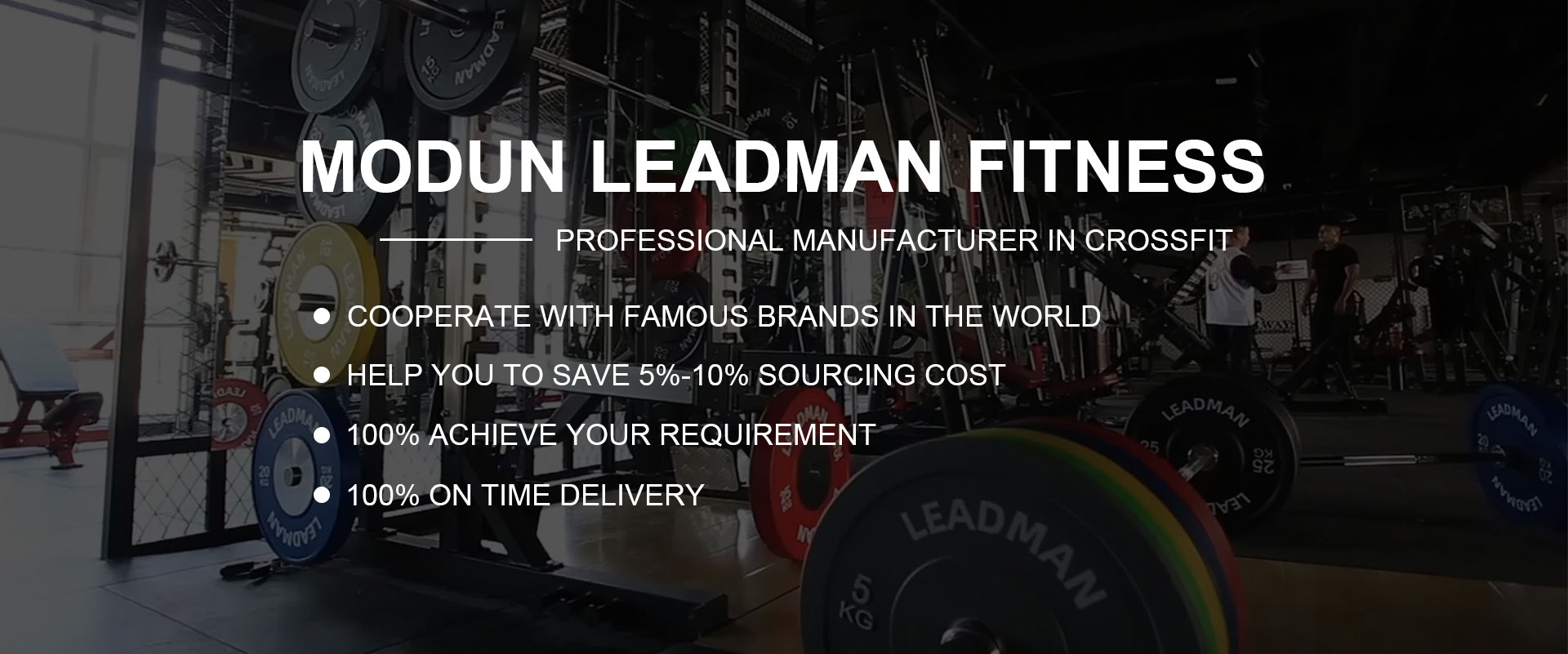
This guide is designed specifically for B2B professionals who seek to move beyond simple retail purchasing and enter the realm of strategic sourcing. A professional fitness equipment wholesaler does more than just move boxes; they act as a bridge between raw industrial manufacturing and the sophisticated requirements of the modern fitness market. We address the core complexities of procurement, including technical specification alignment, quality assurance for high-traffic environments, and the logistical nuances of international shipping.
Through this deep dive, you will learn how to identify high-value opportunities in the following areas:
By understanding these dimensions, procurement officers and business owners can build a more resilient, cost-effective, and scalable fitness ecosystem. Our goal is to provide the clarity needed to make informed decisions that support long-term facility growth and brand authority.
When scaling a fitness business, the decision between purchasing from high-end retail showrooms and sourcing through a specialized fitness equipment wholesaler involves more than just the sticker price. It is a decision regarding long-term operational stability, brand control, and capital efficiency. To make an informed choice, procurement officers must look beyond marketing slogans and focus on verifiable technical metrics.
The following table provides a comparative framework to help you evaluate different sourcing tiers. We use neutral classifications such as "Premium Retail Tier" and "Direct Factory Tier" to illustrate the structural differences in value, customization, and technical oversight without referencing specific brand names.
| Procurement Dimension | Premium Retail Tier (High-End Brands) | Direct Factory Tier (Wholesale & OEM) |
|---|---|---|
| Core Value Proposition | Brand prestige and established consumer recognition. | High-performance specs at optimized cost-to-value ratios. |
| Customization Depth | Limited to standard colorways and minor accessory options. | Deep OEM integration (frame gauge, color, logo, and packaging). |
| Technical Oversight | Relies on third-party retail distributors for technical support. | Direct access to production-level engineering and QC reports. |
| Lead Time & Logistics | Often dependent on existing retail inventory availability. | Controlled via direct production scheduling and sea-freight planning. |
| Cost Structure | Includes high margins for retail, marketing, and showroom overhead. | Streamlined B2B pricing focused on manufacturing and logistics. |
| Ideal Use Case | Single-unit boutique purchases or high-street retail. | Gym chains, regional distributors, and private label brands. |
Understanding these distinctions is vital for professional buyers. For instance, while a "Premium Retail Tier" model offers immediate gratification, it often lacks the flexibility required for a growing brand. A specialized fitness machine manufacturer can provide the precise technical documentation required for large-scale facility builds, such as load-bearing test results for strength machines or motor duty-cycle specifications for cardio equipment.
Furthermore, the "Direct Factory Tier" allows for a more nuanced approach to product differentiation. Instead of competing on price alone, distributors can use OEM services to create a unique market position, whether through specialized resistance band textures or custom-branded weightlifting gear, effectively building a proprietary product line that is difficult for competitors to replicate via standard retail channels.
A common pitfall in global procurement is equating a lower unit price with higher profitability. For a professional buyer, the true cost of a gym machine is not the initial invoice amount, but the total cost of ownership (TCO) over a five-year operational cycle. This includes maintenance frequency, spare part availability, and the potential for downtime in a high-traffic commercial environment.
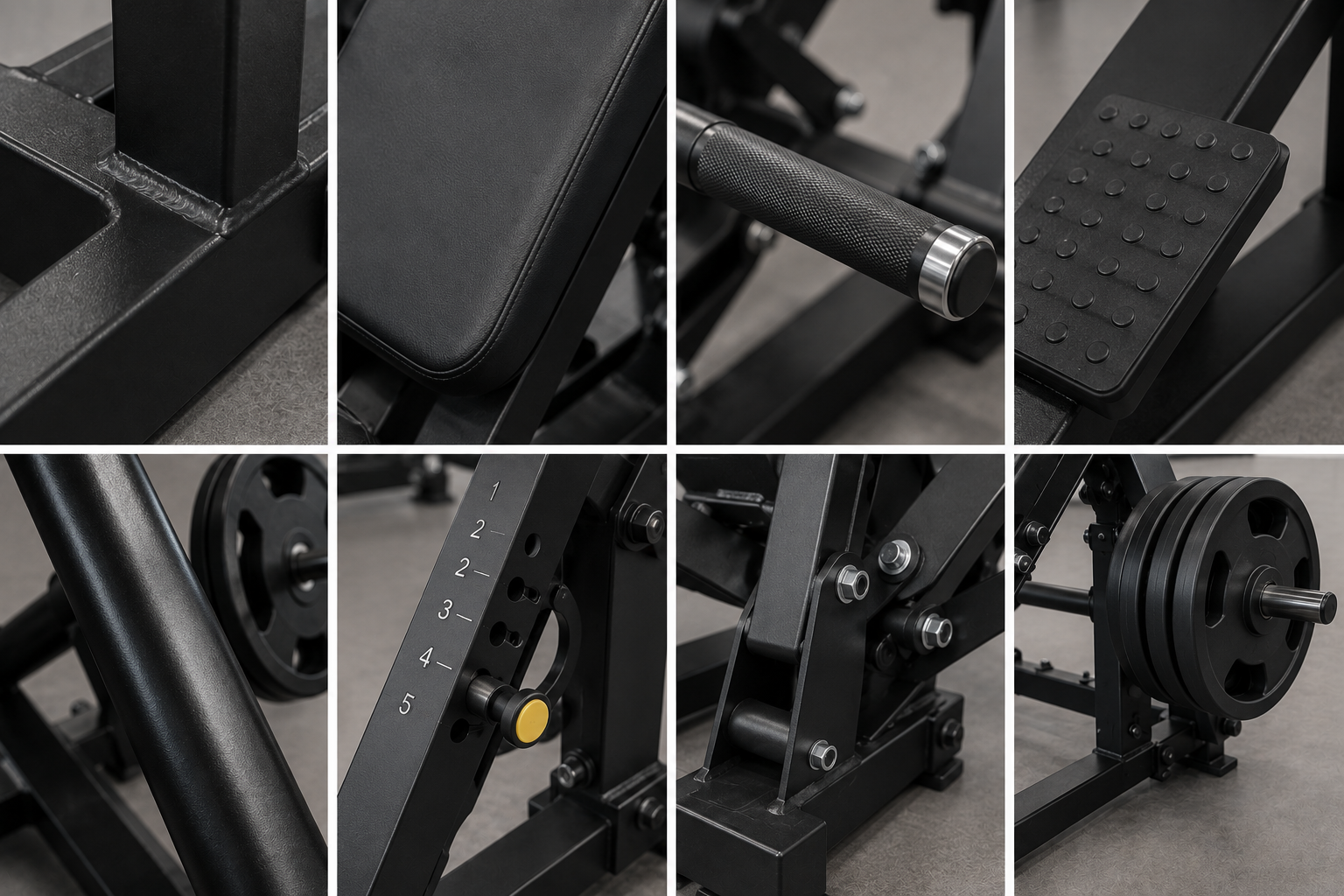
When sourcing strength and cardio equipment, the distinction between "commercial-grade" and "home-use" lies in the engineering tolerances and material density. For example, in strength training equipment, the gauge of the steel tubing (often measured in mm) and the thickness of the powder coating directly impact resistance to oxidation and structural fatigue. A professional gym machine manufacturer will provide specific technical drawings detailing these dimensions, whereas a low-tier supplier may only offer vague descriptions. Similarly, for cardio machines like rowing machines or cycles, the critical metric is the motor's duty cycle—its ability to sustain continuous operation under load without overheating.
Compliance is another layer of depth often overlooked. Reliable manufacturers operate under strict ISO or similar quality management systems, ensuring that every batch of resistance bands or weightlifting gear meets standardized tension and safety thresholds. Without these verifiable quality control (QC) protocols, a distributor risks high return rates and brand damage due to product failure in the field.
Effective procurement requires a strategic understanding of the production-to-logistics timeline. A common misconception is that lead times only begin once an order is placed. In reality, a professional procurement framework must account for three distinct phases: pre-production (including sample approval and mold adjustments), mass production (which varies by product complexity), and the logistical window (sea-freight transit and customs clearance).
To avoid the trap of "empty promises" regarding delivery, we recommend a decision-making framework based on the following three pillars:
By shifting focus from "lowest price" to "highest reliability and technical transparency," procurement professionals can build a supply chain that supports long-term scalability and minimizes operational risk.
In the global fitness market, a significant gap often exists between the high-cost "brand-name" solutions and the direct-from-factory options. However, for professional procurement officers, this gap is not a matter of quality, but of marketing overhead and distribution layers. By focusing on verifiable technical benchmarks, businesses can secure equipment that performs at a level comparable to premium retail tiers while maintaining a much more efficient capital structure.
To achieve a "premium-grade" result through a specialized fitness equipment wholesaler, procurement teams must move away from qualitative descriptions and toward quantitative verification. We recommend auditing the following key indicators to ensure your direct-sourcing model aligns with high-end facility requirements:
Our manufacturing philosophy is built on the ability to serve diverse market segments, ranging from boutique studios to large-scale gym chains. We operate under a rigorous production framework designed to meet the stringent requirements of international orders. This involves a highly controlled transition from the initial design phase to mass production.
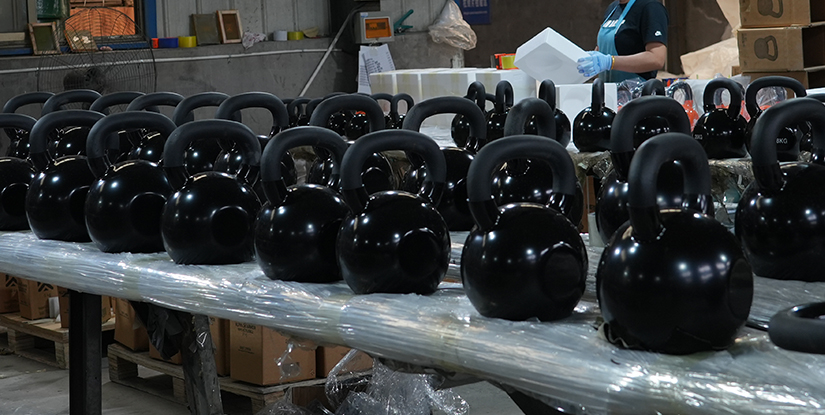
The process begins with a dedicated prototyping stage. When a client requests a customized OEM solution—whether it is a specific colorway for a multi-gym system or a custom-branded resistance band—we produce a physical sample that serves as the definitive quality benchmark. This sample is subjected to a full cycle of testing before the client provides the final sign-off. Once approved, the project moves into mass production under strict oversight. Our production lines utilize standardized quality control (QC) checkpoints at every stage: raw material inspection, component assembly, functional testing, and final packaging. This systematic approach ensures that the thousandth unit produced is identical in performance and build quality to the first approved sample, providing the consistency required for global distribution and long-term brand reputation.
Theoretical planning is essential, but the true value of a specialized fitness equipment wholesaler is proven through the successful resolution of real-world constraints. The following anonymous case studies illustrate how technical expertise and flexible manufacturing can address the specific pain points of different B2B segments.
A rapidly growing fitness chain in Southeast Asia sought to launch a new "Premium Studio" line to differentiate itself from budget-friendly competitors. Their primary requirement was to move away from generic, unbranded equipment and instead present a cohesive, high-end aesthetic across all locations. However, they faced a significant constraint: they needed a unique brand identity (custom colorways and logo placement) but lacked the volume required by top-tier global manufacturers.
The challenge was to provide a high-end look without the prohibitive costs of major brand-name equipment. We developed a customized OEM solution that focused on "visual premiumization." This involved selecting a high-grade matte black powder coating for all strength machines and multi-gym systems, paired with a specific metallic accent color for the weight stacks and adjustment knobs. We also implemented a precision laser-engraving process for their brand logo on all moving parts and upholstery. By managing the production through a controlled sampling process, the client was able to approve the exact texture and color shade before mass production. The result was a seamless, branded experience across all their new studios that met their high-end aesthetic standards while staying within a scalable budget.
An international distributor specializing in home-to-commercial crossover gear faced a critical deadline. They had committed to a large-scale launch of a new line of high-durability rowing machines and resistance bands for the European market. The primary constraints were two-fold: the products had to meet specific structural durability standards for commercial-grade use, and the entire shipment had to be ready for sea-freight departure within a strict 60-day window to avoid missing the peak seasonal demand.
To address the durability requirement, we adjusted the technical specifications of the rowing machines, increasing the thickness of the internal drive mechanism components and providing detailed stress-test reports for the tension system. For the resistance bands, we utilized a higher-density latex material that passed rigorous breakage testing. To meet the aggressive timeline, we integrated a streamlined QC and packaging workflow. Instead of waiting for a standard end-of-month inspection, we implemented a "rolling inspection" protocol, where batches were tested and packed as soon as they cleared the assembly line. This proactive approach allowed the client to meet their shipping deadline with a fully compliant, high-performance product line, ensuring a successful market entry without the risk of logistical delays or quality-related returns.
Moving from the conceptual phase to a live purchase order requires a clear understanding of the operational boundaries that define a professional B2B relationship. Unlike retail transactions, procurement through a specialized fitness equipment wholesaler is governed by structured workflows designed to manage large-scale volumes, technical precision, and international transit risks. Establishing these parameters early ensures that both the buyer and the manufacturer are aligned on expectations regarding scale, quality, and delivery.
To ensure a smooth transition from initial inquiry to final delivery, we adhere to a rigorous set of procedural milestones. These steps are designed to minimize ambiguity and protect the interests of both the facility owner and the production team.
Shipping heavy-duty commercial gym machines and high-volume accessories requires specialized logistics strategies to prevent transit damage and optimize container utilization. We provide several packaging and shipping options tailored to the specific needs of the destination market:
By integrating these operational details into your procurement planning, you can move beyond simple ordering and begin building a professional, scalable, and highly predictable supply chain that supports your long-term business objectives.
Successful long-term partnerships in the fitness industry are built on the foundation of rigorous preparation and clear communication. As you move from the research phase toward active sourcing and potential OEM collaboration, utilizing a structured approach to verify your requirements will ensure that your facility or brand receives equipment that meets both your aesthetic and functional standards.
Before finalizing any purchase order or entering a formal manufacturing contract, we recommend conducting a final review of your procurement strategy based on these critical execution pillars:
By addressing these operational dimensions with precision, you transition from a reactive buyer to a strategic partner. This proactive stance allows you to leverage the full capabilities of a professional fitness equipment wholesaler, turning the complexities of global manufacturing into a scalable advantage for your business growth.